

Introduction
Greek yogurt has earned its spot as a morning staple. Walk into any grocery store, and you’ll find entire refrigerator cases dedicated to this thick, tangy dairy product. Fitness enthusiasts praise it. Busy professionals rely on it. Nutrition labels highlight it.
But the real question remains: is Greek yogurt good for breakfast? especially when you want a balanced, high protein breakfast?
The high-protein reputation helps. Greek yogurt protein content often doubles that of regular yogurt, making it a convenient high protein breakfast option. Yet protein alone does not make a complete meal. A truly effective breakfast needs balance, fiber, healthy fats, and enough calories to carry you through the morning.
This article examines what Greek yogurt actually delivers. We’ll look at the numbers behind the protein claims, explore when it works as a standalone option, and share practical ways to turn a simple container of yogurt into several balanced breakfast ideas that actually satisfy hunger.
Whether you currently eat Greek yogurt every morning or are considering adding it to your rotation, this breakdown gives you the facts to decide if it fits your goals.
Table of Contents
Why Greek Yogurt Is Considered a High-Protein Breakfast Option
High-protein eating patterns have dominated nutrition conversations for the past decade. Research shows that protein:
- Increases feelings of fullness
- Supports muscle maintenance
- Helps stabilize energy levels throughout the day
Breakfast is a natural starting point for anyone looking to boost morning protein intake.
Greek Yogurt: A Convenient Protein Source
Greek yogurt emerged as a simple, ready-to-eat solution:
- Straining removes liquid whey, concentrating protein
- Regular yogurt: 5–7g protein per serving
- Greek yogurt: 15–20g protein per serving
This makes it ideal for high protein breakfast examples that require minimal effort.
Texture and Satiety
- Thick, creamy texture feels more substantial than regular yogurt
- Satisfies the desire for a hearty morning meal
- Can be eaten plain, with fresh toppings, or in savory dishes, the protein foundation stays solid
Comparison to Other Breakfast Proteins
Greek yogurt holds its own against common breakfast proteins:
- More protein than a slice of toast with peanut butter
- Matches or exceeds a single egg
- Provides a dairy-based alternative for variety beyond meat or eggs
Why It Became Popular
Greek yogurt solves a specific problem: getting significant protein quickly in the morning.
- Convenient and ready-to-eat
- High protein density supports satiety
- Fits both sweet and savory meal formats
For a deeper comparison of Greek yogurt vs regular yogurt, check Greek Yogurt vs Regular Yogurt.
Greek Yogurt Protein Content: What You Actually Get
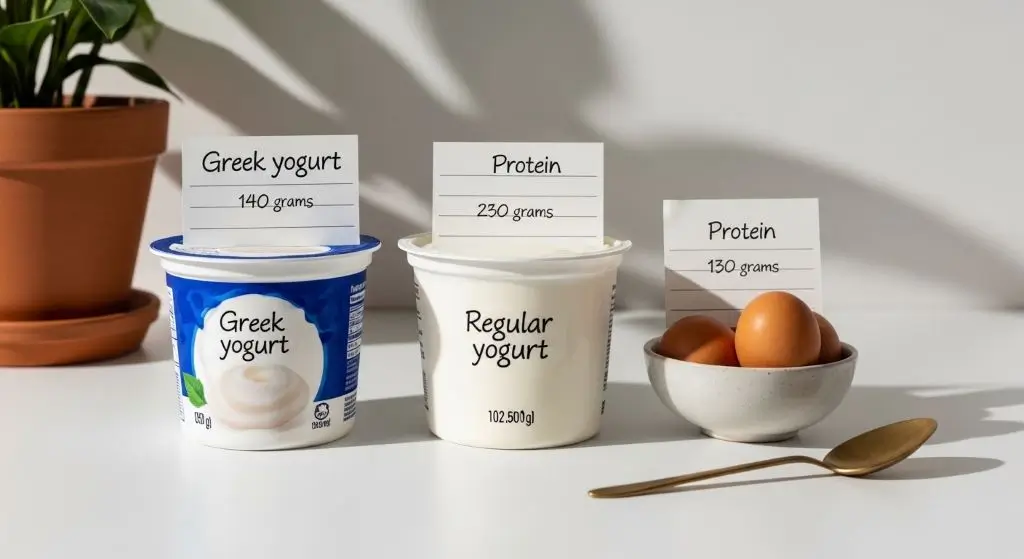
Understanding Greek yogurt protein content requires checking labels carefully, as amounts vary by brand and fat content. According to the USDA FoodData Central, Greek yogurt is a protein-dense dairy option, making it a reliable choice for breakfast.
Most standard single-serve containers (150–170 grams) contain:
- Non-fat Greek yogurt: 15–18 grams protein, 90–100 calories
- Low-fat (2%) Greek yogurt: 15–20 grams protein, 130–150 calories
- Whole milk Greek yogurt: 15–20 grams protein, 190–230 calories
These numbers represent solid protein density, nutrition without excessive calories, especially in lower-fat options. The Harvard T.H. Chan School of Public Health notes that yogurt, including Greek varieties, packs concentrated protein while retaining essential nutrients like calcium and B vitamins
Comparison to other breakfast proteins:
| Food | Protein | Calories | Notes |
| 1 large egg | 6g | 70 | Requires cooking |
| 1 cup cooked oatmeal | 6g | 150 | Higher carbs, minimal fat |
| Protein shake | 20–25g | 120–150 | Powder dependent |
| Non-fat Greek yogurt (150g) | 17g | 100 | Ready to eat |
Greek yogurt offers more protein per calorie than eggs, more than oatmeal, and is comparable to basic protein shakes. Its key advantage remains convenience, no stove, blender, or shaker bottle required.
However, protein alone doesn’t make a breakfast complete. A truly effective morning meal also needs fiber, healthy fats, and carbohydrates. For practical ways to structure high protein breakfast meals around yogurt and other protein sources, see our detailed guide.
Is Greek Yogurt Alone Enough for a Balanced Breakfast?
Greek yogurt delivers excellent protein, but a balanced breakfast needs more than protein alone.
A complete morning meal should include:
- Protein for satiety and muscle support
- Fiber for digestive health and sustained fullness
- Complex carbohydrates for energy
- Healthy fats for hormone production and nutrient absorption
- Micronutrients from varied food sources
Plain Greek yogurt provides protein, calcium, and probiotics but lacks fiber and minimal carbs unless sweetened. Whole milk versions provide some fat, but not the variety found in nuts or avocado.
This creates a fiber gap: you feel satisfied initially, but without fiber, hunger can return faster. Carbohydrates provide immediate energy for the brain after overnight fasting. Fats help with fullness and absorption of fat-soluble vitamins. According to the Mayo Clinic, dietary fiber is essential for digestion, fullness, and long-term health, making plant-based additions like fruits, seeds, or whole grains crucial to complete a breakfast.
Think of Greek yogurt as the protein frame of your breakfast. You need additional components to complete the meal. For guidance on nutrient-dense yogurt choices and overall balance, also see Is Greek Yogurt Healthier?.
Sweet vs Savory: A Smarter Way to Eat Greek Yogurt
Sweet preparations dominate breakfast: honey, granola, berries, or flavored yogurt. They satisfy cravings but can add sugar: a quarter-cup of granola adds 5–10g sugar; some flavored yogurts contain 15–20g added sugar.
Controlled sweet toppings work: berries, a drizzle of honey, or cinnamon provide flavor without excess sugar.
Savory Greek yogurt breakfast remains underrated. Treat it like a base for vegetables, herbs, or proteins. Examples:
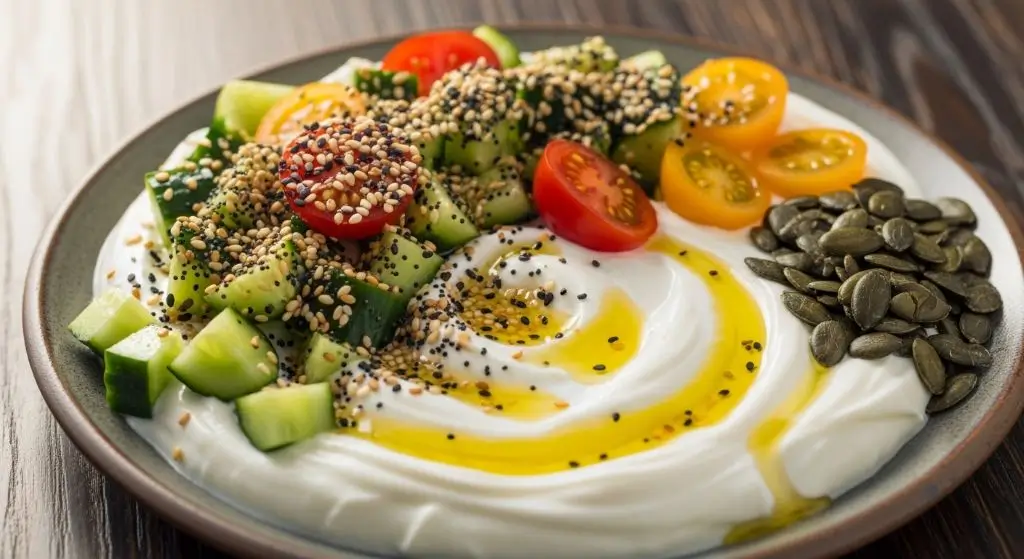
- Greek yogurt with cucumber, tomato, olive oil, everything bagel seasoning
- Yogurt mixed with herbs as a dip for raw vegetables
- Bowl with smoked salmon, capers, red onion, dill
- Yogurt combined with roasted vegetables and seeds
The savory greek yogurt breakfast offers several advantages. It naturally avoids the sugar creep that plagues sweet versions. It encourages vegetable consumption, adding fiber and micronutrients that pure yogurt lacks. It creates variety, preventing breakfast boredom that leads to poor choices.
Both approaches can work. The key lies in awareness. Sweet bowls require careful topping selection. Savory bowls need flavor balancing to avoid blandness. Understanding both expands your options and helps you build more nutritious morning meals.
How Greek Yogurt Compares to Other High Protein Breakfast Examples
Context matters. Greek yogurt fits specific high protein breakfast scenarios:
- Eggs: 12g protein from 2 eggs. Nutrient-rich but requires cooking. Greek yogurt wins convenience; eggs win nutrient diversity.
- Cottage cheese: Similar protein, different texture and micronutrient profile.
- Protein oatmeal: Adds fiber, maintains high protein. Requires more prep.
- Protein smoothies: Can match protein content, adds fiber, requires blender.
Greek yogurt ranks high for protein and convenience, slightly behind eggs/cottage cheese in nutrient completeness. Rotating options ensures both convenience and variety.
Common Mistakes That Make Greek Yogurt Less Effective
Context helps you make informed choices. Greek yogurt occupies a specific place in the landscape of high protein breakfast examples. Understanding that position helps you decide when to use it and when to choose alternatives.
- Eggs: Two large eggs provide 12 grams of protein with 140 calories. They offer complete nutrition including healthy fats and important nutrients like choline and vitamin D. However, eggs require cooking and cleanup. Greek yogurt wins on convenience. Eggs win on nutrient diversity.
- Cottage cheese: Similar to Greek yogurt in protein content, cottage cheese offers a different texture and slightly different micronutrient profile. Some people find it more filling due to the curd structure. Others prefer Greek yogurt’s smoothness. Both work well as protein bases.
- Protein oatmeal: Combining oats with protein powder or Greek yogurt itself creates a hybrid option. This provides the fiber that plain Greek yogurt lacks while maintaining high protein content. It requires more preparation than yogurt alone but creates a more complete meal.
- Protein smoothies: Blending protein powder with fruit, greens, and liquid offers customization and convenience. Smoothies can match or exceed Greek yogurt’s protein content while adding fiber and micronutrients. However, they require a blender and can become calorie-dense if portions grow too large.
These mistakes do not make Greek yogurt bad. They simply reduce its effectiveness. Awareness helps you avoid these pitfalls and get full value from your morning meal.

How to Build a Balanced Greek Yogurt Breakfast
Turn Greek yogurt into a complete high protein breakfast using a simple framework:
- Start with a solid serving: 150–170g plain Greek yogurt → 15–20g protein. Choose fat level based on calorie needs.
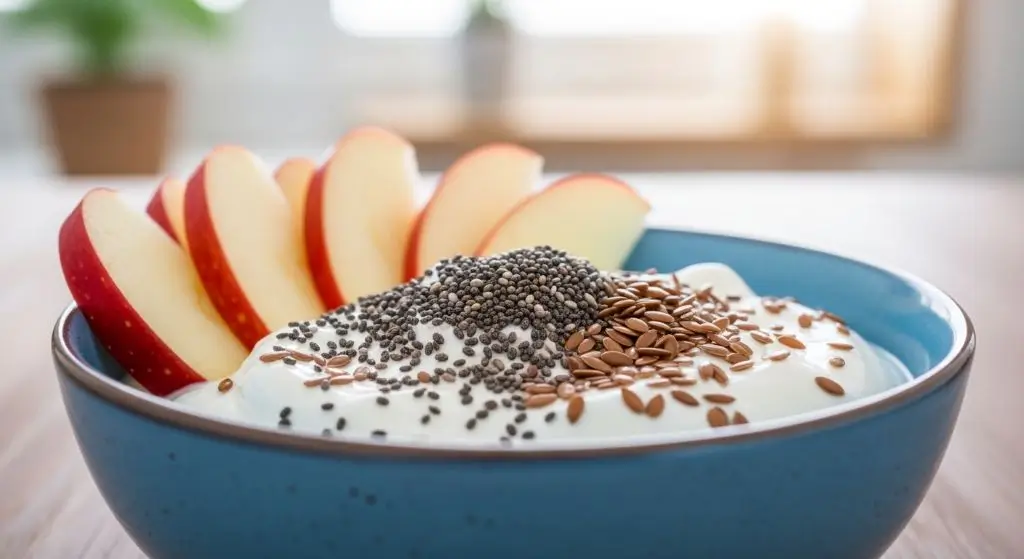
- Add fiber: Berries, apple slices, chia seeds, flaxseed meal, or raw vegetables. Aim for 3–5g fiber.
- Add healthy fats: Nuts, seeds, nut butter, or olive oil (for savory bowls). Adds satiety and aids nutrient absorption.
- Adjust carbohydrates: For active mornings or higher calorie goals, add oats, whole-grain toast, or fruit. Sedentary days may need less.
This framework creates endless variations. You might choose berries and walnuts one day, cucumber and sunflower seeds the next. Both follow the same structure while offering different flavors and nutrients.
The best-balanced breakfast ideas share this characteristic. They combine protein, fiber, and fats in proportions that match individual needs. Greek yogurt serves as an excellent starting point for this construction.
3 Balanced Greek Yogurt Breakfast Combinations
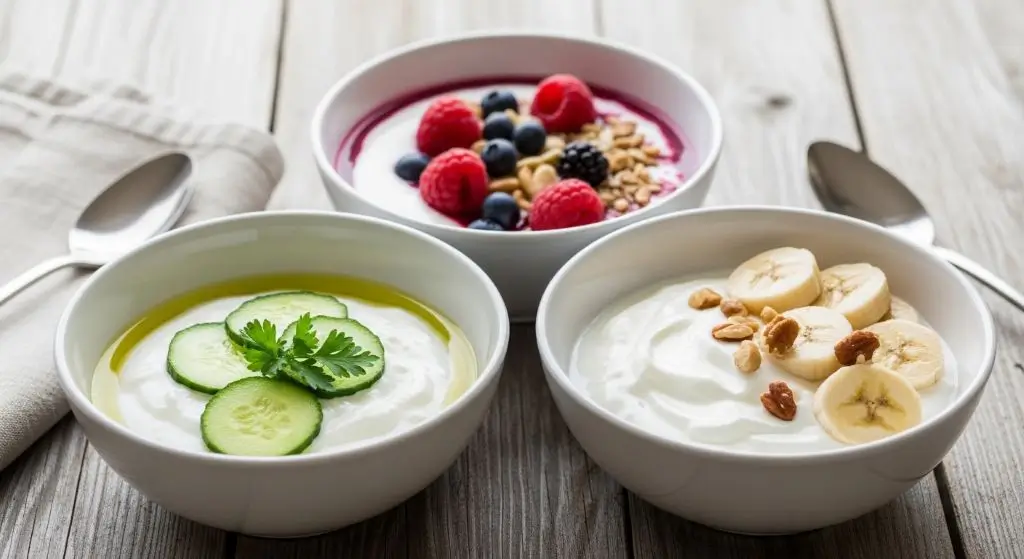
These structured examples show the framework in action. They are not formal recipes, but rather templates you can adapt.
High-Protein + Fiber Bowl
Components: 170 grams plain Greek yogurt, 1 cup mixed berries, 2 tablespoons chia seeds, 1 tablespoon sliced almonds
Why it works: The berries add fiber and antioxidants with minimal sugar compared to dried fruit. Chia seeds contribute additional protein, omega-3 fatty acids, and soluble fiber that absorbs liquid and expands in your stomach. Almonds provide crunch and healthy fats. Total protein reaches 22 to 25 grams with significant fiber content.
Savory Greek Yogurt Breakfast Plate
Components: 150 grams plain Greek yogurt, 1 cup cherry tomatoes, 1/2 cucumber diced, 1 tablespoon olive oil, everything bagel seasoning, 2 tablespoons pumpkin seeds
Why it works: This savory greek yogurt breakfast avoids sugar entirely while adding substantial fiber from vegetables. The olive oil and pumpkin seeds provide healthy fats. The seasoning adds flavor without calories. This combination works particularly well for people who prefer savory morning flavors or want to reduce sugar intake.
Higher-Calorie Active Morning Bowl
Components: 170 grams whole milk Greek yogurt, 1 medium banana sliced, 2 tablespoons peanut butter, 1 tablespoon hemp seeds, sprinkle of cinnamon
Why it works: Active mornings or higher calorie needs require more energy. The whole milk yogurt adds calories and richness. Banana provides quick carbohydrates for immediate energy. Peanut butter adds substantial calories from healthy fats and additional protein. Hemp seeds contribute omega-3 fatty acids and complete protein. This bowl supports physical activity or long mornings without mid-day crashes.
Each example follows the same basic structure while serving different needs. Adjust portions and ingredients based on your specific goals and preferences.
So, Is Greek Yogurt Good for Breakfast?
Direct answer: Yes, when structured properly.
Greek yogurt provides excellent protein density in a convenient format. It supports muscle maintenance and satiety better than many traditional breakfast options. It adapts to sweet or savory preparations, adding variety to morning meals.
However, Greek yogurt alone is not a balanced meal. Add fiber, healthy fats, and strategic carbohydrates to create genuine balanced breakfast ideas. Avoid sugar-heavy flavored versions or over-topping sweet additions to preserve benefits.
For higher protein targets, Greek yogurt is efficient and convenient. For lower protein needs or dairy sensitivities, other options may fit better.
The key: Treat Greek yogurt as a foundation, not a complete solution. Thoughtful construction makes it a smart, flexible breakfast choice.
FAQs: About Is Greek Yogurt Good for Breakfast?
Q: Is Greek yogurt good for breakfast every day?
A: Yes, if meals are balanced and varied. Rotating protein sources ensures nutritional diversity.
Q: How much protein does Greek yogurt have?
A: Typically 15–20g per 150–170g serving, depending on brand and fat content.
Q: Is Greek yogurt alone enough for breakfast?
A: Alone, it provides protein but may lack fiber and carbs. Adding fruit, seeds, or whole grains creates a balanced meal.
Q: What is a savory Greek yogurt breakfast?
A: Greek yogurt combined with vegetables, nuts, seeds, olive oil, or herbs. Reduces sugar while supporting protein intake.
Q: How does Greek yogurt compare to other high protein breakfast examples?
A: Quick, protein-dense, convenient. Eggs and cottage cheese may offer more micronutrients. Fiber additions improve completeness.
Q: Is flavored Greek yogurt healthy?
A: Many contain added sugar. Choose plain versions (<8g added sugar per serving) and add your own toppings.
Q: What can I add to Greek yogurt for more fiber?
A: Chia seeds, flaxseed, berries, apples, pears, or raw vegetables. Boosts fullness and creates a more complete meal.