

Introduction
Walk through any grocery dairy aisle and you’ll spot it: rows of pristine containers promising zero fat, high protein, and all the benefits of yogurt without the extra calories. Nonfat Greek yogurt has earned a reputation as the cleanest choice in the cooler. It blends into smoothies, works in meal prep containers, and delivers protein in a compact form. But the real question is: is nonfat Greek yogurt healthy for daily use, or is this confidence mostly perception?
The assumption is simple: remove the fat, improve the food. Fat carries more calories than protein or carbohydrates, but daily health depends on more than calorie math. Hunger control, meal satisfaction, and consistency over days matter more than labels. Foods that look perfect on paper sometimes fail to support real-life habits, while less “perfect” foods often work better.
Nonfat Greek yogurt is not about moral superiority. It’s about how it fits your needs, supports protein intake, and whether it keeps you satisfied. Understanding this helps you decide if it deserves a permanent spot in your rotation or if it’s better used selectively. Nonfat Greek yogurt packs protein similar to regular Greek yogurt.
Table of Contents
What “Nonfat” Really Means on the Label
Nonfat Greek yogurt isn’t magic; it’s created through careful processing. Producers start with skim milk, culture it with live bacteria, and strain it to achieve the thick, creamy texture that sets Greek yogurt apart. The process removes most milk fat but keeps other nutrients concentrated.
Here’s what happens nutritionally:
What stays:
- Protein (15–20 grams per serving)
- Calcium (similar to full-fat versions)
- Live active cultures that may support digestion
What’s removed:
- Milk fat (<0.5% remaining)
- Some fat-soluble compounds that contribute to flavor and satiety
These constants define nonfat Greek yogurt nutrition. While it provides high protein relative to calories, the absence of fat changes taste, texture, and satiety. Fat naturally slows digestion, helping meals feel more satisfying. Without it, yogurt may leave you hungry sooner than expected.
For more on how yogurt cultures affect digestion and gut health, see Harvard T.H. Chan School of Public Health – Probiotics.
Nonfat Greek yogurt is a nutritional option, not inherently better than full-fat varieties. It’s different, offering lower fat and high protein, but its value depends on your personal hunger, preferences, and meal patterns.

Nonfat Greek Yogurt Nutrition vs Expectations
Nonfat Greek yogurt looks impressive on labels, but it’s important to see how the numbers translate to real‑life meals. A typical 170‑gram serving provides:
| Nutrient | Nonfat Greek Yogurt | Full‑Fat Greek Yogurt |
| Calories | ~100 | ~150 |
| Protein | 17–20 g (nonfat Greek yogurt protein) | 15–18 g |
| Carbohydrates | 6–7 g (mostly lactose) | 6–7 g |
| Fat | <0.5 g | 4–5 g |
| Calcium | 15–20% DV | 15–20% DV |
This high protein‑to‑calorie ratio explains part of nonfat Greek yogurt’s appeal. Protein helps with fullness when paired with fiber or fat, but on its own it may not prevent hunger from returning sooner than expected. Research shows that higher protein intake at breakfast can help reduce appetite later in the day, which may influence how satisfied you feel after eating dairy foods like yogurt (see Harvard Health’s discussion on protein and hunger).
Carbohydrates in nonfat Greek yogurt are primarily natural milk sugars. Straining reduces some lactose, so nonfat Greek yogurt typically contains less sugar than regular yogurt, but it still contributes calories. Calcium remains strong, similar to full‑fat versions, making it a reliable source for bone health.
These figures explain the appeal, but they don’t guarantee satisfaction. Daily effectiveness depends on how this yogurt fits your overall eating pattern, not just its macro numbers.
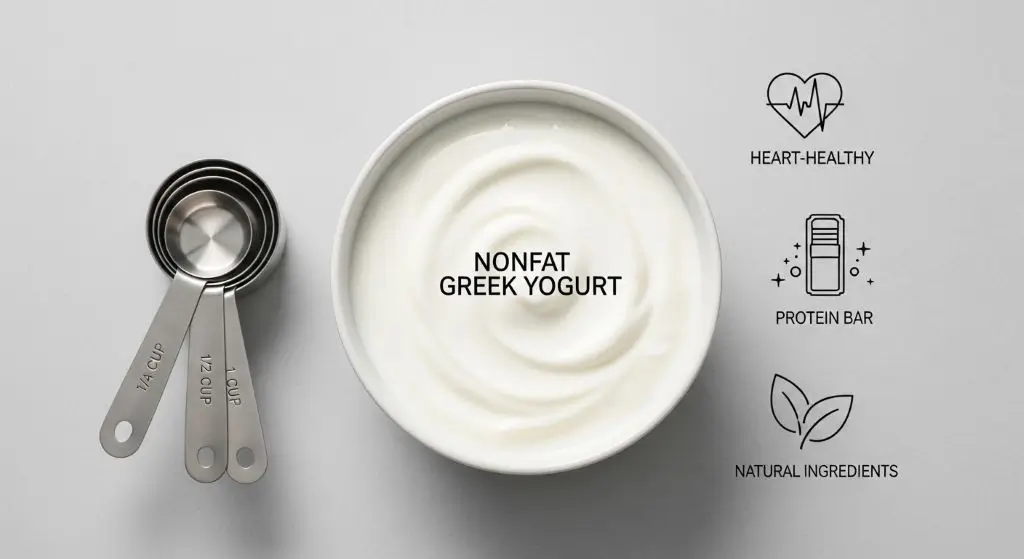
Who Nonfat Greek Yogurt Works Best For
Nonfat Greek yogurt fits well into certain eating patterns where its profile provides real benefits (nonfat Greek yogurt benefits). It is most effective when it supports your goals without creating frustration or hunger. Key groups include:
- Athletes or active individuals who need higher protein intake without extra calories.
- Calorie-conscious eaters tracking energy while still wanting a filling snack.
- Fans of lighter textures who prefer yogurt that blends easily into smoothies or meals without richness overwhelming flavors.
It also works well for simple, repeatable meals where fat isn’t essential for satisfaction. Its versatility allows it to serve as a base for nutrient-rich additions like fruit, nuts, or seeds. For those interested in optimizing protein intake, pairing nonfat Greek yogurt with other protein sources can amplify benefits.
The real advantage comes when nonfat Greek yogurt becomes a tool for consistency rather than restriction. People eat it regularly because it works for their taste, routine, and energy needs, not because it is automatically “better” than full-fat options.

When Daily Nonfat Greek Yogurt Can Backfire
Even healthy foods can have unintended effects if they don’t match your body’s needs. If you’re asking is nonfat Greek yogurt healthy every day, it depends on how your appetite and eating patterns respond. Potential backfire points include:
- Hunger rebound: Removing fat reduces natural satiety signals. You may feel hungry sooner than expected, leading to extra snacking between meals.
- Compensatory eating: Small calorie savings from nonfat yogurt can unintentionally prompt larger portions or additional snacks later in the day.
- Added sugar or flavoring: Many flavored nonfat yogurts compensate for missing fat with sweeteners. What starts as a low-calorie choice can quickly turn into a higher-sugar snack.
The takeaway: nonfat Greek yogurt works best when it fits your hunger cues and eating habits. Daily use is healthy only if it supports satisfaction, not just calorie counting. Paying attention to portion sizes, pairing it with protein- or fiber-rich toppings, and enjoying it consistently ensures it helps rather than hinders your routine.

Nonfat vs Full-Fat Greek Yogurt: The Real Trade-Off
Choosing between nonfat and full-fat Greek yogurt comes down to personal needs, appetite, and taste preferences. This comparison helps you see the trade-offs clearly, rather than relying on assumptions about fat content.
Key differences at a glance:
| Feature | Nonfat Greek Yogurt | Full-Fat Greek Yogurt |
| Calories | ~100 per 170g | ~150–160 per 170g |
| Fat | 0–0.5g | 4–5g |
| Satiety | Moderate, may leave you hungry sooner | Often more satisfying for longer periods |
| Nutrient absorption | Good for protein and calcium | Fat aids absorption of fat-soluble vitamins |
| Taste & texture | Tangier, lighter mouthfeel | Creamier, richer flavor |
If you want a broader comparison of how Greek yogurt stacks up nutritionally against traditional yogurt, this breakdown of Greek yogurt vs regular yogurt explains the key differences in protein, fat, and overall balance.
Some people perceive fat as a dietary villain, but it plays a functional role. Fat slows digestion, helps deliver fat-soluble nutrients, and contributes to a feeling of fullness. Those who enjoy full-fat yogurt often report stable energy for several hours, while nonfat eaters may notice hunger signals sooner.
Digestive comfort can also vary. Fat slows gastric emptying, which can steady blood sugar responses and reduce energy crashes. For a deeper look at how Greek yogurt compares in overall health impact and protein effects, see our full review on is Greek yogurt healthier or just higher in protein. If digestion or texture is an issue, full-fat Greek yogurt may feel too heavy in the morning, whereas nonfat yogurt is lighter and easier to handle.
Ultimately, nonfat vs full-fat Greek yogurt isn’t a hierarchy. It’s about matching yogurt characteristics to your physiology, appetite, and enjoyment. The best choice is the one you’ll eat consistently without frustration or overcompensation.

Is Nonfat Greek Yogurt Good for Weight Loss?
Nonfat Greek yogurt can support weight goals in some contexts, but it’s not a universal solution. Its effectiveness depends on how it fits into your overall eating pattern and satisfaction level.
When it can help:
- Fits a controlled calorie plan without triggering hunger rebound
- Provides high protein for a small volume, supporting muscle maintenance
- Works in simple, repeatable meals that keep energy steady
- Complements fiber or fruit additions to improve fullness
When it might not work:
- Hunger returns quickly due to lack of fat, leading to snacking
- Overcompensation later in the day with higher-calorie foods
- Reliance on flavored versions with added sugar
- Low enjoyment, making daily adherence difficult
In short, is nonfat Greek yogurt good for weight loss? It can be, but only when it fits your appetite, taste preferences, and daily routine. The real measure is consistency and satisfaction, not calorie stripping alone.
How to Decide Without Overthinking
Choosing whether nonfat Greek yogurt fits your routine doesn’t need to be complicated. Focus on simple, observable signals from your body and habits.
Decision rules for nonfat Greek yogurt daily use:
- Hunger check: If you’re hungry within 2–3 hours, consider pairing with fruit, nuts, or switching to a slightly higher-fat option.
- Portion awareness: If you finish containers easily and remain satisfied, nonfat works. If you compensate with extra snacks, it might not.
- Enjoyment factor: If eating the yogurt feels like a chore, flavor or texture tweaks won’t fix the underlying mismatch. Choose what you actually like.
- Consistency over perfection: The yogurt that fits your taste and schedule is more valuable than chasing the “perfect” fat content.
In essence, nonfat Greek yogurt daily use succeeds when it fits naturally into your meals, keeps you satisfied, and is enjoyable without requiring strict rules or constant adjustments.

Final Takeaway
So, is nonfat Greek yogurt healthy for daily use? The answer is cautiously positive. It can fit well into a balanced diet when it supports your appetite control, provides protein, and fits your taste preferences.
Key points to remember:
- Protein and nutrition: Nonfat Greek yogurt delivers high protein, calcium, and live cultures, making it a solid choice for those who enjoy it regularly.
- Not universally superior: Removing fat doesn’t automatically make yogurt healthier. Satisfaction, satiety, and consistency matter more than the label.
- When it works: Daily use is effective when the yogurt keeps you full, complements your meals, and doesn’t trigger compensatory eating or added sugars.
- Flexibility matters: Alternate with full-fat versions if needed, or pair with nutrient-dense toppings to balance texture, taste, and satiety.
The healthiest yogurt isn’t the one with the least fat; it’s the one you eat consistently, enjoy, and that supports your lifestyle. Nonfat Greek yogurt daily use can be part of this approach, but success depends on listening to your hunger signals and choosing what works for your routine, not just following a label.
FAQs About Is Nonfat Greek Yogurt Healthy
1. Is nonfat Greek yogurt healthy for daily use?
Nonfat Greek yogurt can be healthy daily if it fits your hunger patterns, protein needs, and taste preferences. Choosing plain varieties and pairing them with fruit, nuts, or other nutrient-dense additions helps maintain satisfaction.
2. How much protein does nonfat Greek yogurt provide?
A typical serving delivers 15–20 grams of protein, similar to full-fat Greek yogurt. This makes it a strong option for supporting muscle maintenance and satiety in a smaller calorie package.
3. Can nonfat Greek yogurt help with weight loss?
It can support weight goals when it keeps you satisfied, fits into a controlled calorie plan, and is part of consistent meals. It may not work well if hunger returns quickly or you compensate with high-calorie additions.
4. What are the main nonfat Greek yogurt benefits?
Key benefits include high protein content relative to calories, lower fat intake for those monitoring energy, and versatility in meals and snacks. It works best when it supports consistency rather than restriction.
5. Does nonfat Greek yogurt keep you full?
Protein helps with satiety, but the lack of fat may reduce fullness for some people. Pairing it with fiber-rich foods or a small fat source can improve appetite control.
6. How does nonfat Greek yogurt compare to full-fat yogurt?
Nonfat versions have fewer calories and no fat, but similar protein and calcium levels. Full-fat yogurt may provide longer-lasting satiety and improved nutrient absorption from fat-soluble vitamins.
7. Is flavored nonfat Greek yogurt as healthy as plain?
Flavored varieties often include added sugars, which can reduce the health advantages. Plain nonfat Greek yogurt with your own fruit or minimal sweetener is the better daily choice.
8. Who benefits most from eating nonfat Greek yogurt regularly?
Athletes in cutting phases, calorie-conscious eaters, and anyone preferring lighter textures tend to benefit most. It’s ideal for simple, repeatable meals that support routine without discomfort.