Introduction
You have probably heard that fiber matters. Everyone says it, but it rarely feels clear in real life. When you are standing in the kitchen at 7 AM or planning a quick lunch, it is not obvious which foods actually help or how to include them without changing your routine.
Most of the confusion comes from how fiber is usually explained in a very general way, without connecting it to actual meals. You do not need special ingredients or complicated recipes. You just need a clear idea of which everyday foods contain fiber and how they can fit into normal eating patterns.
This guide gives you a practical fiber rich foods list and shows how to use these foods in simple, real meals. No strict diet rules. No unfamiliar foods. Just practical options you can use every day without overthinking it.
Table of Contents
What Are Fiber Rich Foods
Fiber is found in plant-based foods your body cannot fully digest. You get it from fruits, vegetables, whole grains, beans, nuts, and seeds as highlighted by Mayo Clinic.
There are two main types:
- Soluble fiber dissolves in water and forms a gel. It’s found in foods like oats, beans, lentils, and apples, and helps slow digestion and keep you full longer.
- Insoluble fiber adds bulk and moves through your system more directly. You’ll find it in whole grains, brown rice, and vegetable skins, supporting regular digestion.
Most adults need around 25 to 30 grams of fiber per day, but many people fall short. Choosing whole, minimally processed foods instead of refined options is the simplest way to increase fiber intake naturally.
Fiber content values in common foods are based on data from USDA FoodData Central
Why Fiber Matters in Everyday Meals
Fiber changes how your meals feel and how long they keep you satisfied. Instead of feeling hungry soon after eating, meals with fiber tend to keep you full for longer, especially when combined with protein, which helps improve overall meal satisfaction, more on why protein and fiber keep you full.
Spreading foods high in fiber for daily diet across your day works better than adding a large amount in one meal. Your body handles it more comfortably, and your meals feel more balanced overall.
What this looks like in real life:
- Morning: Oatmeal with berries keeps you satisfied until lunch, not mid-morning
- Afternoon: An apple with almond butter helps you stay steady through the afternoon
- Evening: Adding beans or vegetables to dinner makes the meal more filling and satisfying
You do not need to change your entire routine. Small additions across the day can make meals feel more complete and easier to stick with. This is important because many people still fall short of daily fiber intake, as noted by Harvard T.H. Chan School of Public Health.
Fiber Rich Foods List You Can Actually Add to Meals
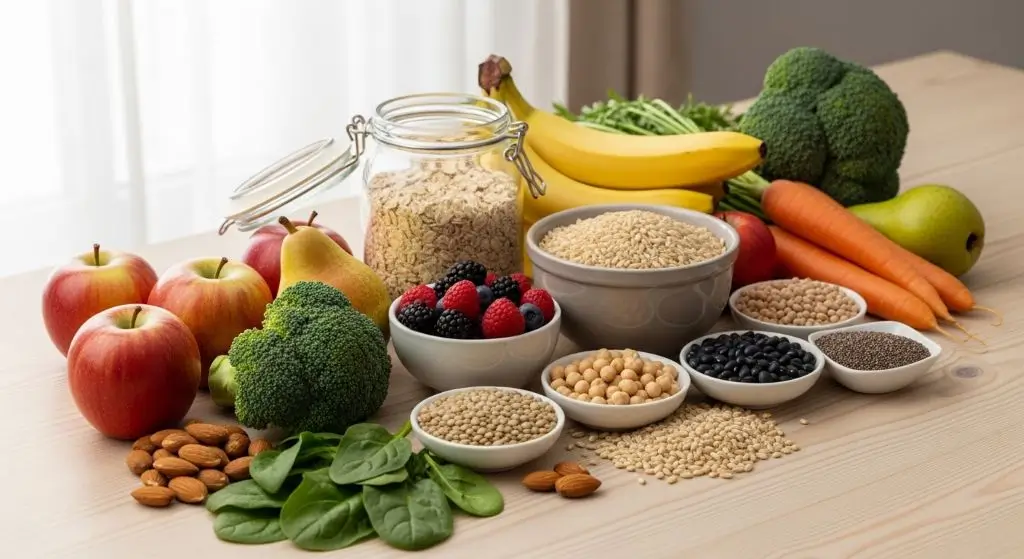
This is where things get practical. Not a long list to scroll through and forget, but real foods you can use in meals you already eat. You don’t need new recipes or complicated prep. These are simple ingredients that fit into your normal routine and make your meals more filling and balanced.
Fruits You Can Add Without Changing Your Routine
- Apples sit at the top of this list for good reason. You can grab one on your way out the door. Slice one into your oatmeal. Pack one for your afternoon snack. The skin contains most of the fiber, so do not peel it.
- Bananas work as breakfast toppings or quick snacks. Slice a banana over your cereal. Mash one into pancake batter. Eat one before your workout. They travel well and need zero preparation.
- Pears make excellent evening snacks. They taste sweet and contain plenty of fiber in the skin. Eat one while you watch TV instead of reaching for chips.
- Berries mix easily into yogurt or oats. Strawberries, raspberries, blueberries. All of them work. Toss a handful into your morning routine without planning anything fancy.
Vegetables That Fit Into Normal Meals
- Carrots crunch well as snacks or side dishes. Cut them into sticks for your lunchbox. Roast them with dinner. Shred them into rice dishes for extra texture.
- Broccoli fits into rice bowls or dinner mixes. Steam it. Roast it. Stir it into fried rice. You can buy it frozen and keep it ready anytime.
- Spinach slides into eggs or cooked meals. Throw a handful into your morning scramble. Mix it into pasta. It wilts down small but adds real fiber.
- Peas work in curries or rice dishes. Keep frozen peas on hand. Toss them into almost any hot dish at the last minute. They add sweetness and fiber without changing your meal completely.
Whole Grains That Replace Regular Staples
- Oats serve as breakfast base. Not just for oatmeal. Blend them into smoothies. Use them in homemade granola. Soak them overnight for cold breakfast.
- Brown rice swaps directly for white rice. Use it in fried rice. Serve it with curry. The texture differs slightly, but your meals stay familiar.
- Whole wheat bread upgrades your sandwiches. Switch your regular toast. Make your grilled cheese with it. Small change, real difference.
- Barley works in soups or warm meals. Add it to vegetable soup. Use it instead of rice in pilafs. It fills you up and adds chewy texture.
Beans and Lentils for Everyday Meals
- Lentils cook into dal or soups. They take about twenty minutes. Add spices you already like. Serve over rice. One of the easiest foods high in fiber for daily diet you can find.
- Chickpeas work in salads or curries. Roast them for crunchy snacks. Blend them into hummus. Toss them into any vegetable curry.
- Black beans fit into wraps or mixed meals. Mash them for tacos. Add them to rice bowls. Mix into scrambled eggs. They carry flavor well and add substance.
Nuts and Seeds as Easy Add-ons
- Almonds work as snacks or breakfast additions. Grab a small handful. Chop them over your cereal. Blend them into smoothies.
- Chia seeds mix into yogurt or smoothies. They absorb liquid and create pudding texture. Sprinkle a tablespoon into anything.
Flax seeds grind up easily and can be sprinkled on meals. If you want to understand their role in daily eating, more on flaxseed benefits for daily diet.
Easy Ways to Add More Fiber Without Changing Your Diet
You do not need a new diet. You need small additions. Here is how to add more fiber to meals without stress.
- Add one fruit daily without planning. Just pick one. Any fruit. Eat it with breakfast or as your afternoon snack. Apple. Banana. Orange. Whatever you grab at the store.
- Mix vegetables into normal meals. Shred zucchini into pasta sauce. Add spinach to eggs. Toss extra vegetables into frozen pizza before baking. You barely notice them, but your fiber intake rises.
- Swap refined grains with whole grains. Choose brown rice instead of white sometimes. Pick whole wheat bread for your next loaf. Switch to whole grain pasta. Your meals stay the same, but the fiber content jumps.
- Add seeds to breakfast or snacks. Keep chia seeds or ground flax on your counter. Sprinkle a spoonful onto whatever you are eating. Yogurt. Oatmeal. Smoothies. It takes ten seconds.
- Include one bean-based meal per day. Lunch or dinner. Lentil soup. Bean chili. Chickpea curry. Hummus wrap. Beans cost little and deliver plenty of fiber.
These are easy ways to eat more fiber using foods you already have.
Fiber Rich Foods for Breakfast
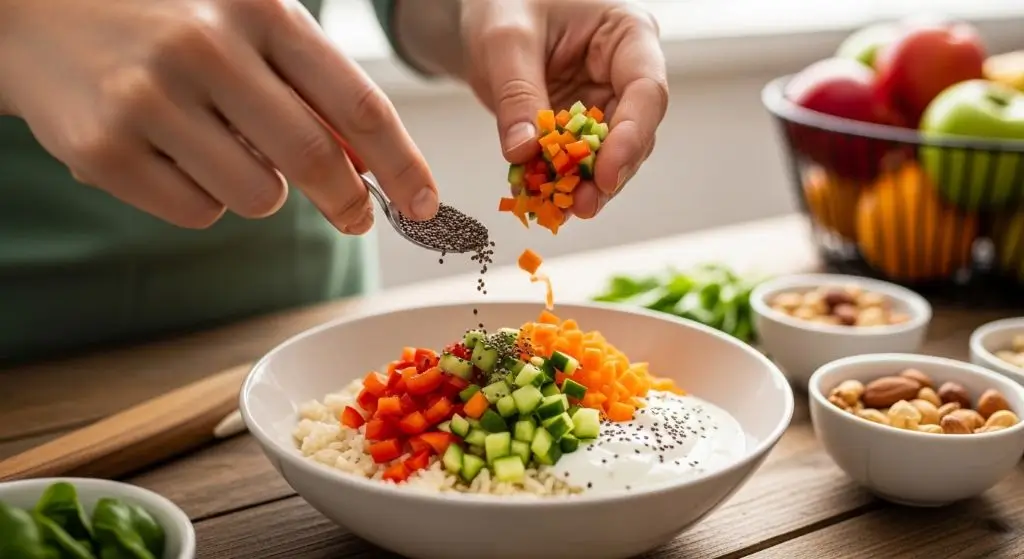
Morning meals set your day up. If you want to improve both fullness and balance, it helps to understand how to build a more complete meal, especially if you’re working on how to build a high protein breakfast. Here are fiber rich foods for breakfast that require minimal effort.
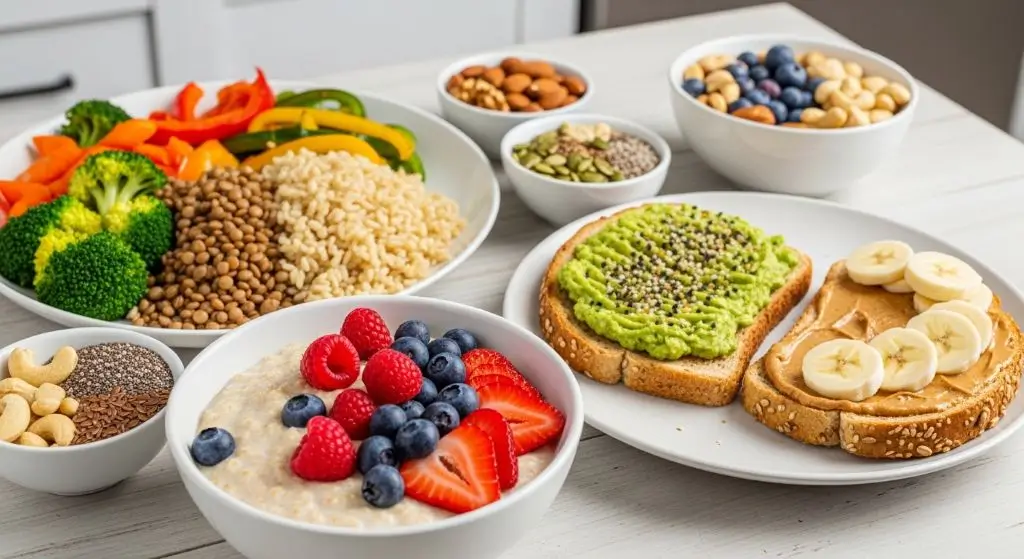
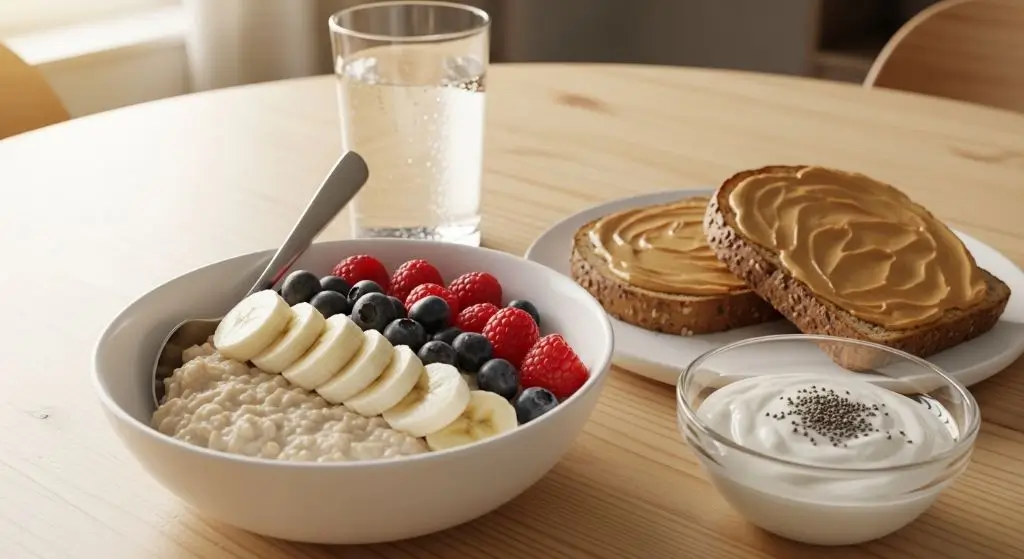
- Oats plus fruit combo. Cook oatmeal. Top with sliced banana and berries. Add chia seeds. Takes five minutes. Keeps you full until lunch.
- Whole grain toast with peanut butter. Simple. Familiar. Satisfying. The whole grain bread provides fiber. The peanut butter adds more plus protein.
- Yogurt with chia seeds. Stir a tablespoon of chia into your yogurt. Let it sit five minutes. The seeds swell and create texture. Add fruit if you want.
Simple High Fiber Meal Ideas
Sometimes you want complete meal ideas. Here are simple high fiber meal ideas using foods from this list.
- Breakfast: Oats cooked with milk. Top with sliced pear and almonds. Sprinkle flax seeds on top. Warm, filling, done in ten minutes.
- Lunch: Brown rice bowl with lentils and roasted carrots. Add spinach. Season with whatever spices you like. Make extra rice and lentils on Sunday. Assemble quickly during the week.
- Dinner: Barley soup with broccoli and chickpeas. Add peas near the end. Serve with whole wheat bread. Comfort food that delivers real nutrition.
Common Mistakes When Adding Fiber
People mess this up sometimes. Here is what to avoid.
- Increasing fiber too quickly. Your digestive system needs time to adjust. Add one new high fiber food per week. Let your body adapt. Rush it and you will feel uncomfortable.
- Not drinking enough water. Fiber needs fluid to work properly. Drink water throughout the day. Keep a bottle nearby. This simple step prevents problems.
- Thinking only superfoods count. You do not need goji berries or expensive supplements. Regular apples. Normal oats. Standard beans. These provide plenty of fiber. Do not let marketing confuse you.
- Relying only on supplements. Fiber powder works in emergencies. Real food provides vitamins, minerals, and satisfaction that powder cannot match. Use food first.
- Ignoring vegetables. People focus on grains and forget about vegetables. Vegetables provide fiber with fewer calories. Make them half your plate when you can.
Conclusion
Fiber does not require a complicated approach. This fiber rich foods list shows which everyday foods provide it and how to include them in regular meals.
Small changes are enough. Adding fruit to breakfast, choosing whole grains, or including beans in meals can gradually increase your intake. Over time, these additions make meals more filling and balanced without changing your overall routine. If you want to build on this, start by improving one meal at a time. A simple breakfast or a balanced plate can make the rest of your day easier to manage.
FAQs: Fiber Rich Foods List
Q1: What are the best fiber rich foods to eat daily?
Some of the easiest fiber rich foods to include daily are fruits like apples and pears, vegetables like broccoli and carrots, whole grains like oats and brown rice, and legumes like lentils and chickpeas. These foods fit naturally into regular meals without requiring major changes.
Q2: How can I add more fiber to my meals without changing my diet?
Start with small additions. Add a fruit to breakfast, mix vegetables into lunch or dinner, and swap refined grains with whole grains. These simple changes help increase fiber intake without needing new recipes.
Q3: What are good fiber rich foods for breakfast?
Oats with fruit, whole grain toast with peanut butter, and yogurt with seeds are simple options. These meals are quick to prepare and help you stay full longer through the morning.
Q4: How much fiber do I need each day?
Most adults need around 25 to 30 grams of fiber per day. Instead of trying to reach it in one meal, it works better to spread fiber-rich foods across your day.
Q5: Can I get enough fiber from regular foods?
Yes, you can meet your fiber needs through everyday foods like fruits, vegetables, grains, and beans. There is no need to rely on supplements if your meals include a variety of these foods.
Q6: What happens if I increase fiber too quickly?
Increasing fiber too fast can make you feel uncomfortable. It is better to add fiber gradually and drink enough water so your body can adjust.
Q7: Are fiber supplements better than food?
Whole foods are usually the better option because they also provide vitamins, minerals, and help make meals more filling. Supplements can help in specific situations, but they should not replace real food.
Q8: Do protein and fiber work together in meals?
Yes, combining protein and fiber in meals can help you feel more satisfied and stay full longer. That is why meals with both tend to be easier to manage throughout the day.
Food & Nutrition Writer at PureHealthBites

Nadeem Sharif is the voice behind PureHealthBites, a blog focused on simple nutrition and everyday food choices. With hands-on experience experimenting with ingredients and meals, he shares practical, gut-friendly ideas to help readers eat well, feel better, and build healthier habits for real life.
Connect With Nadeem