
Introduction
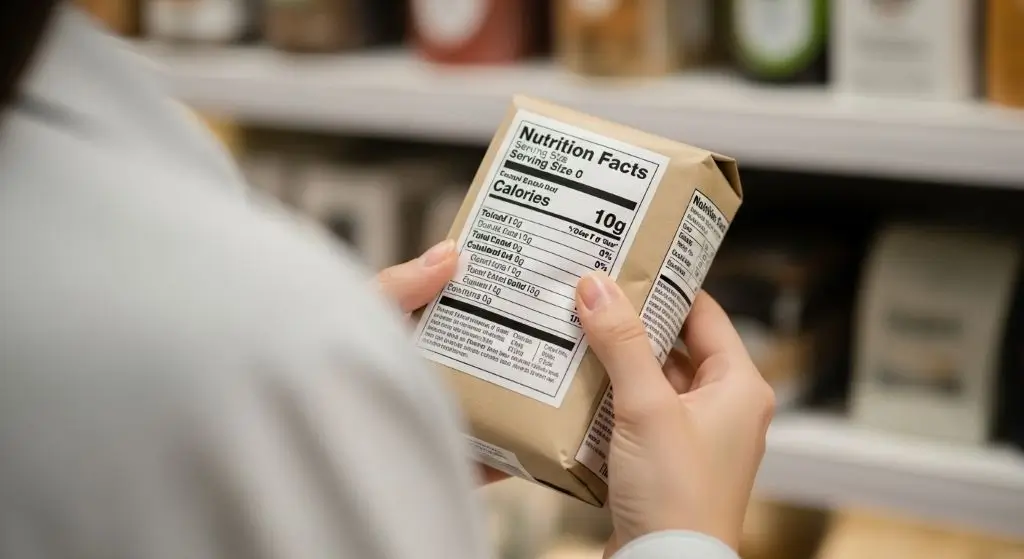
You’re standing in the snack aisle. A bag of granola looks healthy at first glance. You turn it around and suddenly it’s a wall of numbers, percentages, and unfamiliar words.
Learning how to read nutrition labels sounds simple, but in that moment, it feels anything but.
14 grams of sugar, but it says “natural.”
3% of your daily calcium, but 15% saturated fat.
You put it back. Pick up another one. Same story. A few minutes later, you’re just grabbing a banana and moving on.
This is how most people experience nutrition labels. They’re meant to help you choose better food, but they often do the opposite. Too many numbers compete for attention at the same time. Marketing words like “lite” or “fortified” create more confusion than clarity. And the more you try to make sense of everything, the easier it is to freeze.
Here’s what actually matters. You don’t need to decode every line or memorize nutrition science. You just need a simple way to read the parts that actually change your decision.
This guide breaks it down into a few clear signals so you can look at any label, understand it quickly, and move on without second-guessing yourself.
Table of Contents
Why Nutrition Labels Feel Confusing (And How to Simplify Them)
The first problem is the layout. Numbers jump out at you from every angle. Percentages sit next to milligrams. There is even a full chart for vitamins you probably do not think about day to day. Your brain tries to process it all at once because you want to make the “right” choice. That is where the stress starts.
Then there is the marketing. The front of the box shouts “High Protein!” or “Made with Whole Grains!” But the back often tells a different story. It starts to feel like you need extra effort just to figure out what is actually inside.
Most people end up checking everything. Calories, fat, carbs, sodium, ingredients, even organic labels. Trying to process everything at once is what creates the confusion. By the time they reach checkout, they are mentally drained.
Here is the shift that helps. The label is a tool, not a test. You only need a few signals that matter for your decision in that moment. Once you understand how to read nutrition labels, it becomes much easier to filter what matters. You are not chasing perfection, just clarity.

How to Read Nutrition Labels (Step-by-Step Without Overthinking)
This is the core of how to read nutrition labels and how to understand nutrition labels without losing your mind. Follow these 7 simple steps in order. You don’t need to memorize everything, just follow the flow.
1. Start With Serving Size
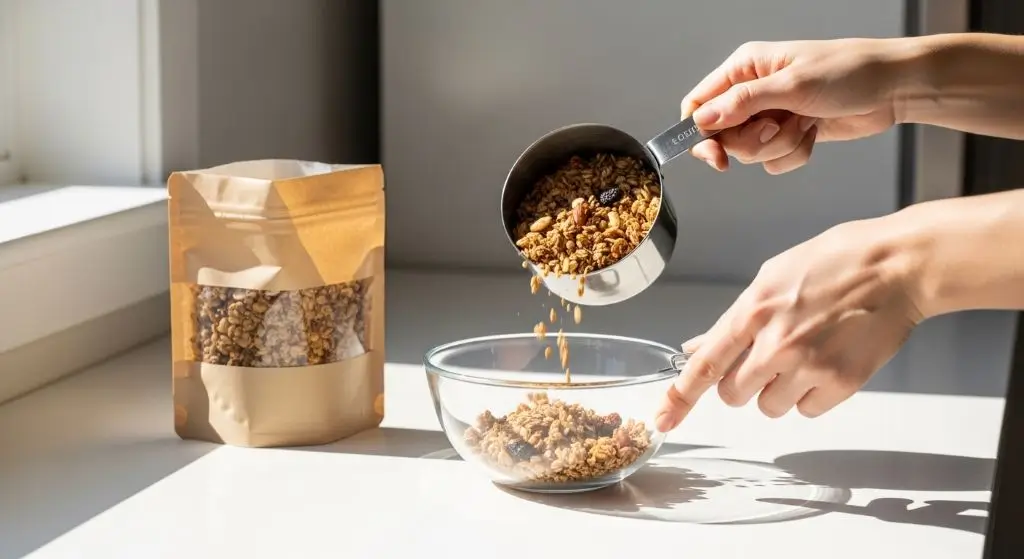
This is where almost everyone messes up. The serving size sits at the very top of the label, but most people skip straight to calories. That’s the mistake. Everything else depends on this number.
A package might look like one snack, but the label could show three servings. The FDA explains that serving sizes reflect what people typically eat, not what they should eat, so always check this first.
That means you need to multiply everything if you eat the whole pack. A small bag of chips might show 150 calories per serving, but if it has three servings, that becomes 450 calories.
Look at the serving size first. Ask yourself if you will actually eat that amount. Sometimes a serving is half a cup and you know you pour a full cup. Just adjust the numbers in your head right away. This one step changes everything else you read.
2. Check Calories for Context, Not Fear
Calories are not evil. They are just energy. The number on the label helps you understand how much this food contributes to your day. That is all.
If you are grabbing a small mid-morning snack, 200 calories might be reasonable. If you are looking at a side dish for lunch, 500 calories might be heavy. Do not avoid calories. Just use them to gauge whether this portion matches your hunger and your day.
3. Scan Added Sugar, Not Just Total Carbs
Total carbohydrates include fiber, sugar, and starch. That number alone does not tell you much. Look directly at “Added Sugars.” This is where you quickly spot heavily processed foods.
Harvard’s Nutrition Source points out a simple rule: 4 grams of sugar equals 1 teaspoon. So a product with 16 grams of added sugar is basically 4 teaspoons of sugar in one serving.
A flavored yogurt might have 24 grams of total carbs. That sounds okay until you see 18 grams are added sugar.
Plain yogurt with fruit might have the same total carbs but only 7 grams of sugar, which changes how long it keeps you full and how soon hunger returns.
You are really just looking for sugar that got added during processing.
4. Look at Protein and Fiber Together
These two nutrients keep you full. They slow digestion. They help you feel satisfied. When you see a decent amount of both on a label, you are usually looking at something that will actually satisfy you.
A good rule of thumb is to look for at least 3 grams of fiber or protein per serving. If a snack has both, even better. This combo helps you avoid the empty hunger that comes ten minutes after eating something sugary and processed.
5. Ignore the Noise (Percentages, Micronutrients for now)
Those percentages on the right side are based on a 2,000 calorie diet. You might eat 1,600. You might eat 2,400. They are just rough estimates. If you are just starting out, do not get stuck on whether something has 10% or 15% of your daily iron.
Same with the vitamin section at the bottom. It is useful, but it rarely drives a quick food decision. Pay attention to the few numbers that actually impact your choice right now. You can come back to the smaller details later once the basics feel easy.
6. Quick Label Reading Rule (10-Second Method)
If you are in a hurry, this is your fastest way to read any nutrition label without overthinking. This is basically what to look for on nutrition labels when you need a quick decision in seconds.
Just run through this quick scan before you decide what to buy:
- Check the serving size so you know what you are actually eating
- Look at added sugar to quickly spot heavily processed options
- Scan for protein or fiber to see if it will keep you full
- Read the first three ingredients to understand what the product is mostly made of
That is all you need for a quick decision. It keeps things simple and helps you choose better without getting stuck in details.
According to the Mayo Clinic, a practical way to read labels is to start with serving size, then check calories for context, and finally scan the percent daily values to compare products quickly.
7. Nutrition Panel vs Ingredients List
The nutrition panel shows quantity. The ingredients list show quality. Both matters.
A juice may show zero added sugar on the panel, but the ingredients list might include apple juice concentrate, grape juice concentrate, and pear juice. That is still sugar, just from fruit sources.
The panel can look clean, but the ingredients list often tells the fuller story.
Nutrition Label Explained in Real Food (Simple Examples)
Let us put this into practice. Here is a nutrition label explained through foods you actually buy.
Flavored Yogurt vs Plain Yogurt
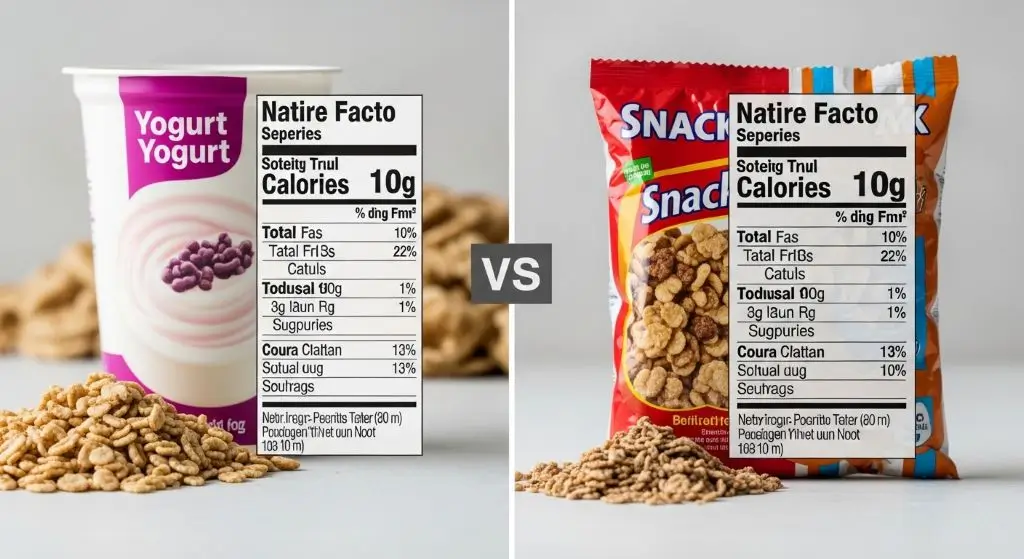
The vanilla yogurt shows 140 calories. The plain shows 110. At first glance, they look similar. But look at the sugar. The vanilla has 19 grams. The plain has 7 grams. That’s a 12-gram gap, about three teaspoons of sugar.
The plain yogurt gives you protein and calcium without the sugar spike. Add your own berries and you control the sweetness.
Packaged Snack vs Whole Food Option
A granola bar often looks healthy with whole grains and fiber. It has around 200 calories, 9 grams of sugar, and 3 grams of fiber. Not terrible on paper.
But compare that to an apple with a small handful of almonds. Similar calories, less sugar, more fiber, and more natural nutrients.
This is where labels can be misleading. The bar seems like a good choice until you compare it to food without a label.
Breakfast Cereal Comparison
One cereal claim to be “heart healthy” with whole grains. It has 210 calories per serving and 11 grams of added sugar.
Another plain cereal has 150 calories and just 1 gram of sugar.
The first one tastes sweeter because it’s closer to dessert. The second keeps you steady until lunch.
This is where labels help you see through marketing and compare what actually matters.
How to Understand Nutrition Labels Without Getting Stuck
Here is the mindset part. Learning how to read nutrition labels for healthy eating isn’t about getting everything perfect. Some days you’ll grab a packaged cookie because you want it. That’s fine. The label doesn’t judge you. It just gives you information.
You don’t need perfect choices every time. Aim for awareness. When you understand how to read nutrition labels in real life, your choices naturally improve. Maybe you still eat the cookie, but stop at one after seeing the sugar content. Maybe you pick crackers with real seeds instead of ones with coloring. Small shifts add up.
Think in patterns, not single products. If most of your packaged foods have short ingredient lists and reasonable sugar, you’re doing well. One item won’t make or break your health. Consistency matters more than perfection.
Food Labels Nutritional Information and Ingredients (What Matters Most)
To understand food labels nutritional information and ingredients, you need to look at both sides of the package. The numbers tell one story. The ingredients tell another.
Ingredient List Trick
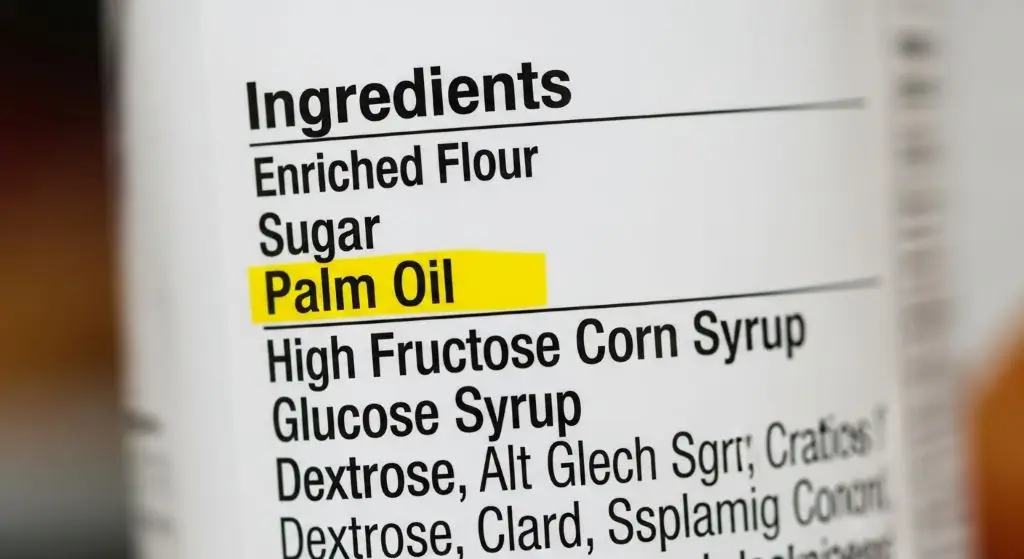
Ingredients are listed in order by weight. The first three usually make up most of what you’re eating.
If you see sugar, refined flour, or hydrogenated oils in those first three spots, that’s a clear sign it’s more of a treat than a staple.
Long ingredient lists often mean more processing. If a simple cracker needs twenty ingredients, it’s usually not just basic food anymore.
Watch for Hidden Sugar Names
Sugar shows up under many names. Look for syrups, words ending in “ose,” and anything labeled as “concentrate.”
Examples include cane juice, maltose, dextrose, and brown rice syrup.
You don’t need to memorize them all. Just know this: if sweeteners appear multiple times in the list, the product is likely heavily sweetened.
Common Mistakes When Reading Nutrition Labels
People make the same mistakes over and over. Watch out for these.
- Ignoring serving size. We’ve already covered it, but it’s worth repeating. If you miss this, the rest of the label can mislead you.
- Over-focusing on calories only. A 100-calorie cookie pack is still a cookie. A higher-calorie handful of nuts actually gives you nutrients. The number alone doesn’t tell the full story.
- Trusting front-of-package claims. “Low-fat” can mean more sugar. “High-protein” can still mean heavy processing. Always verify on the back.
- Trying to read everything perfectly. You won’t catch everything every time. That’s normal. Keep it simple and move on.
- Comparing products, the wrong way. Don’t compare dry weights or serving sizes blindly. Compare based on how you actually eat it, not what the label assumes.
Simple Ways to Use Nutrition Labels in Daily Life
Make it practical. Here’s how to use these skills when you’re busy.
- Grocery shopping quick scan. Give yourself ten seconds per item. Check serving size, added sugar, and the first three ingredients. If it looks fine, move on.
- Comparing two similar products. Hold them side by side. Check which has less added sugar and more fiber. Pick that one.
- Choosing better snacks. Keep that mental checklist handy. If you need something at 3 PM, grab the option with protein and fiber. You will not need another snack at 4 PM, especially when you start choosing better snack swaps.
- Building balanced meals from packaged foods. Not everything comes fresh. Canned beans, frozen vegetables, and packaged grains can still be good options. Use the label to pick low-salt beans, plain vegetables, and whole grain versions without added sauces.
Conclusion
You don’t need to analyze every line on a nutrition label or track every milligram of sodium or percentage of vitamin A.
Once you learn how to read nutrition labels in a simple, consistent way, everything gets easier. Focus on a few key signals instead. Check the serving size so you know what you are actually eating. Watch the added sugar so you avoid hidden sweetness. Look for protein and fiber so you stay full. Glance at the ingredients to see how processed the food really is.
Small awareness leads to better decisions over time. As this becomes a habit, label reading gets faster and more natural in everyday shopping. You’ll start picking food with more confidence and less confusion, and what you bring home will simply fit your life better.
FAQs: How to Read Nutrition Labels
Q1: What is the first thing to check on a nutrition label?
Start with the serving size. Everything else on the label depends on it. If you eat more than one serving, you need to multiply all the numbers.
Q2: How do you read nutrition labels for healthy eating?
Keep it simple. Check the serving size, look at added sugar, and scan for protein or fiber. Then glance at the ingredients list to see what the food is mostly made of.
Q3: What should I avoid on nutrition labels?
Watch for high added sugar, long ingredient lists, and products where sugar or refined flour shows up in the first few ingredients. These are usually more processed options.
Q4: Are calories the most important part of a nutrition label?
No. Calories give you context, but they do not tell the full story. A food with more calories can still be more filling and nutritious if it has protein, fiber, and better ingredients.
Q5: What does “added sugar” mean on a nutrition label?
Added sugar is sugar that is put into the food during processing. It is different from natural sugar found in foods like fruit or milk.
Q6: How can I quickly read a nutrition label while shopping?
Use a quick scan. Check serving size, added sugar, protein or fiber, and the first three ingredients. This takes about 10 seconds and helps you make a fast decision.
Q7: Why are ingredient lists important on food labels?
The ingredient list shows the quality of the food. Ingredients are listed by weight, so the first few items make up most of what you are eating.
Q8: What do the daily value percentages mean?
They are based on a standard 2,000 calorie diet. They can help compare products, but they are not exact for everyone, so do not rely on them too much.
Q9: Is a long ingredient list always bad?
Not always, but it often means the food is more processed. Simple foods usually have shorter, more recognizable ingredient lists.
Q10: Can I trust claims like “low-fat” or “high-protein” on packaging?
Not completely. These are marketing terms. Always check the nutrition label and ingredients list to see the full picture.
Food & Nutrition Writer at PureHealthBites

Nadeem Sharif is the voice behind PureHealthBites, a blog focused on simple nutrition and everyday food choices. With hands-on experience experimenting with ingredients and meals, he shares practical, gut-friendly ideas to help readers eat well, feel better, and build healthier habits for real life.
Connect With Nadeem