By Nadeem Sharif | Reviewed April 6, 2026 |
Medical Disclaimer: This article is for informational purposes only and does not replace professional medical advice. See our full disclaimer.
Introduction
You finish a meal and feel fine at first. But an hour or two later, hunger starts creeping back. This is a common problem. Many people think the solution is eating more. In reality, it’s about what your meal is made of.
That’s where protein and fiber come in. If you’ve ever wondered why protein and fiber keep you full, it comes down to how they work together in your body.
When combined properly, they help meals last longer without needing larger portions. This article breaks down how they work and how to build meals that actually keep you satisfied.
Table of Contents
Why Protein and Fiber Keep You Full
Protein and fiber support fullness in different ways. Protein slows digestion, while fiber adds volume and helps meals feel more satisfying. When combined, they help release energy more steadily, so you don’t feel hungry again too quickly.
This is why meals built with both tend to feel more filling and easier to sustain between eating times.
This explains why protein and fiber keep you full compared to meals that are mostly refined carbs.
Protein helps your meals feel more filling because it digests more slowly than quick, refined carbs. This slower process means food stays satisfying for longer, instead of leaving you hungry again soon after eating.
Think about eating two eggs for breakfast versus two slices of toast with jam. The toast might taste great, but hunger often returns by mid-morning. The eggs tend to keep you going until lunch. That’s a simple example of how protein keeps you full.
The same applies to yogurt compared to sugary cereal. A bowl of cereal digests quickly and doesn’t hold you for long. A thicker option like yogurt with fruit tends to last longer because it includes more protein and structure.
Meals with enough protein also help steady your energy, so you’re less likely to feel sudden hunger or reach for quick snacks between meals.
How Fiber Keeps You Full
Fiber is the part of plant foods your body doesn’t fully break down. Instead of being digested quickly, it moves more slowly through your system, which helps your meals feel more filling.
It adds volume to your food and supports a steadier release of energy, so you’re less likely to feel hungry again soon after eating. Research also shows that fiber can slow digestion and help you stay satisfied longer, especially when it forms a gel-like texture in the stomach. That’s the basic idea behind how fiber keeps you full.
Oats are a simple example. Compared to more refined options, they tend to keep you satisfied longer because they absorb water and take more time to move through your system.
Fruits work the same way. An apple is usually more filling than apple juice because it still contains the fiber. The juice has the sugar, but not the structure that slows things down. Seeds like chia or flax also help by absorbing liquid and adding texture to your meal.
Foods like vegetables, beans, and whole grains all contribute in the same way. These types of foods are consistently linked to better fullness and appetite control when included regularly in meals. They add substance to your meals and help you stay satisfied between eating times.
Why Protein and Fiber Work Better Together
Protein and fiber are both helpful on their own, but they work better when combined in the same meal. Protein helps slow digestion, while fiber adds volume and keeps your stomach feeling satisfied. When you eat them together, meals tend to last longer and feel more balanced.
Think of a simple meal like chicken with vegetables. The chicken provides protein, and the vegetables add fiber. Together, they create a meal that feels more complete and satisfying than either one alone.
If you eat only protein, the meal may feel heavy but not fully satisfying for long. If you eat only fiber-rich foods, you may feel full at first but get hungry again sooner.
Combining both helps your meals feel steady and more sustaining, which makes it easier to go longer without thinking about food.
This is a big part of why protein and fiber keep you full compared to meals that rely on just one.

High Protein High Fiber Foods That Keep You Full
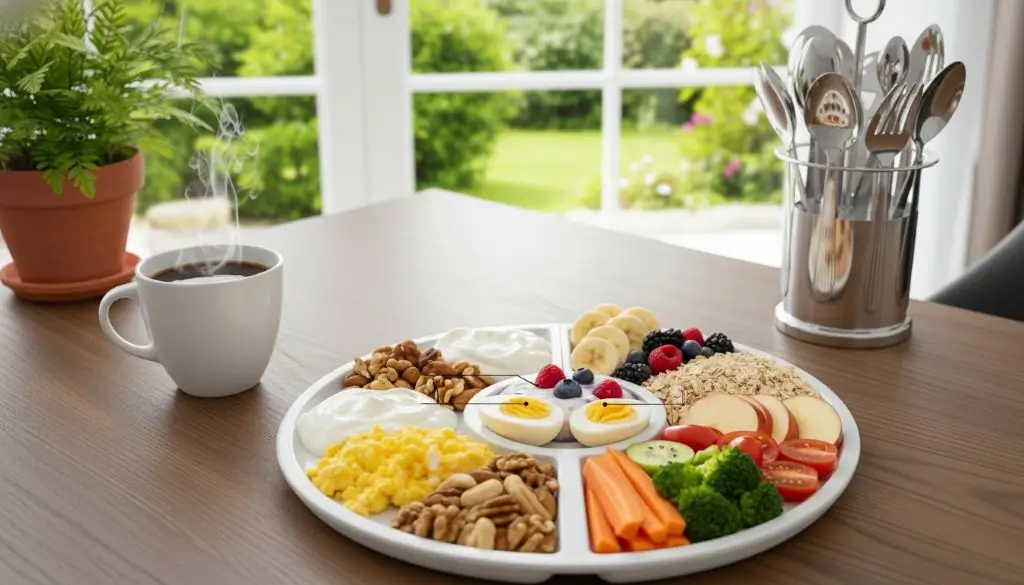
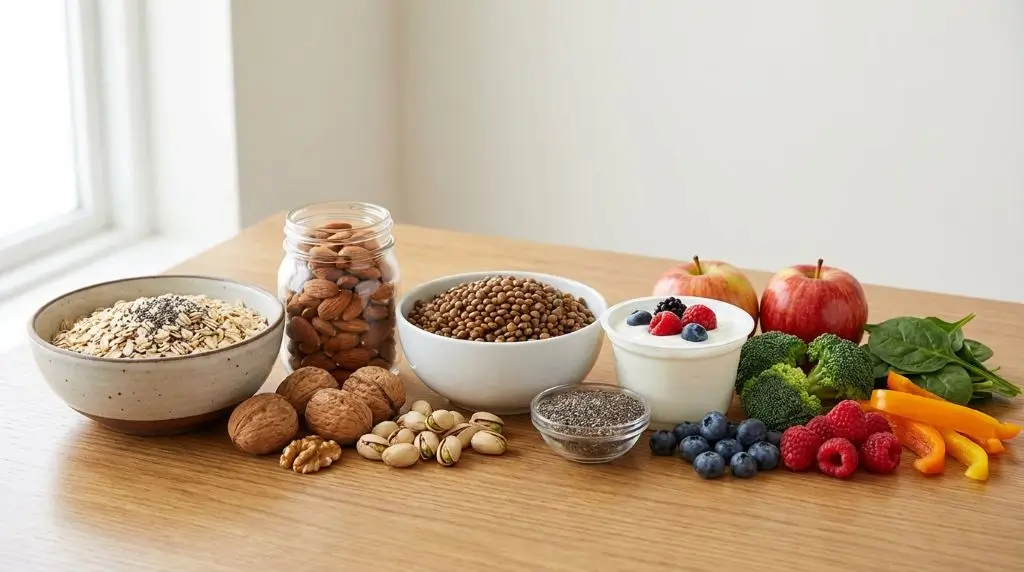
You don’t need complicated recipes to build filling meals. You just need foods that naturally combine protein and fiber. Here are some simple options that work well in everyday meals.
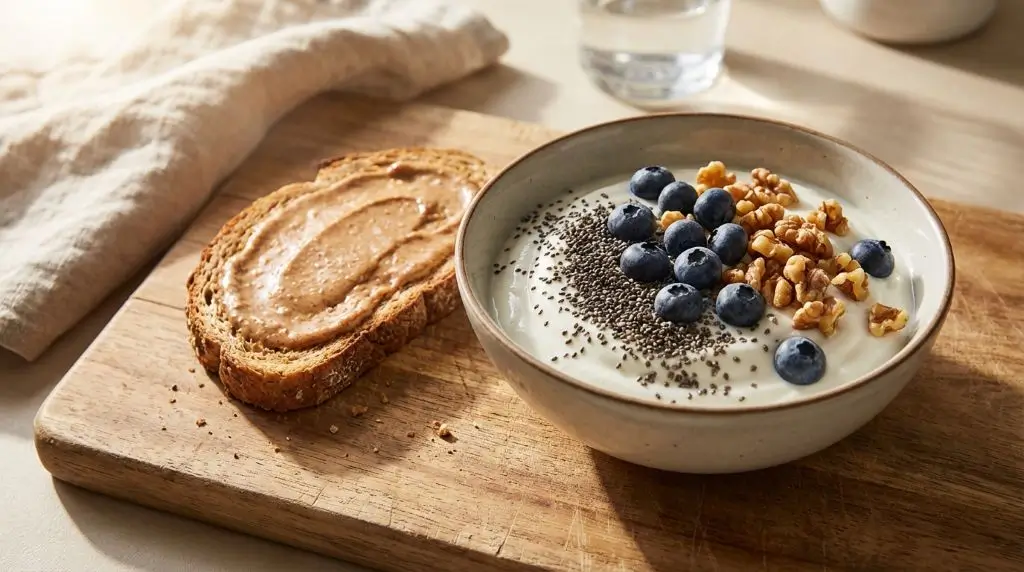
Greek yogurt with chia seeds is a simple, effective combination. If you’re unsure which seeds to use, this breakdown of flaxseed vs chia seeds can help you choose based on your needs. The yogurt provides protein, while the seeds add fiber and texture, making the meal more satisfying.
Eggs with whole grain toast are another easy option. The eggs help the meal last longer, while the whole grain bread adds fiber that keeps you steady. Adding vegetables like spinach or tomatoes can make it even more filling.
Oats with nuts work well for breakfast. Oats provide fiber, and nuts add protein along with some healthy fats. This combination tends to keep you going through the morning.
Lentils with vegetables are a practical choice for lunch or dinner. Lentils naturally contain both protein and fiber, and adding vegetables increases the overall volume of the meal.
Other options like beans, quinoa, and even popcorn can also fit into this pattern. The goal is to combine foods in a way that supports longer-lasting fullness, rather than relying on just one nutrient.
How to Stay Full Longer After Eating
Choosing the right foods matters, but how you put your meals together matters just as much. Here are a few simple ways to stay full longer after eating without overcomplicating your meals.
Build Balanced Meals
Don’t rely on just one nutrient. Combine protein and fiber in the same meal. A simple way to do this is to include a portion of protein, add fruits or vegetables for fiber, and include some whole-food carbs if needed. This kind of balance helps meals feel more complete and satisfying.
If you want a practical starting point, you can also look at how to build a high protein breakfast using the same approach.
Avoid Quick-Digesting Meals
Meals built around sugary foods and refined carbs tend to pass through your system quickly. This can leave you feeling hungry again sooner than expected.
Choosing more whole, less processed foods helps your meals last longer and keeps your energy more steady.
Don’t Skip Portions
Eating too little can lead to early hunger, even if your meal includes protein and fiber.
Make sure your portion is enough to carry you through to your next meal. Using simple visual guides, like your hand, can help you keep portions balanced without overthinking it.
Eat at a Steady Pace
Eating too quickly can make it harder to recognize when you’re full. Your body needs time to register that you’ve eaten.
Slowing down, chewing properly, and taking short pauses during meals can help you feel satisfied without needing extra food.
What a Simple Protein and Fiber Diet Looks Like
You don’t need a strict meal plan or detailed tracking. A protein and fiber diet is simply a way of building meals with a better balance. General dietary guidelines also recommend including a variety of protein foods as part of a balanced eating pattern. It’s about structure, not rules.
For breakfast, something like yogurt with fruit and seeds works well. It’s quick to prepare and combines both protein and fiber in a simple way.
Lunch can be as straightforward as rice with lentils and vegetables. Preparing lentils in advance makes it easy to put meals together during the week without much effort.
Snacks also make a difference. Instead of relying on highly processed options, pairing foods like nuts with fruit or cheese with whole grain crackers can help you stay more satisfied between meals.
Dinner follows the same pattern. Meals like chicken with vegetables, fish with beans, or tofu with grains all bring together protein and fiber in a balanced way.
This approach doesn’t feel restrictive. It’s simply a more thoughtful way of putting meals together so they keep you going for longer.
Common Mistakes That Reduce Fullness
There are a few common patterns that make meals less satisfying than they could be.
One is relying on protein without enough fiber. A meal like steak on its own may feel filling at first, but adding vegetables or whole foods can make it more balanced and longer-lasting.
Another is eating fiber without protein. A large salad without beans, eggs, or another protein source may have volume, but it often doesn’t keep you satisfied for long.
Added sugars can also reduce how filling a meal feels. Even foods that seem healthy, like yogurt with granola, can become less satisfying if they include a lot of extra sugar.
Liquid-heavy meals are another factor. Smoothies and drinks are convenient, but they tend to be less satisfying than solid foods. Chewing and texture both play a role in helping meals feel complete.
If breakfast is where you struggle most, you can also look at these simple breakfast mistakes that keep you hungry to see how small changes can make a difference.
When Hunger Is Still Normal
Even with balanced meals, it’s normal to feel hungry at times. Hunger isn’t always a sign that something is wrong.
Longer gaps between meals naturally lead to hunger. If you eat breakfast early and lunch much later, your body will signal that it needs more energy.
Higher activity levels also increase hunger. Exercise or physically demanding work means your body is using more fuel, so needing additional food is expected.
Meal timing plays a role as well. Eating earlier in the day can create longer gaps before your next meal, which may lead to hunger before lunchtime.
The goal isn’t to eliminate hunger completely. It’s to reduce frequent, early hunger and build meals that keep you satisfied for a reasonable amount of time.
Final Thoughts
Protein and fiber work best when they’re part of the same meal. You don’t need perfect planning or complicated recipes. Just keeping both in mind when building your plate can make a noticeable difference.
Balance matters more than any single ingredient. Instead of focusing on one “healthy” food, think about how your meals are put together. Small changes in structure often have a bigger impact than adding something new.
Over time, meals built this way tend to feel more satisfying and easier to manage between eating times. This is what why protein and fiber keep you full looks like in everyday eating.
You can start with your next meal. Pay attention to how long it keeps you satisfied and adjust from there. Simple changes, repeated consistently, make the biggest difference.
FAQs: How Protein and Fiber Work Together for Fullness
1. Why do protein and fiber keep you full longer?
Protein and fiber slow down how quickly food moves through your system. Protein takes longer to digest, while fiber adds volume and helps meals feel more satisfying. When combined, they help reduce early hunger and keep energy more steady between meals.
2. How much protein and fiber do you need to stay full?
You don’t need exact numbers for every meal. A simple approach is to include a clear source of protein like eggs, yogurt, beans, or chicken, along with fiber-rich foods like vegetables, fruits, or whole grains. This balance is usually enough to improve fullness.
3. What are some high protein high fiber foods?
Foods that naturally combine both include lentils, beans, chickpeas, quinoa, and oats. You can also pair foods like Greek yogurt with seeds, or eggs with whole grain bread and vegetables to get both nutrients in one meal.
4. Why do I feel hungry even after eating a full meal?
This usually happens when meals are high in refined carbs or low in protein and fiber. These meals digest quickly and don’t keep you satisfied for long. Meal timing, portion size, and activity level can also affect how soon hunger returns.
5. Is it normal to feel hungry between meals?
Yes, some hunger between meals is normal, especially if there are long gaps between eating times or higher activity levels. The goal is to reduce frequent, early hunger, not eliminate hunger completely.
6. Are smoothies less filling than solid food?
In many cases, yes. Liquid meals tend to be digested faster and don’t provide the same level of satisfaction as solid foods. Adding protein, fiber, and thicker ingredients can help make smoothies more filling.
7. Can I stay full without eating more calories?
Sometimes yes. Improving the balance of protein and fiber in your meals can help you feel fuller without needing significantly more food. It’s more about meal structure than just increasing portion size.
8. What is the easiest way to stay full longer after eating?
The simplest approach is to build balanced meals. Include protein, add fiber-rich foods, and avoid relying only on sugary or highly processed options. Eating at a steady pace and not skipping portions also helps.
Food & Nutrition Writer at PureHealthBites

Nadeem Sharif is the voice behind PureHealthBites, a blog focused on simple nutrition and everyday food choices. With hands-on experience experimenting with ingredients and meals, he shares practical, gut-friendly ideas to help readers eat well, feel better, and build healthier habits for real life.
Connect With Nadeem