
By Nadeem Sharif | Reviewed February 17, 2026 |
Medical Disclaimer:This article is for informational purposes only and does not replace professional medical advice. See our full disclaimer.
Introduction
If you’re wondering how to build a high protein breakfast without overcomplicating your mornings, you’re in the right place. A well-structured breakfast with enough protein can help you stay full longer, support muscle maintenance, and reduce mid-morning hunger.
The key is not memorizing dozens of recipes. It’s understanding a simple formula you can repeat with different ingredients. Once you know how to combine the right protein source, fiber, and optional healthy fats, you can create balanced high protein breakfast meals in minutes.
In this guide, you’ll learn exactly how to structure your plate, how to reach 20 to 30 grams of protein, and how to adjust your breakfast based on your goals. Whether you prefer egg-based meals, high protein breakfast recipes without eggs, low carb options, or quick high protein breakfast on the go ideas, the framework stays the same.
Table of Contents
Why a High-Protein Breakfast Matters
The 20–30g Protein Benchmark
When nutritionists talk about a “high-protein” breakfast, they’re generally referring to meals containing between 20 and 30 grams of protein. This range hits what researchers call the “protein threshold”, the amount needed to support muscle protein synthesis and increase satiety. For context, a typical breakfast of toast and juice might deliver 5–8 grams, while a well-constructed high-protein plate can triple that impact.
Satiety and Appetite Control
Protein takes longer to digest than carbohydrates, which means it stays in your stomach longer and signals fullness hormones like peptide YY and GLP-1. The result? You’re less likely to experience the mid-morning energy crash that sends you reaching for sugary snacks. Some research from the Harvard T.H. Chan School of Public Health explains that protein supports muscle maintenance, metabolic function, and overall satiety, which makes it especially useful in the morning.
According to the Cleveland Clinic, starting your day with adequate protein may help reduce mid-morning cravings and improve energy stability.
Muscle Maintenance and Daily Repair
Your body is constantly breaking down and rebuilding tissue, even if you’re not hitting the gym. Overnight, muscle protein breakdown occurs during the natural fasting period. Breaking that fast with adequate protein provides the amino acid building blocks needed for repair and maintenance. This becomes increasingly important as we age, when muscle preservation directly impacts metabolism and functional strength.
Who Benefits Most
Busy professionals find that protein-rich breakfasts may reduce mid-morning energy dips that derail productivity. Active individuals use morning protein to support recovery and performance. Those with weight management goals appreciate the natural appetite regulation that makes calorie control feel effortless rather than restrictive. Essentially, anyone who wants stable energy and better hunger management can benefit from prioritizing protein at breakfast.
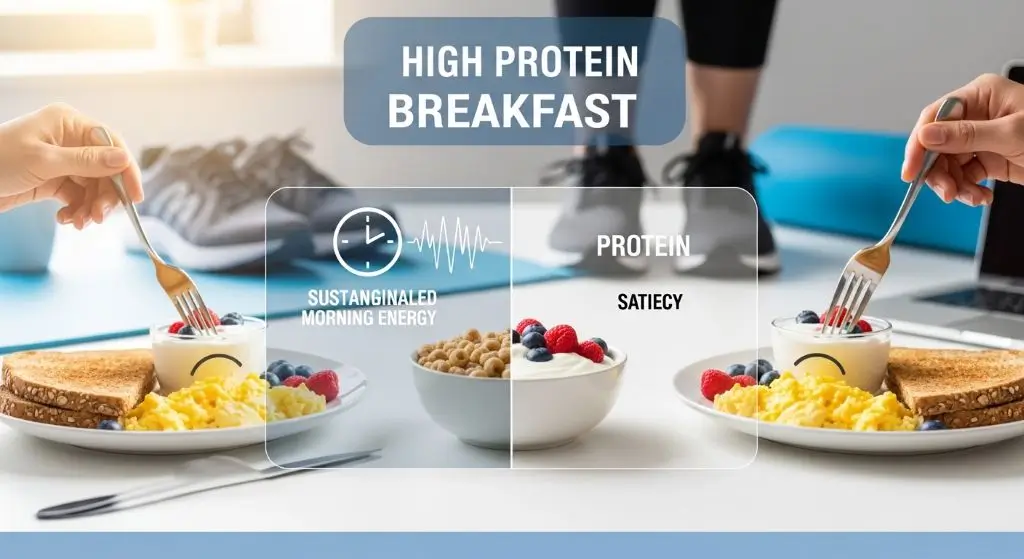
The Simple 4-Step Formula to Build a High Protein Breakfast
Forget complicated recipes. Master this formula, and you can construct a satisfying, protein-rich breakfast from whatever’s in your kitchen.
Step 1 – Choose a Primary Protein Source (20–30g Target)
This is your foundation. Aim for 20–30 grams of protein from one of these sources:
- Eggs: 4–5 large eggs provide approximately 24–30g protein
- Greek yogurt: 1.5–2 cups of plain, non-fat Greek yogurt delivers 30g protein; see our comparison of Greek yogurt vs regular yogurt for choosing the most protein-rich option.”
- Cottage cheese: 1.5 cups of low-fat cottage cheese contains roughly 30g protein
- Tofu: ~300g firm tofu (about 1.5 standard servings)
- Protein powder: 1–1.5 scoops (depending on brand) mixed into oats or smoothies
- Lean meats: 4–5 ounces of turkey, chicken, or lean beef delivers 30g protein
What 30 grams looks like in real food: Picture a Greek yogurt container slightly larger than your fist, a generous scoop of cottage cheese the size of a baseball, or a palm-sized portion of salmon alongside two eggs. These aren’t bodybuilder portions, they’re sustainable, satisfying amounts that keep you full until lunch.
The Academy of Nutrition and Dietetics notes that protein needs vary based on factors like activity level, age, and body size, which is why adjusting portions matters for a high protein breakfast.
Step 2 – Add Fiber for Balance
Fiber works synergistically with protein to slow digestion and extend fullness. Layer in:
- Oats: ½ cup dry oats adds 4g fiber and creates a hearty base
- Fruit: Berries, apples, or pears contribute volume and antioxidants
- Vegetables: Spinach, peppers, or tomatoes in egg dishes add bulk without calories
- Whole grains: Quinoa, whole grain bread, or farro provide complex carbohydrates
- Seeds: Chia, flax, or hemp seeds boost fiber and add omega-3s, read more about differences in Flaxseed vs Chia Seeds to decide which fits your breakfast routine best.
The combination of protein and fiber creates a “slow-burn” effect, preventing the blood sugar spikes and crashes that lead to energy crashes and cravings.
Step 3 – Include Healthy Fats (Optional but Helpful)
While not mandatory, healthy fats enhance flavor, increase satiety, and help absorb fat-soluble vitamins. Add a small amount of:
- Nuts: 10–15 almonds or walnuts
- Seeds: 1 tablespoon of chia or pumpkin seeds
- Avocado: ¼ to ½ of a medium avocado
- Nut butters: 1 tablespoon of almond or peanut butter
Think of fats as the seasoning that makes your breakfast enjoyable and keeps you satisfied longer.
Step 4 – Adjust Carbs Based on Your Goal
Your carbohydrate needs depend on your activity level and objectives:
- Balanced approach: Include 1 serving of whole grains or fruit for steady energy
- Low carb high protein breakfast: Focus on vegetables and skip grains for blood sugar control
- Higher carb for active mornings: Add extra fruit or oats if you have a workout or physically demanding morning ahead
The beauty of this formula is its flexibility. Once you understand the components, you can adapt any breakfast to your specific needs without overthinking.
30 Grams Protein Breakfast Ideas (Built Using the Formula)
Here are practical 30 grams protein breakfast ideas built using the formula above:
Greek Yogurt Bowl Build
- Protein: 1.5 cups plain Greek yogurt (30g)
- Fiber: ½ cup blueberries, 1 tablespoon chia seeds
- Fat: 1 tablespoon chopped walnuts
- Carbs: ¼ cup granola
Why it works: The yogurt provides the protein anchor, while berries and chia add fiber without excessive sugar. The granola offers crunch and quick energy, making this ideal for mornings when you need sustained focus.
Savory Egg Plate
- Protein: 4 whole eggs (24g) + 2 egg whites (6g) = 30g
- Fiber: Sautéed spinach and cherry tomatoes
- Fat: ½ avocado
- Carbs: 1 slice whole grain toast
Why it works: Eggs offer complete protein with all essential amino acids. The vegetables add volume and nutrients, while avocado provides creamy satisfaction. This is a classic high protein breakfast meal that never gets old.
Tofu Scramble Plate
- Protein: 300g firm tofu, crumbled and seasoned (30g)
- Fiber: 1 cup sautéed peppers, onions, and spinach
- Fat: 1 teaspoon olive oil for cooking
- Carbs: ½ cup roasted sweet potato cubes
Why it works: Tofu absorbs flavors beautifully and provides plant-based protein. The colorful vegetables deliver antioxidants, while sweet potato offers complex carbohydrates for energy.
Cottage Cheese Bowl
- Protein: 1.5 cups low-fat cottage cheese (30g)
- Fiber: 1 cup sliced strawberries, 1 tablespoon ground flaxseed
- Fat: 10 whole almonds
- Carbs: ½ cup sliced banana
Why it works: Cottage cheese contains casein protein, which digests slowly for prolonged fullness. The fruit adds natural sweetness, eliminating the need for added sugars.
Protein Smoothie Combo
- Protein: 1 scoop whey or plant protein (25g) + ½ cup Greek yogurt (10g) = 35g
- Fiber: 1 cup spinach, ½ cup frozen berries
- Fat: 1 tablespoon almond butter
- Carbs: ½ frozen banana
Why it works: Perfect for on-the-go mornings, this liquid option delivers protein efficiently while the frozen fruit creates a milkshake-like texture without ice cream.

High Protein Breakfast Recipes Without Eggs
These high protein breakfast recipes without eggs work for vegetarian, dairy-free, or egg-free diets.
Greek Yogurt Parfait
Layer 1.5 cups Greek yogurt with mixed berries, a sprinkle of granola, and chopped nuts. Drizzle with honey if desired. This takes two minutes to assemble and travels well. For context on choosing the best Greek yogurt for protein and nutrition, see Is nonfat Greek yogurt healthy.
Tofu Scramble
Crumble firm tofu into a pan with turmeric (for color), nutritional yeast (for cheesy flavor), and your favorite vegetables. Season with garlic powder, black salt (kala namak) for an eggy flavor, and pepper.
Protein Overnight Oats
Combine ½ cup oats, 1 cup milk or plant milk, 1 scoop protein powder, and chia seeds in a jar. Refrigerate overnight. In the morning, top with fruit and nuts.
Cottage Cheese Bowl
Mix cottage cheese with pineapple chunks, cucumber slices, or savory herbs like dill and chives. The versatility makes this a staple for high protein breakfast recipes without eggs.
Chia Pudding
Combine 3 tablespoons chia seeds with 1 cup milk and 1 scoop protein powder. Let sit overnight. The chia seeds create a tapioca-like texture while adding fiber and omega-3s.
These options prove that skipping eggs doesn’t mean sacrificing protein or satisfaction.
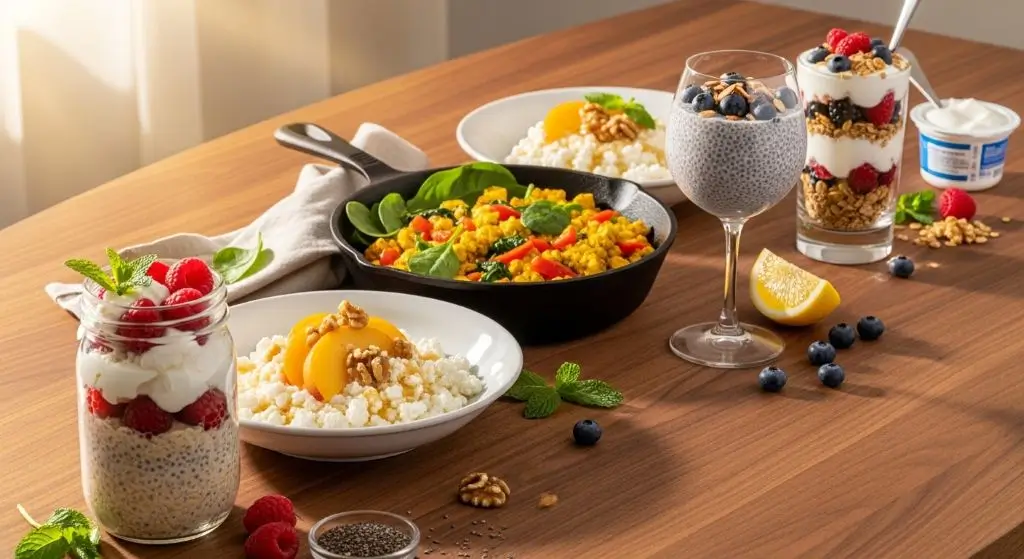
High Protein Breakfast On the Go (Under 5 Minutes)
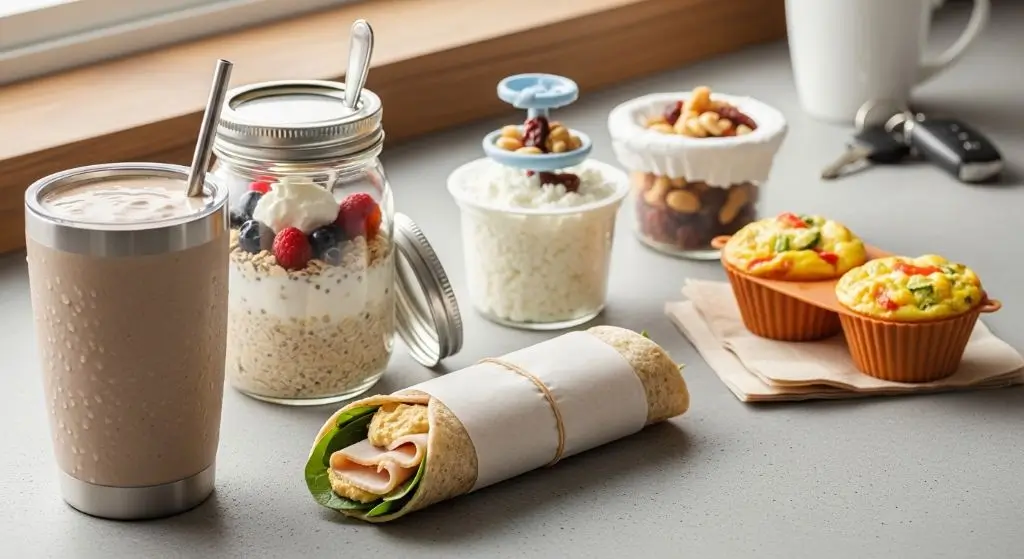
Mornings don’t always allow for cooking. These are the best high protein breakfast on the go options if you have less than five minutes:
Protein Smoothie
Blend protein powder, frozen fruit, spinach, and milk while your coffee brews. Pour into a travel cup.
Overnight Oats
Prep the night before. Grab and eat cold, or microwave for 30 seconds if you prefer warm oats.
High Protein Wraps
Spread 2 tablespoons hummus on a whole grain tortilla, add 3–4 slices of turkey, spinach, and tomato. Roll and go.
Cottage Cheese Cup
Single-serve cottage cheese cups require zero prep. Keep nuts and fruit in your desk drawer for toppings.
Prepped Egg Muffins
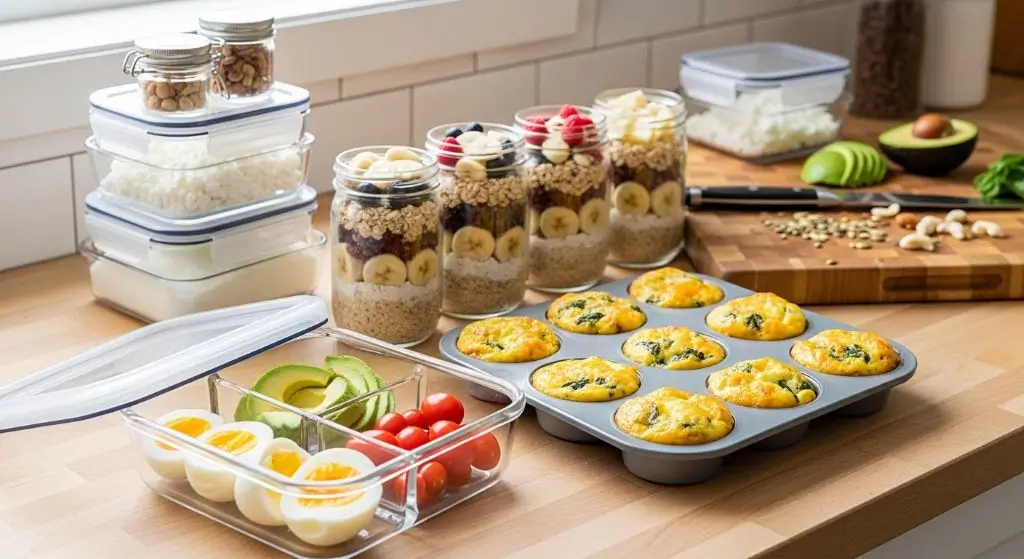
Make a batch on Sunday. These protein-packed muffins reheat in 30 seconds and travel in a napkin.
The key to a sustainable high protein breakfast on the go is having components ready. Spend 20 minutes on Sunday prepping, and your weekday mornings become effortless. These options are ideal for busy mornings, office commutes, or travel.
Low Carb High Protein Breakfast Options
“Low carb” typically means keeping net carbohydrates under 20–30 grams for the meal, focusing instead on protein, healthy fats, and fiber-rich vegetables. This approach suits those managing blood sugar, following ketogenic protocols, or simply feeling better with fewer starches.
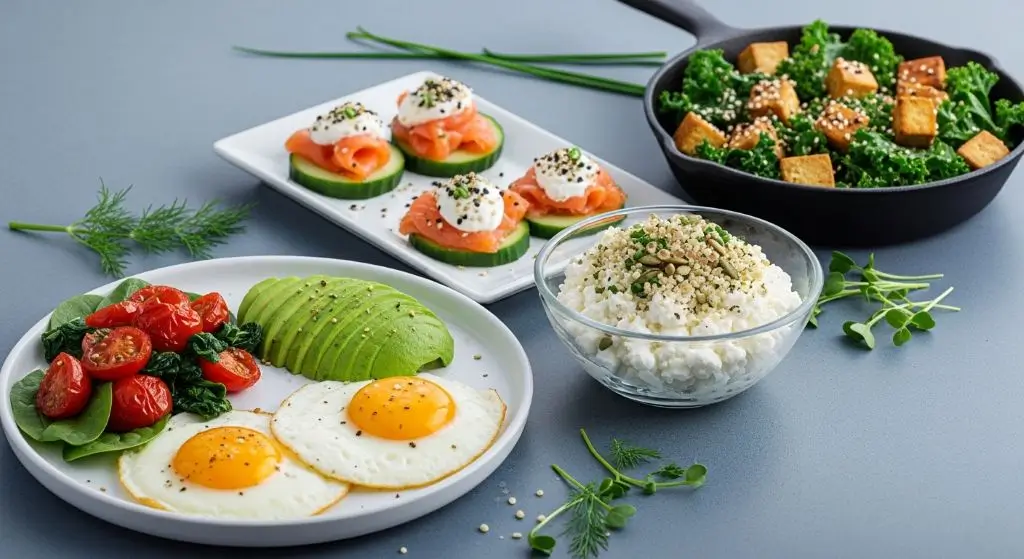
Eggs + Avocado Plate
3 eggs scrambled with spinach, topped with ½ avocado and salsa. Total carbs: approximately 8 grams.
Salmon + Cucumber Stack
4 ounces smoked salmon on cucumber rounds with cream cheese and everything bagel seasoning. Light, refreshing, and approximately 5 grams of carbs.
Cottage Cheese + Seeds
1.5 cups cottage cheese with 2 tablespoons hemp hearts and flaxseed. Creamy, crunchy, and under 10 grams of net carbs.
Tofu + Greens
Crumbled tofu sautéed with kale, mushrooms, and sesame oil. Finished with a sprinkle of sesame seeds. Approximately 6 grams of carbs.
A low carb high protein breakfast isn’t about deprivation, it’s about reallocating your calories to foods that suit those who prefer fewer carbohydrates or feel better with lower-carb meals.
Portion Guidance and Protein Timing
The 20–30g Sweet Spot
Research suggests that 20–30 grams of protein per meal is generally considered effective for supporting muscle protein synthesis. Going beyond 30 grams in a single sitting may not significantly increase muscle-building benefits for most people. For most adults, aiming for around 25 grams at breakfast is a practical and sustainable target.
Daily Distribution
Rather than loading all your protein into dinner, distribute it evenly across meals. Aim for 25–30 grams at breakfast, lunch, and dinner, with smaller protein snacks if needed. This approach maintains steady amino acid availability for muscle maintenance and keeps hunger hormones balanced throughout the day.
Morning Workout Considerations
If you exercise in the morning, you have two solid options: eat a full high protein breakfast 1–2 hours before training, or have a small protein snack (like a protein shake) 30 minutes prior, then follow your workout with your full breakfast. The key is ensuring you have adequate protein within a few hours of waking to break the overnight fast.
Meal Prep Strategies for Consistency
Consistency beats perfection. These strategies make high protein breakfast meals easier to maintain long term:
- Batch Cooking: Hard-boil a dozen eggs on Sunday. Cook a large frittata or egg bake and portion into squares. Prepare a big batch of steel-cut oats and reheat portions throughout the week.
- Overnight Prep: Assemble overnight oats, chia pudding, or yogurt parfaits in jars the night before. Morning effort: zero.
- Freezer Options: Egg muffins, breakfast burritos (eggs, vegetables, and cheese in tortillas), and protein pancakes freeze beautifully. Reheat in the microwave for 60–90 seconds.
- Smart Grocery Staples: Keep these on hand for emergency high protein breakfasts: Greek yogurt, cottage cheese, eggs, frozen spinach, protein powder, nuts, and whole grain bread. With these basics, you can always assemble a balanced meal.
Having options ready removes friction and makes a high protein breakfast automatic.
Clear Takeaway
Mastering high protein breakfast meals doesn’t require advanced cooking skills or expensive ingredients. Follow the simple 4-step formula: choose your protein (20–30g), add fiber, include healthy fats if desired, and adjust carbs to your goals. Whether you prefer 30 grams protein breakfast ideas like Greek yogurt bowls or need high protein breakfast on the go options for busy mornings, the framework stays the same.
Rotate between different protein sources to keep meals interesting and ensure a variety of nutrients. Experiment with flavors and textures until you find combinations that fit your routine. The goal isn’t perfection. It’s building a consistent morning habit that supports steady energy and better hunger control.
Once you understand how to build a high protein breakfast, you don’t need to rely on random recipes. Start tomorrow. Choose one option from this guide, prepare the ingredients tonight, and see how you feel mid-morning.
FAQs About How to Build a High Protein Breakfast
Q1: How much protein should I eat at breakfast?
Aim for 20–30 grams. This amount triggers satiety hormones and provides adequate amino acids for muscle maintenance without being excessive.
Q2: Can I build a 30 grams protein breakfast without supplements?
Absolutely. Four eggs, 1.5 cups Greek yogurt, or 1.5 cups cottage cheese all provide 30 grams of whole-food protein. Supplements offer convenience but aren’t necessary.
Q3: What if I do not eat eggs?
Greek yogurt, cottage cheese, tofu, tempeh, lean meats, and protein smoothies are all excellent egg alternatives. See the “High Protein Breakfast Recipes Without Eggs” section above for specific ideas.
Q4: Is a low carb high protein breakfast better for weight loss?
It can be helpful for some people because protein and fat increase satiety, naturally reducing overall calorie intake. However, weight loss ultimately depends on total caloric balance. Some people do better with moderate carbohydrates for energy and workout performance.
Q5: Can I meal prep high protein breakfasts?
Yes, and you should. Egg muffins, overnight oats, chia pudding, and breakfast burritos all store well. Having prepared options increases consistency, which is the most important factor for results.
Food & Nutrition Writer at PureHealthBites

Nadeem Sharif is the voice behind PureHealthBites, a blog focused on simple nutrition and everyday food choices. With hands-on experience experimenting with ingredients and meals, he shares practical, gut-friendly ideas to help readers eat well, feel better, and build healthier habits for real life.
Connect With Nadeem










1 thought on “How to Build a High Protein Breakfast: 4 Simple Steps”