

By Nadeem Sharif | Reviewed August 20, 2026 |
Medical Disclaimer: This article is for informational purposes only and does not replace professional medical advice. See our full disclaimer.
Introduction
Milk is often described as a nutritious food, but what does a glass of milk actually provide? A single cup of cow’s milk delivers protein, carbohydrates, fat, calcium, and several vitamins and minerals. But whole milk, low-fat milk, and skim milk do not share the same calorie count or fat content. Milk nutrition facts can vary depending on the type you choose, especially when it comes to calories and fat.
This article breaks down the nutrients in milk, how much each one matters, and whether the type of milk you choose changes its milk nutritional value. We use USDA FoodData Central as our source for numbers. No hype. No miracle claims. Just clear information about milk nutrition.
Table of Contents
Milk Nutrition Facts at a Glance
If you want the full milk nutrition facts in one place, this section is for you.
Milk Nutrition Facts Per 1 Cup
These values come from USDA FoodData Central for a standard 1-cup serving (8 fluid ounces, or about 240 milliliters) of fluid cow’s milk with added vitamin D.
| Nutrient | Whole Milk | Low-Fat Milk | Skim Milk |
| Calories | 152 | 106 | 84 |
| Protein | 8 g | 8 g | 8 g |
| Total Fat | 8 g | 2 g | 0 g |
| Saturated Fat | 5 g | 1 g | 0 g |
| Carbohydrates | 12 g | 12 g | 12 g |
| Sugars | 12 g | 12 g | 12 g |
| Calcium | 306 mg | 310 mg | 325 mg |
| Vitamin D | 2.39 mcg | 2.61 mcg | 2.71 mcg |
| Vitamin B12 | 1.1 mcg | 1.1 mcg | 1.3 mcg |
| Potassium | 374 mg | 391 mg | 411 mg |
Source: USDA FoodData Central.
Protein stays almost the same across all three types. Calcium amounts can vary slightly between milk types and products, but the differences are generally small. The big differences are calories and fat.
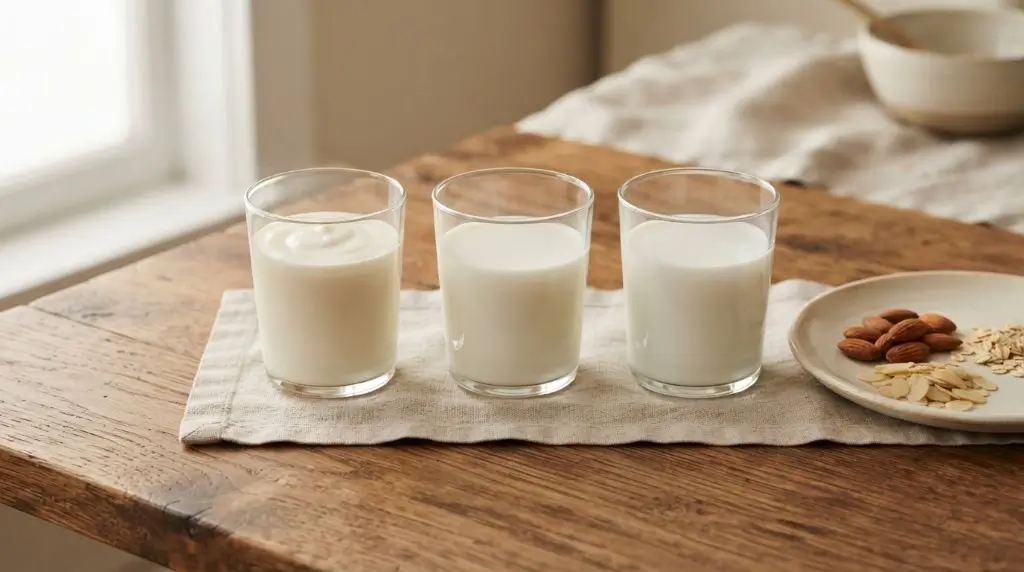
What One Glass of Milk Provides
One cup gives you about 8 grams of protein. That is roughly the same as one large egg. The protein in milk contains all nine essential amino acids your body needs.
You also get about 12 grams of carbohydrates, all from lactose, the natural sugar in milk. No added sugar in plain milk.
For minerals, one cup delivers around 300 milligrams of calcium, about one-quarter of the Daily Value for calcium. You also get potassium, phosphorus, and smaller amounts of other nutrients.
The vitamins depend partly on fortification. Most U.S. milk is fortified with vitamin D. Lower-fat milks are usually fortified with vitamin A because some is lost when fat is removed. Whole milk naturally contains some vitamin A because it still has its fat.
Milk Calories: How Many Calories Are in a Glass?
If you are watching your calories, the milk aisle can feel confusing. Whole milk, low-fat, skim. The numbers are different, but the reason is simple. Most of the calorie gap comes from fat. One type has nearly 70 more calories per cup than another. Here is how the calories break down by type and why the difference may or may not matter for you.
Whole Milk Calories
One cup of whole milk contains about 152 calories. Most come from fat. Whole milk has 3.25% milkfat, which adds up to about 8 grams per cup.
Low-Fat Milk Calories
One cup of low-fat milk (1% milkfat) contains about 106 calories. The fat drops to about 2 grams per cup.
Skim Milk Calories
One cup of skim milk contains about 84 calories. With nearly all fat removed, skim milk has the lowest calorie count.
Why the Calorie Difference Matters
The gap between whole and skim milk comes almost entirely from milk fat. Fat has 9 calories per gram, while protein and carbohydrates have 4. When you remove fat, you remove the most calorie-dense part.
But lower calories do not automatically mean better for everyone. Some people may prefer whole milk for its richer taste and texture, while others prefer lower-fat milk to reduce calories and fat. Others prefer skim to get the protein and calcium without extra fat. The right choice depends on your overall diet.

Milk Protein: How Much Does Milk Provide?
Milk is one of the easiest ways to get protein without cooking anything. One cup gives you about 8 grams, which is close to what you get from a large egg. But people often wonder if whole milk has more protein than skim, or if the protein in milk is actually worth counting. The short answer is yes, milk protein matters, and the amount stays almost the same no matter which type you pour. Let us look at what one cup really gives you and why that protein is useful in a normal day.
Protein in Whole Milk
One cup of whole milk provides about 8 grams of protein. That stays nearly the same in low-fat and skim milk because protein lives in the liquid part, not the fat. So whole milk protein is basically the same as what you get in skim.
Why Milk Protein Matters
Milk contains casein and whey. Milk protein is made up mainly of casein, with a smaller proportion of whey. Casein generally digests more slowly than whey. Together they provide a balanced amino acid profile.
Eight grams per cup is useful, but milk is not a miracle muscle-building food. It is one of many foods that help you meet daily protein needs. A cup at breakfast and another at dinner adds 16 grams without much effort.

Milk Carbohydrates and Natural Sugar
Pick up a carton of milk and look at the label. You will see about 12 grams of sugar and may wonder where it comes from. In plain milk, that sugar is naturally occurring lactose, not added sugar. In this section, we break down milk carbohydrates, what lactose is, and how plain milk differs from flavored varieties. In this section, we break down how many carbohydrates milk really has, what lactose actually is, and why plain milk is different from the flavored stuff.
How Many Carbohydrates Are in Milk?
One cup of plain milk contains about 12 grams of carbohydrates. Nearly identical across whole, low-fat, and skim milk. Whole milk carbohydrates are the same 12 grams you find in skim.
What Is Lactose?
Lactose is the natural sugar in milk. It is a disaccharide made of glucose and galactose. Your body needs lactase to break it down. People who are lactose intolerant do not produce enough lactase, which can cause digestive discomfort. Lactose is simply the naturally occurring carbohydrate found in milk. It is just a natural part of the food.
Is the Sugar in Milk Added Sugar?
No. The 12 grams on plain milk’s label is lactose, a naturally occurring sugar. Not added during processing.
Added sugar is what you find in flavored milk like chocolate or strawberry. Those products contain extra sugar on top of natural lactose. If you watch added sugar, plain milk is not the problem. Check flavored varieties instead.

Milk Fat: Whole Milk vs Low-Fat vs Skim
The biggest difference between whole, low-fat, and skim milk is the fat. That one change affects calories, texture, and how satisfying a glass feels. But does less fat mean the milk is automatically better? Not really. The protein stays the same. The calcium is nearly identical. What shifts is the calorie count and some vitamins that travel with fat. Here is what each type delivers and what actually changes when the fat is removed.
Whole Milk Nutrition Facts
One cup of whole milk (3.25% milkfat) provides about 152 calories, 8 grams total fat, 5 grams saturated fat, 8 grams protein, 12 grams carbohydrates, and 306 milligrams calcium. It also contains vitamins A, D, B12, riboflavin, and others.
Whole milk has a richer taste and creamier texture. Some people prefer it for its taste, while others prefer lower-fat options.
Low-Fat Milk Nutrition Facts
The low fat milk nutrition facts show a middle ground. One cup of low-fat milk (1% milkfat) provides about 106 calories, 2 grams total fat, 1 gram saturated fat, 8 grams protein, 12 grams carbohydrates, and 310 milligrams calcium. Similar vitamins, with vitamin A added back after fat removal.
Low-fat milk still tastes like milk but with less fat and fewer calories.
Skim Milk Nutrition Facts
One cup of skim milk provides about 84 calories, 0 grams fat, 0 grams saturated fat, 8 grams protein, 12 grams carbohydrates, and 325 milligrams calcium. Similar vitamins, with vitamin A and D added through fortification.
Skim milk has the lightest texture and lowest calorie count. Some love it. Others find it watery.
Does Removing Fat Change the Nutrients?
Removing fat changes calories and fat content, but not protein, carbohydrates, or most minerals. Calcium is generally similar across milk types, although the exact amount can vary by product.
Fat-soluble vitamins like vitamin A are affected. Whole milk naturally contains it because it is carried in fat. Manufacturers add vitamin A back to low-fat and skim milk to replace what was lost.
The 2025-2030 Dietary Guidelines for Americans notes that dairy foods at all fat levels can fit into a healthy eating pattern. The choice depends on taste, calorie needs, and overall diet.

Milk Calcium and Other Important Minerals
Milk is famous for calcium, but that is not the only mineral in the glass. One cup also provides potassium and phosphorus, nutrients involved in normal muscle function, fluid balance, bone structure, and energy metabolism. Let us look at what milk provides beyond its well-known calcium content.
Calcium in Milk
One cup of milk provides about 300 milligrams of calcium, or roughly 25% of the Daily Value. Calcium is important for maintaining normal bone and tooth structure. It also plays a role in normal muscle function and nerve signaling.
Milk is one convenient source of calcium, but it is not the only option. Other sources include leafy green vegetables, calcium-fortified plant milks, canned fish with edible bones, and tofu made with calcium sulfate.
Potassium in Milk
One cup of milk provides roughly 375 to 410 milligrams of potassium, depending on the type and product. Potassium is an essential mineral that helps maintain normal fluid balance, muscle function, and nerve signaling.
The amount can vary slightly between milk types and brands, so check the nutrition label when exact values matter.
Phosphorus in Milk
One cup of milk provides roughly 220 to 250 milligrams of phosphorus. Phosphorus works with calcium as part of normal bone and tooth structure and also plays an important role in energy metabolism.
Milk therefore provides more than just calcium. Its combination of calcium, potassium, and phosphorus contributes to its overall milk nutrition profile.

Milk Vitamins and Minerals
Milk is not just calcium in a glass. It also carries a mix of vitamins and minerals that help your body use the nutrients you eat. Some of these vitamins are added during processing. Others come straight from the cow. Either way, they turn a simple cup of milk into a more complete package. Let us look at what those vitamins actually do and where they come from.
Vitamin D
Most U.S. milk is fortified with vitamin D. One cup provides about 2.5 to 2.7 micrograms, roughly 10% to 15% of the daily value. Vitamin D helps the body absorb calcium and plays an important role in maintaining healthy bones.
Not all milk is fortified. If you buy milk or specialty milks, check the label.
Vitamin B12
One cup provides about 1.1 to 1.3 micrograms of vitamin B12. Found naturally in animal foods, cows pass it into their milk. Vitamin B12 in milk helps with red blood cell formation and nerve function.
Vitamin A
Whole milk naturally contains vitamin A because it is fat-soluble and carried in milk fat. One cup provides about 80 micrograms. Low-fat and skim milk are fortified with vitamin A to replace what was lost, so those versions often contain 143 to 157 micrograms per cup.
Riboflavin and Other B Vitamins
Milk is a good source of riboflavin (vitamin B2), about 0.4 milligrams per cup. It also contains smaller amounts of niacin (B3), pantothenic acid (B5), and vitamin B6. These help your body convert food into energy.

Is Milk Healthy?
For many people, milk can be part of a balanced diet because it provides protein, calcium, and several vitamins and minerals. But whether milk is a good choice depends on individual tolerance, dietary pattern, and the type of milk.
What Makes Milk Nutrient-Dense?
Milk provides several nutrients in a relatively small serving, including protein, calcium, potassium and several vitamins. One cup gives you protein, calcium, potassium, phosphorus, and multiple vitamins. A lot of nutrition in one glass.
Milk can also fit into simple, balanced snack choices. For more practical ideas, see our guide to Healthy Snack Alternatives to Junk Food.
When Milk May Not Be the Best Fit
Some people cannot digest lactose well. If milk causes bloating, gas, or stomach pain, you may be lactose intolerant. Lactose-free milk is one option. So are fortified plant-based milks.
Some people have a milk allergy, different from lactose intolerance. A milk allergy involves the immune system and can cause more serious reactions. If you suspect an allergy, talk to a healthcare professional.
Others do not like milk or choose not to consume animal products. That is fine. You can get similar nutrients from other foods.
Watch out for flavored milk. Chocolate, strawberry, and other sweetened versions can contain significant added sugar. Plain milk has no added sugar, but flavored versions often do.
Benefits of Drinking Milk: What Does the Nutrition Tell Us?
People often look for a list of benefits when they think about drinking milk. But the real value is not in magic. It is in the nutrients milk delivers. Protein, calcium, vitamins, and minerals are what make milk useful. Let us look at what those nutrients actually do and how a glass fits into a normal day.
Protein
Protein provides amino acids that the body uses for maintaining and building tissues. Not magic. Just a convenient source of complete protein.
Calcium
The calcium in milk supports normal bone and tooth structure. Drinking milk helps you meet daily calcium needs, but works best as part of a diet with other calcium sources too.
Vitamin B12 and Other Nutrients
Vitamin B12 supports nerve health and red blood cell formation. Potassium helps with fluid balance. Phosphorus supports bone structure. These nutrients are useful, but come from milk as part of a broader diet.
How Milk Fits Into a Balanced Diet
Milk is one food among many. A glass at breakfast, some in oatmeal, or a splash in coffee adds protein and calcium. But you do not need milk to be healthy. You need the nutrients it provides, and those can come from many sources.
Whole Milk vs Low-Fat Milk: Which Is Better?
When people ask about whole milk vs low fat milk or whole milk vs skim milk, the answer is not simple. Let us compare them side by side.
| Feature | Whole Milk | Low-Fat Milk | Skim Milk |
| Calories | Higher | Lower | Lower |
| Fat | Higher | Lower | Very low |
| Protein | Similar | Similar | Similar |
| Carbohydrates | Similar | Similar | Similar |
| Calcium | Similar | Similar | Similar |
| Best for | Depends on dietary needs | Depends on dietary needs | Depends on dietary needs |
There is not one milk type automatically best for everyone.
Whole milk provides more calories and fat, while low-fat and skim milk provide similar amounts of protein and comparable amounts of calcium with less fat. The best choice depends on your overall diet, preferences and nutritional needs.
The 2025-2030 Dietary Guidelines for Americans recommend dairy at all fat levels, giving options based on taste and health needs. The guidelines note saturated fat should stay below 10% of total daily calories. For someone eating 2,000 calories, that is about 22 grams. One cup of whole milk contains 5 grams, so it can fit if the rest of your diet is lower in saturated fat.
How Much Milk Should You Drink a Day?
For many adults, federal dietary guidance includes about 3 cup-equivalents from the dairy group in a 2,000-calorie eating pattern. That does not mean you need to drink three cups of milk every day. Milk is only one way to contribute to your overall dairy intake.
Your daily milk intake can vary depending on your overall diet and whether you get calcium, protein, and other nutrients from foods such as yogurt, cheese, or fortified alternatives.
Does Everyone Need to Drink Milk Every Day?
No. Milk is not the only way to get important nutrients such as calcium and protein. Yogurt, cheese, calcium-fortified plant milks, leafy greens, beans, and canned fish with edible bones can also contribute nutrients to your diet.
If you do not drink milk, focus on getting the nutrients it commonly provides from other suitable foods and beverages. The goal is not a specific number of glasses of milk, but a balanced diet that provides the nutrients your body needs.
Milk Serving Size: How Much Is One Serving?
One serving is 1 cup, or 8 fluid ounces, about 240 milliliters.
That is about the size of a standard drinking glass, though many hold more. If you pour a tall glass, you might get 1.5 cups without realizing it. That means 1.5 times the calories, protein, and everything else.
Portion size matters because the numbers in this article are based on one cup. Drink two cups, double everything. Drink half a cup, cut everything in half.
Best Ways to Include Milk in Your Diet
You do not need a recipe book to add milk to your day. A splash here, a glass there, and you have already added protein and calcium without much thought. The trick is knowing where it fits naturally. Here are a few simple ways to use milk in meals you probably already make.
Milk with Breakfast
Pairing a glass of milk with eggs or whole-grain toast adds protein and calcium to the meal. If you want more ideas for building a balanced, protein-rich breakfast, see our guide to How to Build a High-Protein Breakfast. Simple. No extra prep. Using milk for breakfast is one of the easiest ways to start your day with nutrients.
Milk with Oatmeal
Cook oatmeal with milk instead of water. It makes oats creamier and adds protein to the meal. For more on the nutritional value of oats, see our guide to Oats Nutrition Benefits.
Milk in Smoothies
Blend milk with fruit, spinach, and nut butter for a quick nutrient-dense drink. Use plain milk to avoid added sugar.
Milk with Whole-Grain Foods
Pour over whole-grain cereal or use in pancake batter. Milk adds moisture and nutrients while whole grains add fiber.
Choosing Unsweetened Options
If you buy plant-based milk, choose unsweetened. If you choose plant-based milk, compare labels because added sugar and nutrient fortification can vary between products.

FAQs About Milk Nutrition Facts
Q1: How many calories are in a glass of milk?
Depends on type. Whole milk has about 152 per cup. Low-fat about 106. Skim about 84.
Q2: How much protein is in milk?
One cup of cow’s milk provides about 8 grams, regardless of fat level.
Q3: Is milk healthy?
For many people, yes. It provides protein, calcium, and several vitamins and minerals. But it depends on tolerance, dietary pattern, and milk type.
Q4: Is whole milk good for you?
Whole milk can fit into a balanced diet. Same nutrients as other types but more fat and calories. Whether it is good depends on your overall pattern.
Q5: Is whole milk healthier than low-fat milk?
Not automatically. Whole milk has more calories and saturated fat. Low-fat has fewer. Both provide similar protein, calcium, and other nutrients. Better choice depends on your needs.
Q6: How much milk should you drink a day?
Federal dietary guidance includes about 3 cup-equivalents from the dairy group in a 2,000-calorie eating pattern, although individual needs vary. But needs vary, and you can get similar nutrients from other foods.
Q7: Does milk contain natural sugar?
Yes. The sugar in plain milk is lactose, naturally occurring. Plain milk has no added sugar.
Q8: What vitamins and minerals are in milk?
Calcium, potassium, phosphorus, vitamin D, vitamin A, vitamin B12, riboflavin, and other B vitamins. Most milk is fortified with vitamin D, and lower-fat milks are fortified with vitamin A.
Final Takeaway
Milk is a nutrient-rich food for many people, but type and serving size affect calorie and fat content. Whole, low-fat, and skim milk can all fit into different eating patterns. What matters most is how your choice fits into your overall diet.
Look at the whole nutrition profile, not just one nutrient on the label. A glass of milk adds protein, calcium, and vitamins to your day. But it is one piece of the puzzle, not the whole picture. Choose what works for you, watch portions, and keep the rest of your plate balanced too.
Food & Nutrition Writer at PureHealthBites

Nadeem Sharif is the voice behind PureHealthBites, a blog focused on simple nutrition and everyday food choices. With hands-on experience experimenting with ingredients and meals, he shares practical, gut-friendly ideas to help readers eat well, feel better, and build healthier habits for real life.
Connect With Nadeem