

By Nadeem Sharif | Reviewed October 11, 2026 |
Medical Disclaimer:This article is for informational purposes only and does not replace professional medical advice. See our full disclaimer.
Introduction: Why Carbohydrates Get So Confusing
Carbs are bad. You need carbs for energy. Avoid sugar. Eat complex carbs. Low-carb is healthier.
Spend any time online and you hear all of these. No wonder people feel confused.
Here is the problem. Carbohydrates are not one thing. They are a big family of nutrients and foods. A bowl of lentils and a can of soda both contain carbohydrates, but they come with very different combinations of fiber, nutrients, and added sugar.
This guide keeps it simple. You will learn what carbohydrates actually are, which foods contain them, and how simple and complex carbs differ. So, what do carbohydrates do for your body? They provide energy, help fuel physical activity, and come packaged with important nutrients when you choose foods such as whole grains, fruits, vegetables, and legumes. We will also look at carbohydrates and blood sugar, and how to choose carb foods without overthinking.
Our take is simple. Do not fear or worship carbohydrates. Ask a better question. What kind of carbohydrate food are you eating, how much, and what does the rest of the meal look like?
Table of Contents
What Are Carbohydrates?
Carbohydrates are one of the three major macronutrients, along with protein and fat. Each plays a different role in the body.
Carbohydrates include sugars, starches, and fiber. Sugars and starches are broken down and used for energy, while most dietary fiber is not fully digested and absorbed. Fiber can still play important roles in digestion and gut health.
Not every carbohydrate food is the same. An apple, a slice of whole-grain bread, and a handful of candy all count, yet their effect on your body can be quite different.
What Is a Carbohydrate Made Of?
Carbohydrates are made from sugar molecules linked together in different ways. Simple carbohydrates contain one or two sugar units, while starches and many forms of fiber contain longer chains. Glucose is the main sugar circulating in your blood and an important fuel source for your cells.
Remember three names. Sugars. Starches. Fiber.
Are Carbohydrates the Same as Sugar?
No, and this is where much of the confusion starts. Sugar is one type of carbohydrate, but carbohydrate does not equal sugar. Starches are carbohydrates too. So is fiber.
Fruit contains naturally occurring sugars, but it also brings fiber, water, vitamins, and minerals. A candy bar can contain added sugars with much less fiber and fewer nutrients than a whole fruit. The FDA explains that added sugars are put into foods during processing, and labels now list them separately.

What Do Carbohydrates Do for Your Body?
The short answer: digestible carbohydrates can be broken down into glucose, which your cells can use for energy.
They support physical activity, from a morning walk to a weekend game, and help supply energy for everyday functions such as brain activity and the work of your heart. Many carbohydrate-rich whole foods also provide fiber, vitamins, minerals, and other useful nutrients. A fiber- and protein-rich food such as lentil soup can contribute to greater fullness than a lower-fiber snack.
Carbohydrates for Energy
Glucose is an important energy source, and carbohydrate is relatively easy for your body to break down and use. Eat more than you need right away, and your body stores the extra as glycogen in your liver and muscles for later. According to MedlinePlus, glucose from carbohydrates is used by your cells, tissues, and organs.
Carbohydrates are an important fuel source during higher-intensity physical activity, which is one reason athletes may deliberately include carbohydrate-rich foods around demanding training or competition.
What Happens to Carbohydrates After You Eat Them?
You eat a carbohydrate food. Digestion breaks it down into smaller sugars, including glucose. Glucose enters your bloodstream, your cells pull it in for energy, and extra gets stored as glycogen.
Fiber follows a different path. Most dietary fiber is not digested and absorbed like starch and sugar. Some fibers are fermented by gut microorganisms, while others mainly add bulk and support normal bowel function.
Does Your Body Need Carbohydrates?
Carbohydrates are an important energy source for most people, but individual needs vary with factors such as activity level, total energy needs, and individual circumstances.
What matters most is your overall dietary pattern. Do you mostly eat whole grains, fruits, vegetables, and beans, or do most of your carbs come from soda and pastries? The pattern tells a bigger story than any single food. Extremely restrictive approaches are not necessary for most people.

What Foods Contain Carbohydrates?
What foods contain carbohydrates? More than you might think. They show up in grains, fruits, vegetables, beans, dairy, and sweets.
Grains and Grain Foods
Oats, rice, barley, and wheat are grains. So are foods made from them, like bread, pasta, and cereals. Grains contain starch, and whole grains contain fiber.
Fruits
Apples, bananas, berries, oranges, and mangoes all contain carbohydrates, including naturally occurring sugars.
Fruit gets blamed unfairly for that sugar. But it arrives as a package deal: the sugar plus fiber, water, vitamin C, and plant compounds. That package has a very different nutritional profile from a soda with a similar amount of sugar.
Vegetables
Potatoes, sweet potatoes, corn, and peas contain more carbohydrate than most other vegetables, so people call them starchy vegetables. Broccoli, spinach, and peppers contain smaller amounts, making them lower-carbohydrate choices compared with starchy vegetables.
Beans and Legumes
Lentils, chickpeas, black beans, and kidney beans are quiet overachievers. They contain starch plus protein and plenty of fiber, a combination that can contribute to fullness and may produce a more gradual blood glucose response than many refined carbohydrate foods.
Dairy Foods
Milk and yogurt contain a naturally occurring carbohydrate called lactose. Plain versions also provide protein and calcium. Flavored yogurts are a different story, since many carry added sugars.
Sweets and Sugary Drinks
Candy, cakes, cookies, soda, and sweetened drinks all contain carbohydrates, mostly from sugar. Yet containing carbohydrates does not automatically make a food unhealthy. Oats and soda are both carbohydrate foods. The processing and what comes with the carbs set them apart.
Types of Carbohydrates
Nutrition science groups the types of carbohydrates in food into three broad categories. This classification is simple and useful.
- Sugars
- Starches
- Fiber
Sugars
Sugars are the simplest forms of carbohydrate. Some occur naturally, like the sugar in fruit and the lactose in milk. Others are added during processing, like the sugar in soda and syrups. Your body does not need added sugars to function.
Starches
Starch is a complex carbohydrate made of many sugar units linked together, found in grains, legumes, and starchy vegetables. Your digestive system breaks starches down into smaller sugars that can be absorbed and used by the body. How quickly this happens depends on the food, its structure, processing, fiber content, and what else you eat with it.
Fiber
Fiber is a type of carbohydrate that your body does not fully digest or absorb in the small intestine. Instead of being fully digested and absorbed like starch and sugar, fiber can support digestion, contribute to fullness, and interact with gut microorganisms. Certain types of fiber can also slow digestion and carbohydrate absorption.
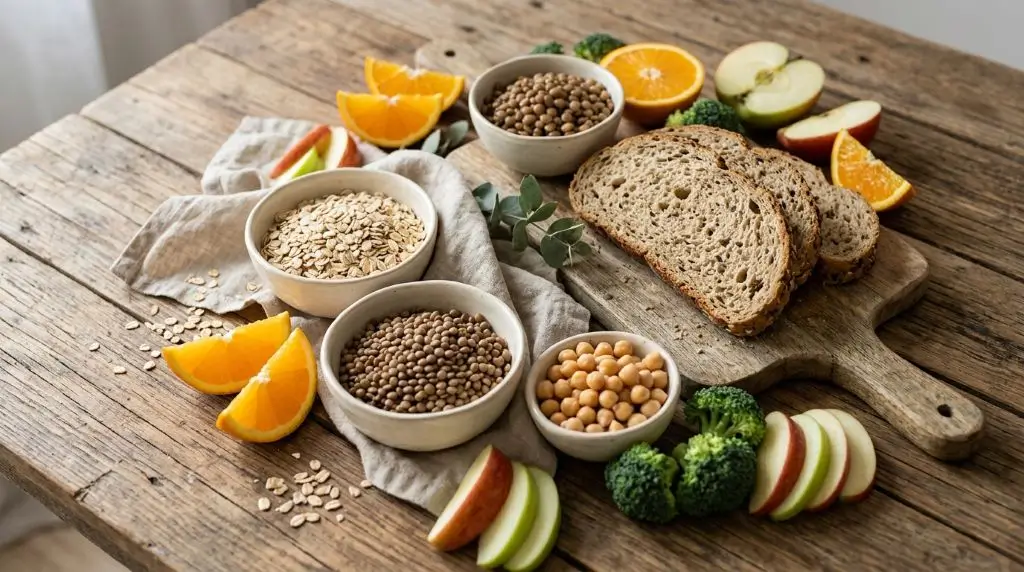
Simple vs Complex Carbohydrates
You have probably heard the phrase simple vs complex carbohydrates. It describes structure, not whether a food is good or bad.
What Are Simple Carbohydrates?
Simple carbohydrates generally contain one or two sugar units. They include naturally occurring sugars in foods such as fruit and milk as well as added sugars found in many sweets and sugary drinks.
What Are Complex Carbohydrates?
Complex carbohydrates are long chains of sugar units. In the traditional classification, starches and fiber are generally grouped as complex carbohydrates, and whole grains, legumes, and many vegetables provide them.
But complex does not automatically mean healthy. Processed foods made from whole-grain flour can still carry plenty of added sugar and salt.
Is Simple Always Bad and Complex Always Good?
No. An apple contains simple sugars plus fiber and nutrients. Oatmeal contains complex starch plus fiber. A hard candy contains simple sugar and not much else. The apple and oatmeal come as packages with fiber, water, and nutrients. The candy does not. The food package matters more than the label.

Are Carbohydrates Bad for You?
No. Carbohydrates are not automatically bad for you. Your body uses them every day. So why the bad reputation?
Why Do Carbs Get a Bad Reputation?
A lot of it comes down to confusion and portions. Sugary foods and refined grains became common parts of many eating patterns, serving sizes grew, and diet trends painted all carbs with the same brush. People started saying carbs when they meant added sugar or oversized portions of refined foods. The bigger issue is that different carbohydrate foods can have very different nutritional profiles.
Which Carbohydrate Foods Deserve More Attention?
Some carbohydrate foods consistently earn their place on the plate. Whole grains like oats and brown rice. Fruits of every color. Vegetables, including starchy ones. Beans and lentils, which bring carbs, protein, and fiber in one food. A simple rule: eat more carbohydrate foods that look close to how they grew.
What About Refined Carbohydrates?
White bread, refined cereals, pastries, and many processed snacks fall into the refined category, which removes parts of the grain along with much of the fiber.
Calling these foods toxic goes too far. They tend to be less nutrient-dense than whole-food carbohydrate choices, and they can also be less filling than higher-fiber whole-food choices, depending on the food and the overall meal.
Are Carbs Good for You?
Now the opposite question. Are carbs good for you? They can be.
Carbohydrate foods can contribute energy, fiber, vitamins, minerals, and plant compounds. They can make a meal satisfying in a way plain protein sometimes is not. Think of rice with your curry or fruit after dinner.
But food quality matters more than the word carbohydrate on a label. The carbs in a lentil stew and the carbs in a frosted donut do not deliver the same package. Judge the food, not the macronutrient.
Carbohydrates and Blood Sugar
Carbohydrates and blood sugar are closely linked.
Digestible carbohydrates raise blood glucose, which is normal physiology. Different carbohydrate foods raise it at different speeds. Certain types of fiber can slow digestion and carbohydrate absorption, and portion size and the rest of the meal matter.
Why Don’t All Carbohydrate Foods Affect Blood Sugar the Same Way?
Several factors shape the response. Food structure, processing, fiber content, particle size, portion size, and the overall meal can all influence how quickly carbohydrate is digested and absorbed.
Certain types of fiber can slow digestion and carbohydrate absorption. Eating carbohydrate foods as part of a meal that also contains protein, fiber, and other foods can affect the overall blood glucose response.
You may have heard of the glycemic index, one way to describe how quickly a food raises blood glucose. It is a tool, not a verdict.
What About People With Diabetes?
Carbohydrate management can be important for people with diabetes, and individual targets vary. Follow the guidance of your doctor or dietitian. This article is general information, not a diabetes meal plan.
What Foods Are High in Carbohydrates?
So what foods are high in carbohydrates? Here is a practical list.
High-Carbohydrate Whole-Food Choices
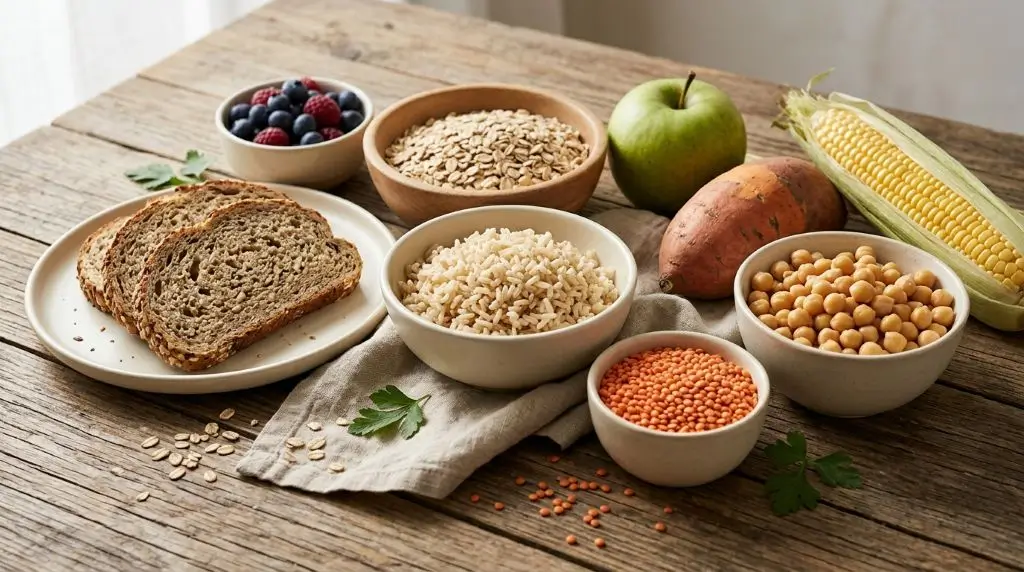
Oats, rice, potatoes, sweet potatoes, whole grains, beans, lentils, and fruit are all useful sources of carbohydrate. Many of these foods also provide fiber, vitamins, minerals, or other nutrients.
Carbohydrate Foods That Also Provide Fiber
Some carbohydrate foods stand out for fiber: oats, barley, beans, lentils, berries, whole grains, and vegetables. Choosing carbs that also provide fiber is one of the simplest upgrades you can make.
Foods High in Carbohydrates and Added Sugar
Sugary drinks, candy, cakes, cookies, and many desserts are high in carbohydrates, mostly from added sugar.
This is where quantity versus quality matters most. Two foods can contain similar amounts of carbohydrate while providing very different amounts of fiber, protein, vitamins, minerals, and added sugar. One may provide protein, fiber, vitamins, or minerals, while the other may provide mostly added sugar and fewer nutrients. High in carbohydrates tells you quantity, not quality.
Healthy Carbohydrate Foods for Everyday Eating
Theory is nice. Lunch is real. Here are healthy carbohydrate foods in actual meals.
Breakfast
Try oatmeal topped with fruit and a handful of nuts. The oats provide carbohydrate and fiber, while the fruit adds sweetness and the nuts provide protein, fat, and other nutrients. Whole-grain toast with eggs and fruit, or plain yogurt with berries, can also make a balanced breakfast. If you want more ideas for building a protein-rich morning meal, see our guide to how to build a high-protein breakfast.
Lunch
A brown rice bowl with roasted vegetables and black beans covers your bases. Rice for energy, beans for protein and fiber, vegetables for volume. A whole-grain wrap with hummus or chicken follows the same formula, as does lentil soup with whole-grain bread.
Dinner
Potatoes get unfairly excluded from healthy plates. A baked potato or roasted sweet potato with vegetables and fish or beans is a solid dinner. So is whole-wheat pasta with vegetables and protein. Starchy food plus vegetables plus protein.
Snacks
Fruit with a handful of nuts. Plain yogurt with berries. Whole-grain crackers with hummus. For more practical ideas, see our guide to healthy snack alternatives to junk food. Pairing carbohydrate foods with protein, fat, or fiber can make snacks more satisfying and can affect how quickly the meal is digested. Build meals around better combinations, not elimination.
How Do Carbohydrates Work in the Body?
How do carbohydrates work in the body? Step by step:
- You eat a carbohydrate-containing food.
- Digestion breaks down the digestible carbohydrate into smaller sugars.
- Glucose enters your bloodstream.
- Cells take up glucose and use it for energy.
- Some glucose can be stored as glycogen in the liver and muscles for later use.
- Fiber follows a different path, moving through the gut mostly undigested.
Fiber takes the scenic route.
How Much Carbohydrate Do You Need?
There is no single number that fits everyone. Needs vary with age, body size, activity, and health circumstances.
As a general reference, MedlinePlus notes that many guidelines suggest about 45 to 65 percent of daily calories from carbohydrates, while individual needs vary.
Overall pattern matters more than an exact percentage. The same percentage of calories from carbohydrates can come from very different food patterns, which is why food quality matters alongside quantity.
H3: Should You Count Carbs?
Not everyone needs to count carbohydrates. For most people, food quality beats math at every meal. Labels list total carbohydrate, and carbohydrate counting can be useful in some medical situations, including diabetes management. For everyday eating, focusing on food quality and balanced meals may be more useful than obsessing over numbers.
Common Carbohydrate Myths
Myths about carbs spread faster than facts. Let us clean up a few big ones.
Myth 1: All Carbs Are Bad
Lentils and lollipops share a nutrient category, nothing more.
Reality: carbohydrate foods vary widely.
Myth 2: Fruit Is Bad Because It Contains Sugar
Whole fruit provides naturally occurring sugar alongside fiber, water, vitamins, minerals, and other plant compounds.
Reality: Whole fruit can be part of a healthy eating pattern despite containing naturally occurring sugar.
Myth 3: Complex Carbs Are Always Healthy
“Complex” does not automatically mean a food is healthy. The term describes carbohydrate structure, not the overall nutritional quality of the food.
Myth 4: You Should Never Eat Carbs at Night
Overall eating pattern matters far more than a time-of-day rule.
Reality: There is no need to avoid carbohydrate foods simply because you eat them at night. Your overall eating pattern matters more than a simplistic time-of-day rule.
Myth 5: You Need to Avoid All Sugar
Naturally occurring sugars can be part of nutritious foods such as fruit and dairy, while added sugars contribute calories without providing the same package of nutrients. Added sugars are the ones worth limiting. The Dietary Guidelines for Americans recommend keeping added sugars below 10 percent of daily calories.
Myth 6: Low-Carb Automatically Means Healthier
Myth: Cutting carbohydrates automatically makes your diet healthier.
Reality: A restrictive low-carbohydrate pattern can also reduce intake of fiber-rich foods such as whole grains, fruits, and legumes if those foods are removed without suitable replacements. MedlinePlus notes that carbohydrate-containing foods can be important sources of fiber and other nutrients.
Our Take: A lower-carbohydrate approach can work for some people, but simply removing carbohydrate foods does not automatically make a diet healthier. What replaces those foods matters.

Simple Ways to Improve Your Carbohydrate Choices
Small changes beat big overhauls. Here are six.
Choose Whole Grains More Often
Pick brown rice over white some nights. Try whole-wheat pasta. Start the day with oats. A practical goal is to make whole grains a regular part of your grain choices.
Keep Whole Fruit on the Menu
Eat fruit whole rather than drinking it as juice. Whole fruit keeps its naturally occurring fiber, which can affect digestion and the way carbohydrate is absorbed.
Add Beans and Lentils
Stir lentils into soup. Add chickpeas to salads. Swap half the meat in chili for beans. You add fiber, protein, and a nutrient-rich carbohydrate source in one move.
Pair Carbohydrates With Protein and Vegetables
This is the formula behind balanced meals. Rice plus beans plus vegetables. Toast plus eggs plus fruit. Pairing carbohydrates with protein, fiber, and other nutrient-rich foods can make meals more satisfying and can affect the overall digestion and blood glucose response. For more on why this combination can help with fullness, see our guide to why protein and fiber keep you full.
Pay Attention to Added Sugar
Check labels on yogurt, cereal, sauces, and drinks. Added sugar can show up in foods where you might not expect it. You do not need to eliminate it. Just know where it lives.
Don’t Fear Potatoes and Other Starchy Vegetables
Potatoes, sweet potatoes, corn, and peas have fed people well for a very long time. Cooked simply and paired with protein and vegetables, they belong in healthy meals.
The tone is simple. Swap, add, balance. Not ban, restrict, fear.
What Does a Balanced Carbohydrate Meal Look Like?
Four quick examples.
- Breakfast: Oatmeal with berries and yogurt or nuts.
- Lunch: Brown rice with black beans and roasted vegetables.
- Dinner: A baked potato or whole grains with chicken or beans and plenty of vegetables.
- Snack: An apple with nuts, or plain yogurt with berries.
Notice the pattern: carbohydrate foods are paired with protein, vegetables, fruit, or other nutrient-rich foods to create a more balanced meal or snack.

FAQs About Carbohydrates
Q1: What are carbohydrates?
Carbohydrates are one of the three macronutrients, along with protein and fat. They include sugars, starches, and fiber, and they provide energy.
Q2: What do carbohydrates do for your body?
Carbohydrates provide glucose that cells use for energy, support physical activity and everyday functions, and deliver fiber, vitamins, and minerals when they come from whole foods.
Q3: What foods contain carbohydrates?
Grains, fruits, vegetables, beans, lentils, and dairy foods all contain carbohydrates. Sweets and sugary drinks do too, usually as added sugar.
Q4: What foods are high in carbohydrates?
Oats, rice, potatoes, sweet potatoes, whole grains, beans, lentils, and fruit are all carbohydrate-rich foods, and many provide fiber and other nutrients too.
Q5: Are carbohydrates bad for you?
No. Carbohydrates are an important energy source. Carbohydrate foods vary widely in their nutritional value. Whole grains, fruits, vegetables, and legumes can provide valuable nutrients and fiber, while foods high in added sugars or refined grains may be less nutrient-dense.
Q6: What is the difference between simple and complex carbohydrates?
Simple carbohydrates generally contain one or two sugar units and are found in foods such as fruit, milk, and sweets. Complex carbohydrates are long chains found in starches and fiber. The food package matters more.
Q7: Are carbs good for you?
Carbohydrate foods can provide energy, fiber, vitamins, minerals, and meal satisfaction. Whole, minimally processed sources like whole grains, fruit, vegetables, and beans offer the most value.
Q8: How many carbohydrates do you need each day?
Needs vary by person. Many guidelines suggest 45 to 65 percent of calories from carbohydrates, but age, activity, and health all play a role. Food quality matters as much as quantity.
Conclusion: Carbohydrates Without the Confusion
Carbohydrates are not one single type of food. That is the whole misunderstanding in a sentence.
Carbohydrates provide energy. Carbohydrate foods include fruits, grains, legumes, dairy, and starchy vegetables. Fiber is a carbohydrate too.
Whole and minimally processed carbohydrate foods can deliver valuable nutrients and fiber, while foods high in added sugars or highly refined grains belong in a different conversation.
Understand the food, build balanced meals, and let your overall eating pattern do the bigger work. Carbohydrates do not need a good-or-bad label. They need context. And now you have it.