

By Nadeem Sharif | Reviewed August 15, 2026 |
Medical Disclaimer:This article is for informational purposes only and does not replace professional medical advice. See our full disclaimer.
Introduction
If you eat an orange, you get vitamins, natural sugar, and fiber all in one package. But when you squeeze that orange into a glass, something changes. The juice looks healthy. It tastes fresh. It comes from fruit, after all. So many people wonder: if eating fruit is a smart choice, does drinking fruit juice give you the same benefits?
The short answer is: not exactly. Whole fruit and fruit juice are related, but they are not the same thing. When people ask is fruit juice healthy, the answer depends on the type of juice, how much you drink, and how often you choose whole fruit. Many people also wonder, is fruit juice good for health? The answer depends on the bigger picture.
This article compares fiber, fullness, sugar, calories, nutrition, processing, and serving size.
Table of Contents
Is Fruit Juice Healthy?
Yes, 100% fruit juice can be part of a balanced diet. It can provide useful nutrients, but it does not offer all the advantages of eating whole fruit.
When people ask is fruit juice healthy, they often picture orange juice at breakfast. That image is not the whole story. Juice can give you certain nutrients, but it lacks something important that whole fruit keeps: fiber.
What Fruit Juice Can Provide
A glass of 100% fruit juice can provide nutrients such as vitamin C, some B vitamins, potassium, and other minerals depending on the fruit. It also contains carbohydrates, mainly from the fruit’s naturally occurring sugars, which provide the body with energy. Because juice is mostly water, it can also contribute to fluid intake.
These are genuine fruit juice benefits, especially when 100% juice is used in place of a less nutritious drink. If you do not eat much whole fruit, a small serving of 100% fruit juice can provide some of the vitamins, minerals, and plant compounds found in fruit. However, juice comes with trade-offs because it contains much less fiber than whole fruit and is easier to consume quickly.
Why Whole Fruit Still Has an Advantage
Whole fruit keeps its physical structure. When you bite into an apple, you eat the skin, the flesh, and all the fiber inside. When that apple gets turned into juice, most of that structure gets broken down or removed.
Juice can contain many of the same nutrients found in fruit. But whole fruit retains its fiber, which can support digestion and fullness and how full you feel afterward. Nutrition experts at the Harvard T.H. Chan School of Public Health note that whole fruit generally provides substantially more fiber than fruit juice.
So when people ask is fruit juice good for you, the honest answer is: it can be, but whole fruit is usually the stronger choice.

Fruit Juice vs Whole Fruit: What’s the Difference?
This is where we get specific. Let us look at fruit juice vs whole fruit side by side.
| Feature | Whole Fruit | Fruit Juice |
| Fiber | Usually higher | Usually lower |
| Sugar | Naturally occurring | Naturally occurring |
| Calories | Depends on fruit | Depends on type and serving |
| Fullness | Usually higher | Usually lower |
| Vitamins & minerals | Yes | Many juices retain some |
| Chewing | Yes | No |
Fiber is one of the biggest differences. Whole fruit retains its fiber, which can support digestion and fullness. Juice contains much less fiber, making it easier to consume more sugar and calories in a short time.
Sugar in whole fruit is wrapped up in the fruit’s cells. In juice, sugar gets released and concentrated into liquid form. You can drink the juice of three oranges in under a minute, but eating three whole oranges takes time and effort.
Calories depend on the fruit and the serving. A small apple has about 95 calories. A cup of apple juice has about 120 calories. The juice is easier to drink and easier to overdo. The fruit juice calories add up faster because liquid is easy to consume.
Chewing slows you down. Juice skips that step entirely.
When we look at whole fruit vs fruit juice, the pattern is clear. Whole fruit gives you the complete package. Juice gives you part of it in a faster, easier form. The whole fruit vs fruit juice comparison is less about good versus bad and more about what you gain and what you lose when fruit is turned into a drink.
Does Fruit Juice Have Fiber?
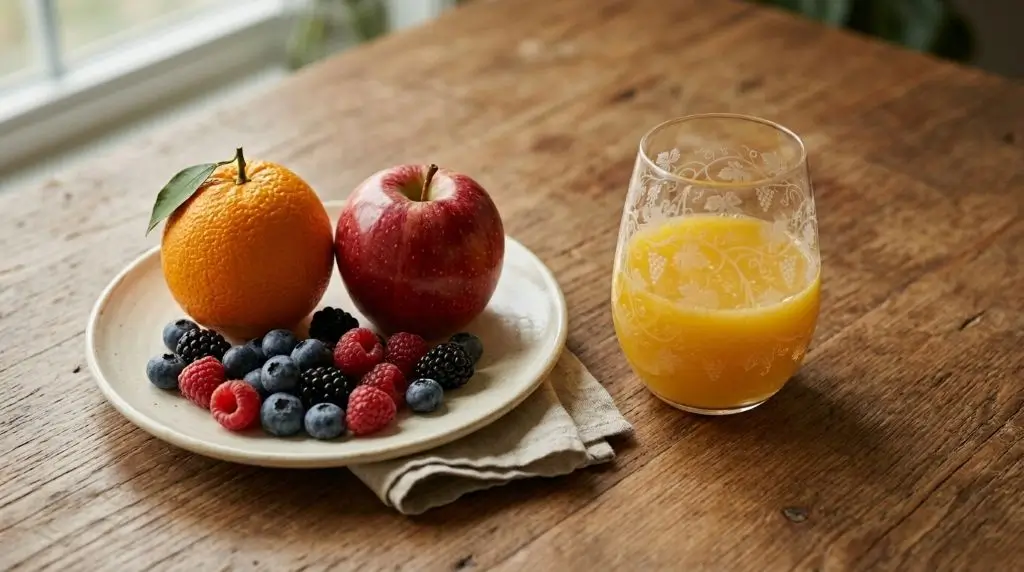
Does fruit juice have fiber? Sometimes, but usually not much.
Whole fruit naturally contains fiber. An orange has about 3 grams. A cup of orange juice has less than 1 gram, sometimes almost none. Many juices contain little or no fiber because the juicing process separates the liquid from the pulp and skin.
Some pulp-containing juices keep a bit more fiber. But even pulp-heavy juice does not match whole fruit.
Juice processing affects the final product in a big way. Fruit juice processing removes most of the structural parts of the fruit. Commercial juicing often removes the skin, seeds, and pulp. Even cold-pressed juice can contain much less fiber than the whole fruit because the juicing process separates much of the fruit’s solid material from the liquid.
The fruit juice fiber content is lower than what you get from eating the whole fruit.
Why Fiber Matters
Fiber plays a real role in how your body works.
Fiber helps with digestion. This is one reason why people notice that fruit juice and digestion feel different than eating whole fruit. Fiber supports normal digestion and certain types of fiber can be used by beneficial gut bacteria. The Academy of Nutrition and Dietetics emphasizes that fiber supports digestive health in ways juice alone cannot.
Fiber helps with fullness. When you eat an apple, the fiber fills your stomach and tells your brain you have had enough. Drink apple juice and your stomach might not get that same signal. That is why fruit juice and fullness do not go together as well as whole fruit and fullness.
Fiber can slow digestion and help moderate how quickly carbohydrates are absorbed. Because most fruit juice contains much less fiber than whole fruit, it does not provide the same fiber-related benefits. That is not dangerous for most people, but it is a difference worth knowing. Whole fruit therefore provides fiber-related benefits that most fruit juice does not provide to the same extent.
Fruit Juice Sugar: Should You Be Concerned?
Let us talk about fruit juice sugar without making it scary. The important question is not simply whether juice contains sugar, but how much you drink and how easily you can consume it.
In whole fruit, naturally occurring sugar comes with fiber, water, and other nutrients. The fiber helps slow digestion and can support fullness. In juice, the natural sugar in fruit juice remains, but much of the fruit’s fiber is removed during juicing. Because juice is easy to drink quickly, it can be easier to consume more sugar and calories than you might get from eating whole fruit.
100% fruit juice contains no added sugar by definition, although some products labeled as juice beverages may contain added sugars. but it can still contain a substantial amount of naturally occurring sugar in a relatively small serving. That does not make 100% juice the same as a sugary soft drink, but the serving size still matters.
The bigger concern is how much juice you drink and what it replaces in your diet. A moderate serving of 100% fruit juice can fit into a balanced eating pattern, but it should not routinely replace whole fruit. The American Heart Association recommends limiting added sugars. While 100% fruit juice is not an added-sugar food, choosing reasonable portions still helps you manage your overall sugar and calorie intake.
100% Fruit Juice vs Fruit Drinks
100% fruit juice is just that: juice from fruit, with nothing added. Fruit-flavored drinks are something else entirely.
A fruit drink or juice beverage often contains water, sugar or high-fructose corn syrup, flavoring, and and varying amounts of fruit juice. These are not the same as 100% juice. Some fruit drinks contain substantial amounts of added sugar, so they should not be treated as nutritionally equivalent to 100% fruit juice.
When you shop, check the label. Look for the words 100% fruit juice. Check that the product is labeled 100% fruit juice and review the ingredients list for added sugars or unnecessary ingredients.
Understanding the difference between fruit drinks and 100% fruit juice can help you avoid unnecessary added sugar.

Fruit Juice Nutrition Facts
Let us look at some real numbers. These fruit juice nutrition facts help explain why portion size matters and why whole fruit and juice are not nutritionally identical.
Fruit Juice vs Whole Fruit Nutrition
| Food | Calories | Carbohydrates | Sugar | Fiber | Protein |
| 1 cup orange juice | ~110–120 | ~26 g | ~21–22 g | <1 g | ~2 g |
| 1 cup apple juice | ~110–120 | ~28–29 g | ~24–26 g | ~0 g | <1 g |
| 1 medium orange | ~62 | ~15 g | ~12 g | ~3 g | ~1 g |
| 1 medium apple | ~95 | ~25 g | ~19 g | ~4 g | ~0.5 g |
Values are approximate and can vary by fruit size, variety, and product. Check the nutrition label for packaged juice.
The numbers make the difference easier to see. A cup of juice can provide vitamins and minerals, but it generally contains much less fiber than the whole fruit. Whole fruit nutrition also comes with the physical structure of the fruit, which means you chew it and typically eat it more slowly.
This matters for fullness and portion control. It is easy to drink a cup of juice quickly, while eating a whole orange or apple takes more time and provides substantially more fiber. For that reason, whole fruit is generally the better everyday choice when you want the full nutritional package, while a moderate serving of 100% fruit juice can still fit into a balanced diet.

Is Homemade Fruit Juice Healthy?
Many people think homemade juice solves the problem.
What Homemade Juice Does Well
When you make juice at home, you control the ingredients. You pick fresh fruit. You do not add preservatives, artificial colors, or extra sweeteners.
What Homemade Juice Doesn’t Solve
Even homemade juice is still juice. When you extract the liquid from fruit, you leave behind most of the fiber. Much of the fruit’s fiber remains in the pulp and solid parts that are removed during juicing.
So is homemade fruit juice healthy? It can be a fine choice in small amounts. But homemade does not automatically mean it is nutritionally the same as eating whole fruit. The fiber is still mostly gone. The sugar is still concentrated. The calories still count.
If you enjoy fruit-based drinks at breakfast, you can also explore our guide on Are Overnight Oats Healthy? for another practical whole-food breakfast option. Blending whole fruit into a smoothie generally retains much more of the fruit’s fiber than juicing it.

Fresh Fruit vs Fruit Juice: Which Is More Filling?
If you are trying to feel satisfied after a snack, Whole fruit will generally be the more filling option.
Whole fruit requires chewing, which sends signals to your brain that you have eaten. The intact fiber fills your stomach and keeps you full longer.
Juice is easier to consume quickly. You can drink a large glass in under a minute. Because juice is easy to drink quickly, it can be easier to consume a larger amount before you feel satisfied. That can make portion control harder.
This is why fruit juice and fullness do not match up as well as whole fruit. If you want to understand how protein and fiber work together to support fullness, see Why Protein and Fiber Keep You Full. If you drink juice and feel hungry an hour later, that is not your imagination. The lack of fiber and the speed of drinking both work against lasting satisfaction.
What Is the Best Fruit Juice to Drink?
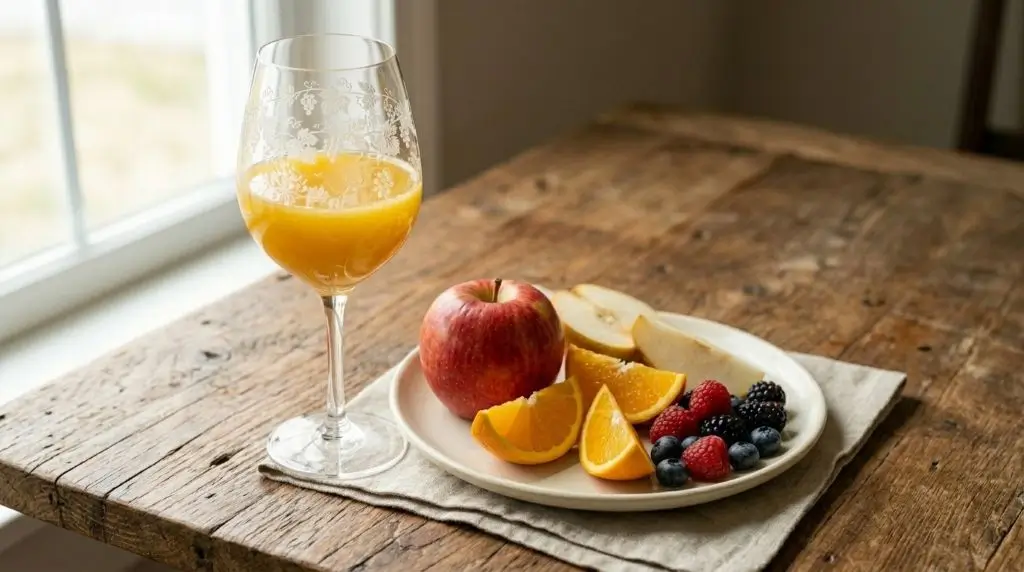
I will not crown a single winner here. The best fruit juice to drink depends on your needs and what is available. But here is a practical checklist:
- Look for 100% fruit juice
- Make sure there is no added sugar
- Stick to a reasonable serving size
- Check that there are minimal unnecessary ingredients
Look for fruit juice without added sugar on the label. If the ingredients list says only juice and maybe water, you are on the right track.
Examples of Common Fruit Juices
Orange juice is high in vitamin C and potassium. Many people drink it for breakfast. Apple juice is mild and naturally sweet but typically contains very little fiber. Grape juice contains certain plant compounds but can be higher in sugar. Pomegranate juice is often blended with other juices, so check the label.
None of these is universally the healthiest option. The best fruit juice to drink every day, if you choose to drink juice daily, is the one that is 100% juice with no added sugar and fits into a small serving. When people search for the best fruit juice to drink every day, they should focus on quality and portion rather than brand.
Can You Drink Fruit Juice Every Day?
Yes, you can. The real question is how much and what kind.
The answer depends on serving size, your overall diet, whether it is 100% juice, and how often you eat whole fruit. Juice should not be your main source of fruit.
Juice can be one of many healthy drinks, but it should not be the only one. Juice does not need to be completely avoided. But it should not automatically replace whole fruit either. Think of juice as one part of your fruit intake, not a replacement for whole fruit.
How Much Fruit Juice Should You Drink?
Let us talk about fruit juice serving size in practical terms.
There is no single serving amount that works for every adult. Your overall diet, calorie needs, age, and how much whole fruit you eat all matter. Dietary guidance generally emphasizes whole fruit over fruit juice, so juice is best treated as one part of your overall fruit intake rather than a replacement for whole fruit.
If you choose 100% fruit juice, keep the portion moderate. Pour a measured serving rather than drinking directly from a large bottle or glass. Drinking juice with a meal can also make it easier to keep the portion reasonable. When possible, choose whole fruit more often because it provides more fiber and tends to be more filling.
Avoid sipping juice throughout the day. Even 100% fruit juice contains calories and naturally occurring sugar, so larger portions can add up over time.
Benefits of Drinking Fresh Juice Daily: What Does the Evidence Really Say?
Fresh juice can provide vitamins, minerals, plant compounds, carbohydrates, and fluid, depending on the fruit used. 100% fruit juice can therefore contribute useful nutrients to your diet when consumed in a reasonable portion.
However, fresh juice is not automatically healthier simply because it is freshly made. Juicing changes the structure of the fruit and usually removes much of its fiber. As a result, juice does not provide the same fullness and fiber benefits as eating the whole fruit.
The benefits of drinking fresh juice daily depend on what juice you choose, how much you drink, and what it replaces in your diet. A moderate serving can fit into a balanced eating pattern, but fresh juice should complement rather than replace whole fruits and vegetables.
Freshness matters less than the bigger picture. Balance matters more.
Whole Fruit or Fruit Juice: Which Should You Choose?
Here is how to decide in real life.
Choose Whole Fruit When:
- you want more fiber
- you want greater fullness
- you want something to chew
- you’re looking for a convenient snack
Choose 100% Fruit Juice When:
- you enjoy it
- you want a convenient source of certain nutrients
- you’re having a moderate serving
- whole fruit isn’t practical at that moment
This balanced approach works better than an all-or-nothing mindset. You do not have to give up juice. You just do not want juice to push whole fruit off your plate.
Simple Ways to Get More Whole Fruit
If you want to eat more whole fruit, here are some easy ideas:
- Add fruit for breakfast instead of reaching for fruit juice. Slice a banana over cereal or oatmeal. For more on the nutritional value of oats, see our guide to Oats Nutrition Benefits. Try an apple with peanut butter. It is crunchy, filling, and easy.
- Mix berries with Greek yogurt. The combination of protein and fiber can make breakfast or a snack more satisfying. For more ideas, see our guide to How to Build a High-Protein Breakfast.
- Keep whole fruit handy for snacks. An orange or a pear fits in your bag. For more simple ideas, see our guide to Healthy Snack Alternatives to Junk Food.
These small habits add up. These simple habits make it easier to get the fiber and fullness benefits that whole fruit provides.

FAQs about Is Fruit Juice Healthy
Q1: Is fruit juice healthy?
It can be part of a healthy diet. 100% fruit juice contains vitamins and minerals. But whole fruit is usually the stronger choice because it has fiber and tends to be more filling.
Q2: Is fruit juice good for you?
In moderate amounts, yes. But drinking too much or choosing juice with added sugar changes the picture.
Q3: Does fruit juice have fiber?
Most fruit juice has very little fiber, even if it has pulp. Whole fruit is a much better source.
Q4: Is homemade fruit juice healthy?
It can be fresher and free of additives. But it still lacks most of the fiber from the original fruit.
Q5: Is 100% fruit juice healthy?
100% fruit juice is generally a better choice than fruit drinks with added sugar, but it still contains naturally occurring sugar and much less fiber than whole fruit.
Q6: Can you drink fruit juice every day?
Yes, in small amounts. Make sure most of your fruit intake comes from whole fruit.
Q7: Which fruit juice is healthiest?
There is no single winner. Look for 100% juice with no added sugar and drink a small portion.
Q8: Is whole fruit better than fruit juice?
For most people, yes. Whole fruit has more fiber, is more filling, and is harder to overeat.
Conclusion
So, is fruit juice healthy? The honest answer is: it depends on the type, the amount, and what else you are eating.
100% fruit juice can provide real nutrients. It can fit into a balanced diet. But whole fruit generally has an important advantage. It keeps its fiber. It is usually more filling. It is harder to overeat.
The practical recommendation is simple. Eat whole fruit most often. Enjoy 100% fruit juice in sensible portions when it fits your eating pattern. You don’t need to fear fruit juice, but you don’t need to treat it as a health drink either. Just treat it as one option among many, and make whole fruit your usual choice, and enjoy 100% fruit juice in sensible portions when it fits your diet.
That is the balanced way to think about fruit. No miracles. No fear. Just practical nutrition that fits real life.
Food & Nutrition Writer at PureHealthBites

Nadeem Sharif is the voice behind PureHealthBites, a blog focused on simple nutrition and everyday food choices. With hands-on experience experimenting with ingredients and meals, he shares practical, gut-friendly ideas to help readers eat well, feel better, and build healthier habits for real life.
Connect With Nadeem