By Nadeem Sharif | Reviewed August 08, 2026 |
Medical Disclaimer:This article is for informational purposes only and does not replace professional medical advice. See our full disclaimer.
Introduction
You open the pantry. You see a bag of dates sitting next to a chocolate bar. Both are sweet. Both taste good. So you wonder: is one actually better for me? Or are dates just fancy sugar in a brown wrapper?
Dates are naturally sweet. Some people call them nature’s candy. Others praise them as one of the healthiest fruits you can eat. So which is true?
This article breaks down the real date fruit nutrition facts. You will learn are dates healthy or if the dates sugar content is something to worry about. We will look at their natural sugars, fiber, vitamins, minerals, and how they fit into a healthy eating pattern. By the end, you will know how to enjoy dates without confusion.
Table of Contents
Date Fruit Nutrition Facts at a Glance
Let us start with the numbers. Understanding dates nutrition facts helps you make sense of what is inside that small, chewy fruit.
Nutrition values vary slightly depending on the variety, ripeness, and whether the dates are fresh or dried, but the overall nutrient profile remains similar.
| Nutrient | Amount (per 100 g) | Daily Value (%)* |
| Calories | 277 kcal | 14% |
| Total Carbohydrates | 75 g | 27% |
| Dietary Fiber | 7 g | 25% |
| Total Sugars | 66 g | — |
| Protein | 2 g | 4% |
| Total Fat | 0.2 g | <1% |
| Potassium | 696 mg | 15% |
| Magnesium | 54 mg | 13% |
| Calcium | 64 mg | 5% |
| Iron | 0.9 mg | 5% |
| Vitamin B6 | 0.2 mg | 12% |
*Daily Values are based on a 2,000-calorie diet. Nutrient content may vary slightly depending on the variety and whether the dates are fresh or dried.
These numbers come from the USDA FoodData Central, which tracks food nutrition across the country. You can explore the full database at USDA FoodData Central.
Quick Fact: One Medjool date provides about 66 calories, naturally occurring sugars, around 1.5 grams of fiber, and important minerals like potassium and magnesium, making it a nutrient-dense way to satisfy a sweet craving.
So when people ask about calories in a date fruit, the answer depends on size. A small Deglet Noor date might have 20 calories. A large Medjool date can hit 66 or more. The date fruit nutrition picture changes based on what kind you pick up.
The dates vitamins and minerals list does not stop at potassium and magnesium. You also get small amounts of copper, manganese, vitamin B6, and iron. Dates are not a multivitamin, but they do carry more than sugar alone. That matters when you compare them to empty-calorie snacks.
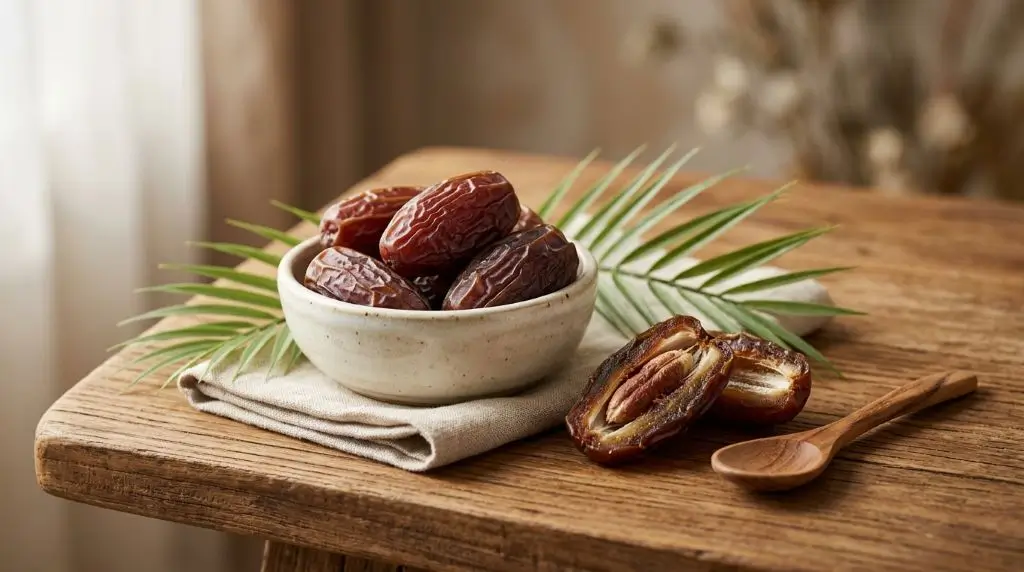
Are Dates Healthy or Just Sugar?
This is the question most people really want answered. Let us be straight about it.
Yes. Dates are high in sugar. A cup of chopped dates packs around 93 grams of sugar. That sounds like a lot because it is a lot.
But here is what makes the story different. The natural sugar in dates comes packaged with fiber, vitamins, minerals, and antioxidants. When you eat a date, you are not eating pure sugar. You are eating a whole food.
Refined sugar, like the white stuff in a soda, hits your bloodstream fast. Your body processes it quickly. You get a spike, then a crash. Dates do not work that way. The fiber slows things down. The vitamins and minerals support many normal functions throughout your body. The antioxidants protect your cells from stress.
So are dates good for you? In the context of a normal diet, yes. They are a fruit. They grow on palm trees. People in the Middle East and North Africa have eaten them for thousands of years. The key is understanding that dates sugar is natural sugar, not added sugar, and that difference matters for your body.
Research from Harvard T.H. Chan School of Public Health suggests that eating whole fruits as part of a balanced diet is associated with better overall health because they provide fiber and other beneficial nutrients. You can read more about their findings on fruit and health at the Harvard Nutrition Source.
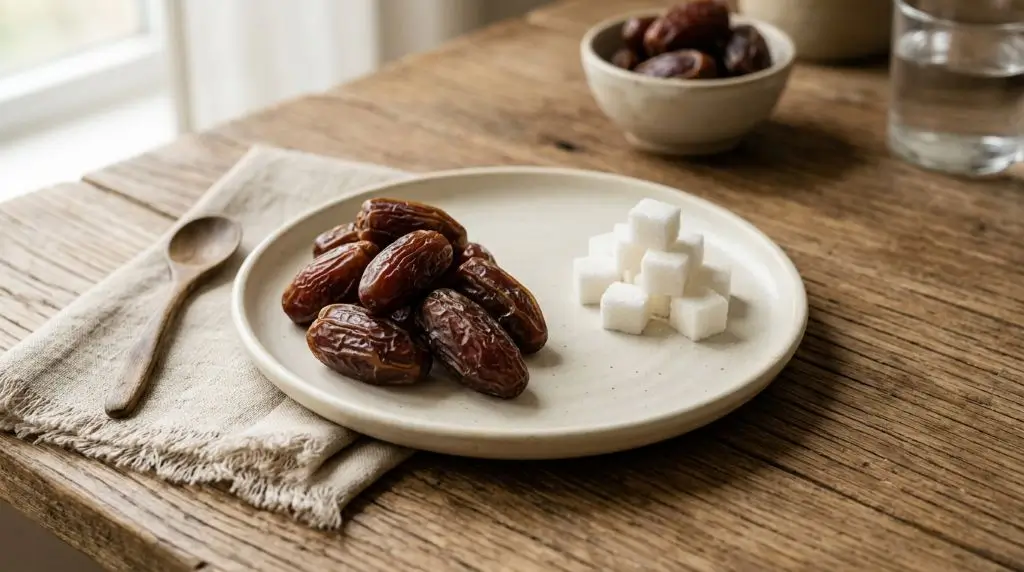
Why Fiber Changes the Story
Fiber is the quiet hero here. It does not get enough credit.
When you eat something sweet without fiber, like a piece of hard candy, the sugar goes straight into your blood. Your pancreas works overtime. You might feel jittery, then tired.
Dates contain fiber. About 7 grams per 100 grams, depending on the variety. That fiber changes everything.
Most of the fiber in dates is soluble fiber, which helps slow digestion and contributes to feelings of fullness.
The fiber in dates slows digestion and helps you stay satisfied longer. Learn more about how this works in our guide, Why Protein and Fiber Keep You Full. The sugar enters your bloodstream at a steadier pace. You do not get the same wild spike. You also feel fuller longer. That is why a couple of dates can satisfy a sweet tooth, while a handful of gummy bears just makes you want more.
Think of it like this. If sugar is the fuel, fiber is the brake. You still get energy, but it is controlled energy. This is why dates fiber matters so much when we talk a]bout dates nutrition benefits. The fiber turns a sweet snack into something that actually supports your body instead of just exciting it for a few minutes.
Dates are one way to increase your daily fiber intake. If you want even more options, see our complete Fiber-Rich Foods List for other naturally high-fiber foods.
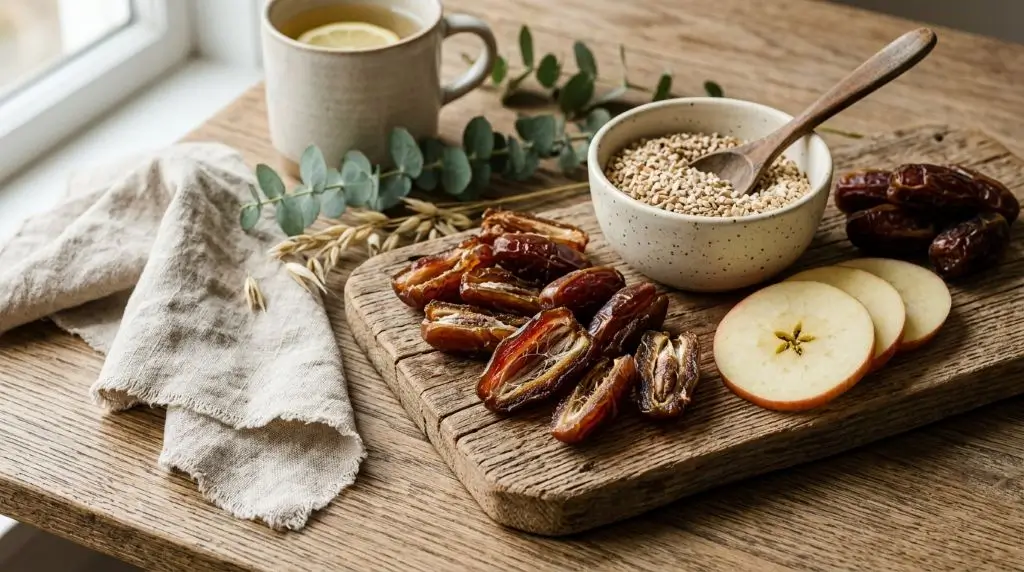
Dates Nutrition Benefits
Dates are not magic. They will not fix everything. But they do offer real benefits when eaten as part of a balanced diet.
Natural Energy
Dates make a solid snack before you move your body. The natural sugars give you fuel, and the fiber keeps it from burning off too fast. Many runners and hikers carry dates in their packs for this reason. It is portable energy that comes from food, not a lab.
Because dates are portable and naturally rich in carbohydrates, many runners, cyclists, and hikers choose them as a convenient source of energy during long activities.
Digestive Health
We already talked about fiber, but it is worth repeating here. Fiber keeps your digestive system moving. Most people do not eat enough of it. Adding a few dates to your day can help you get closer to the recommended amount, which is about 25 to 30 grams daily according to the Mayo Clinic. Learn more about daily fiber needs from Mayo Clinic’s fiber guide.
If you struggle to stay regular, a small handful of dates with water might help more than you expect.
Potassium and Minerals
Dates contain potassium, which your body uses for muscle function and fluid balance. They also have magnesium, which plays a role in over 300 chemical reactions in your body. These dates vitamins and minerals are part of what makes them more than just a sweet treat.
After a hot day outside, your body loses electrolytes through sweat. Dates provide potassium and magnesium, which are two electrolytes your muscles need to work properly.
Antioxidants
Dates contain compounds like flavonoids, carotenoids, and phenolic acid. These antioxidants help protect your cells from damage caused by everyday stress. You cannot see this happening, but your body benefits from it over time. Just remember, dates are food, not medicine. They support health; they do not cure conditions.
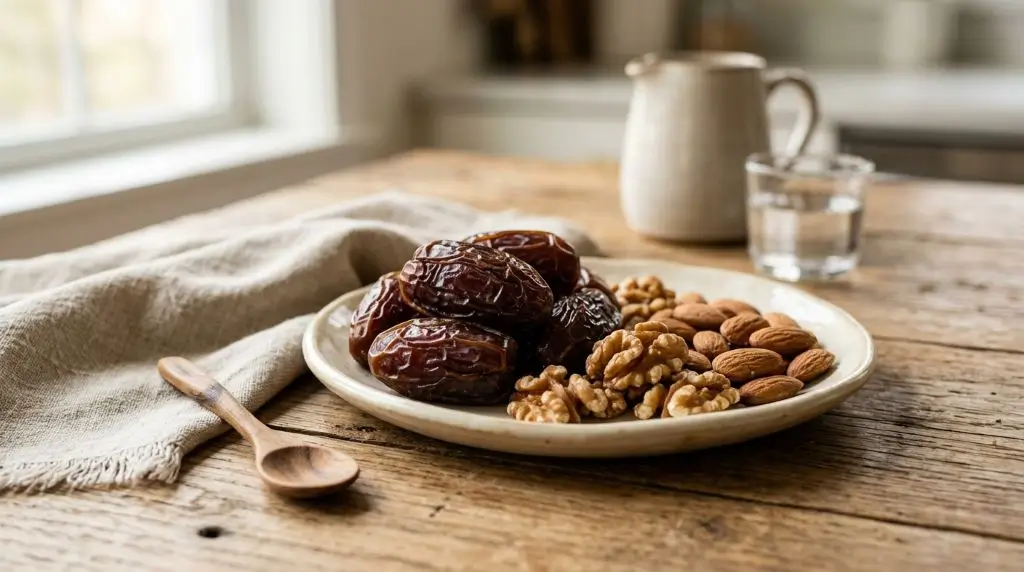
Fresh Dates vs Dried Dates
Fresh dates are soft, moist, and less common in regular grocery stores outside of growing regions. They have a higher water content, which means fewer calories per bite and a milder sweetness.
Dried dates are what most people buy. The drying process removes water, concentrates the sugar, and extends shelf life. A dried date is sweeter, chewier, and lasts months in your pantry.
Here is a simple comparison:
| Factor | Fresh Dates | Dried Dates |
| Water content | High | Low |
| Calories per 100g | ~145 | ~280 |
| Sweetness | Mild | Intense |
| Shelf life | Days to weeks | Months to a year |
So when people ask about dry dates nutrition, the numbers look higher because the water is gone. That does not make dried dates bad. It just means you eat less of them. The dried fruit nutrition profile still includes fiber and minerals. You just get more concentrated energy per bite.
Neither option is automatically healthier. Fresh and dried dates simply provide different amounts of water and concentrated nutrients.
If you want to explore fresh dates vs dried dates further, the University of California Agriculture and Natural Resources has helpful information about date varieties and processing at UC ANR.

Medjool Dates Nutrition
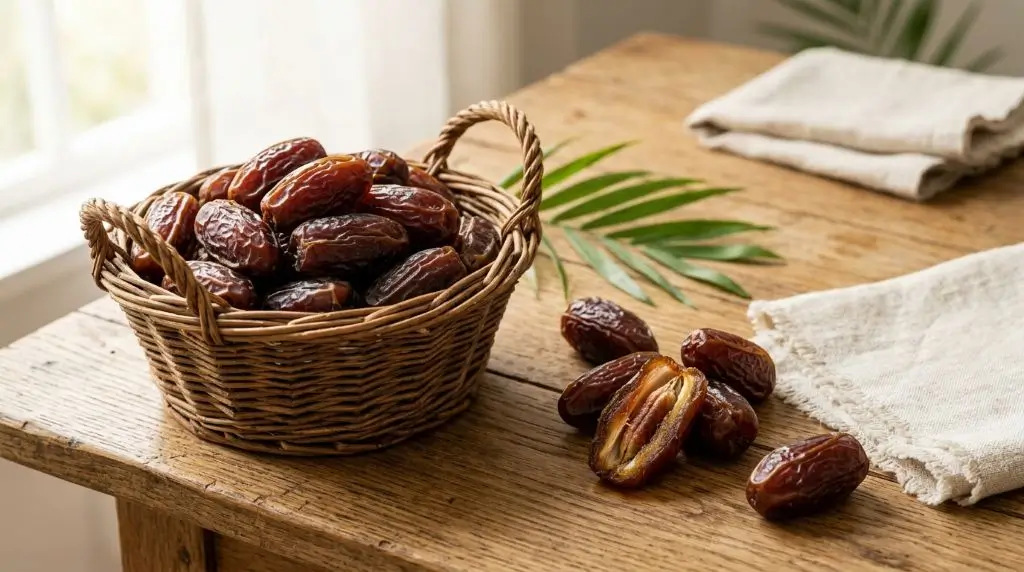
Medjool dates are the big, soft, caramel-like ones you often see in health food stores. They are larger than most other varieties, which is why one Medjool date has more calories than a smaller Deglet Noor date.
Medjool dates nutrition breaks down like this per date:
- Calories: ~66
- Sugar: ~16 grams
- Fiber: ~1.5 grams
- Potassium: ~167 milligrams
They are sweeter and softer because they have more moisture than fully dried varieties. People love them for snacking and stuffing with nuts or cheese.
But Medjool is not the only option. Deglet Noor, Barhi, Zahidi, and Halawi are other varieties. Some are drier. Some are smaller. They all have slightly different textures and sweetness levels. If you only see Medjool at your store, that is normal. They are the most popular export. Just know the world of dates is bigger than one type.
Medjool dates are usually eaten fresh-soft rather than fully dried, although they are still considered a dried fruit commercially.
How Many Dates Should You Eat Per Day?
This is a smart question, and the honest answer is: it depends.
A common portion is 2 to 3 Medjool dates, or 3 to 5 smaller dates like Deglet Noor. But your needs are not the same as your neighbor’s needs.
If you are very active, you might enjoy more. If you are watching your total calorie intake, you might stick to two. If you just want a small sweet thing after lunch, one might be enough.
How many dates to eat per day comes down to your activity level, your overall diet, and your energy needs. There is no rule that fits everyone. The portion size for dates should feel satisfying, not stuffed. Pay attention to how your body responds. If two dates fix your craving, stop there.
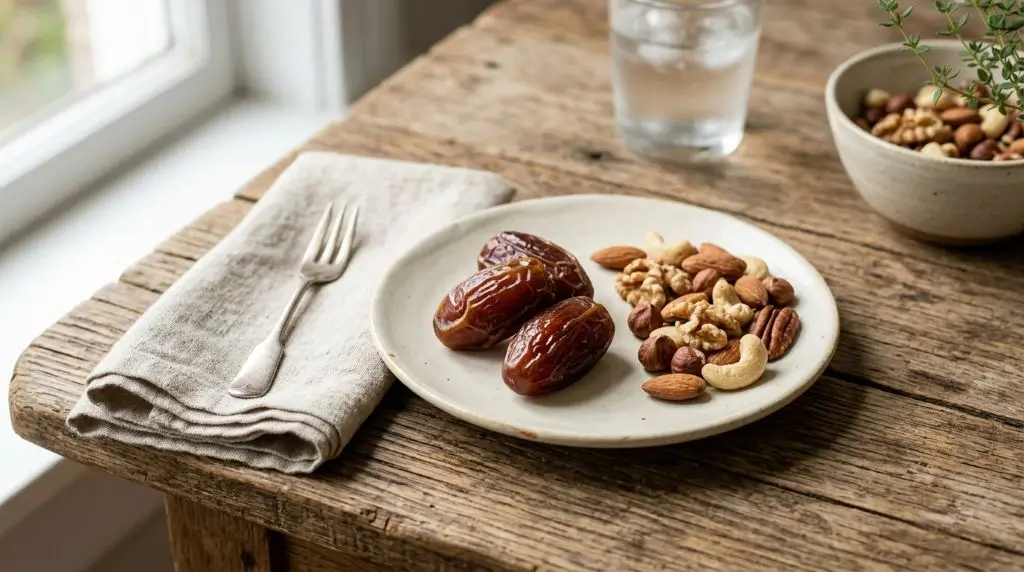
Pairing dates with nuts or yogurt can also make a snack more balanced by adding protein and healthy fats. If you need four before a long bike ride, that works too.
Best Time to Eat Dates
People love timing their food. Here is what makes sense for dates.
Dates for Breakfast
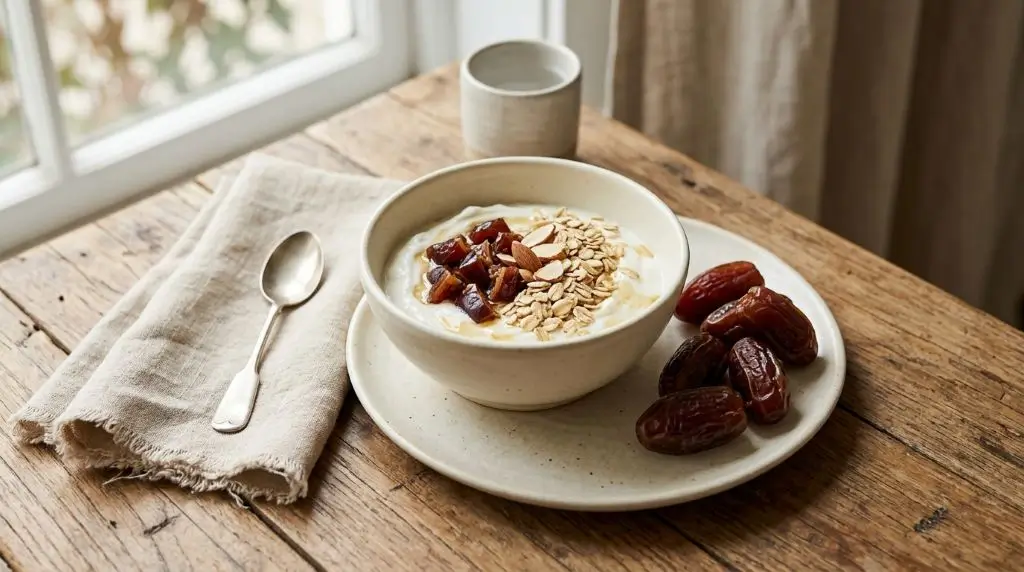
Morning is a great time for dates. Chop them into oatmeal. Blend them into a smoothie. Dates pair well with foods like Greek yogurt, oatmeal, or nuts for a more balanced breakfast. If you are looking for more ideas, explore our guide on How to Build a High-Protein Breakfast. The natural sugars help you wake up, and the fiber keeps you full until lunch. Dates for breakfast work because they combine well with protein and fat, which balances the meal.
Try this: cook half a cup of oats, stir in one chopped date, add a spoon of almond butter, and sprinkle cinnamon on top. It takes five minutes and tastes like dessert.
Dates Before Workout
Dates before workout sessions give you quick, natural fuel. Eat one or two about 30 minutes before you exercise. The carbs are easy to digest, and you will not feel heavy. Many athletes prefer dates over processed energy gels because they are real food.
Dates After Workout
After you sweat, your body wants carbs to refill its stores. Dates after workout combined with a protein source, like a glass of milk or a handful of almonds, help you recover. The sugar refills your muscles. The protein rebuilds them.
Morning or Night?
Some people ask: best time to eat dates morning or night? The truth is, there is not one perfect time. It depends on your goals. Morning works if you want energy for the day. Night works if you want a small sweet snack instead of ice cream. Just do not eat a huge handful right before bed if it bothers your stomach.
The best time to eat dates is whenever they fit your life and your hunger.
Can Dates Support Weight Management?
Let us be clear. Dates are not a weight-loss food. Nobody loses weight just by adding dates to their diet.
But they can still play a helpful role. Dates are calorie dense, which means a small amount has a lot of energy. That sounds like a problem, but it is also why they are filling. Two Medjool dates can help satisfy a sweet craving that might otherwise lead to a large cookie or a candy bar.
The fiber helps you feel satisfied. The natural sweetness means you do not need added sugars. Replacing processed desserts with a few dates can help satisfy a sweet craving while adding fiber and minerals. For more smart swaps, explore our Healthy Snack Alternatives to Junk Food.
So are dates healthy for weight management? They can be, if you watch your portions. They are not free food. Measure them. Enjoy them. Do not mindlessly eat ten while watching TV.
Easy Ways to Enjoy Dates
Dates are versatile. You do not need to be a chef.
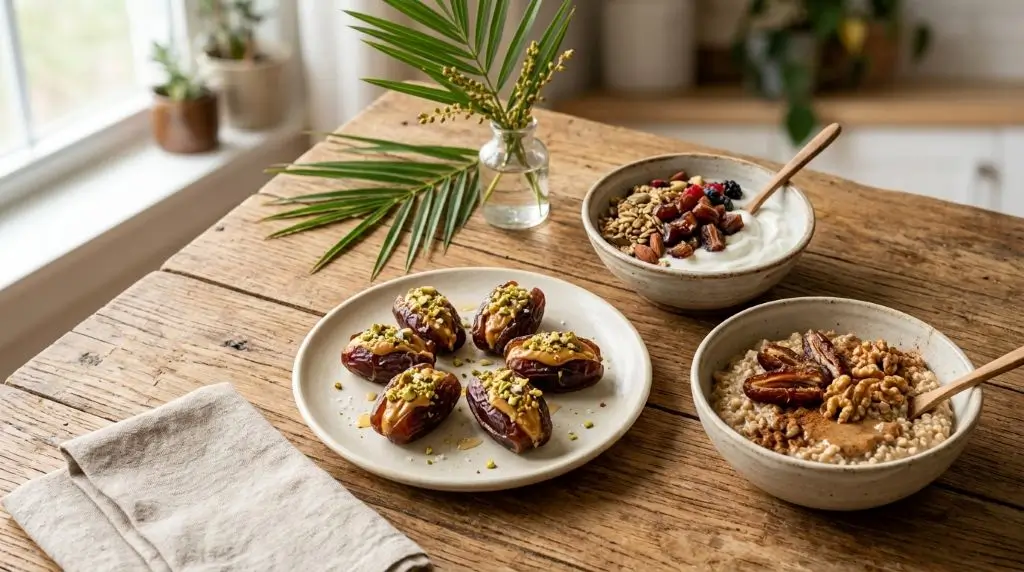
- Stuff dates with natural peanut butter for a satisfying snack that combines natural carbohydrates, protein, and healthy fats. If you are choosing a jar, our Peanut Butter Nutrition Facts guide explains what to look for before you buy.
- Blend them into smoothies for natural sweetness.
- Chop dates into warm oatmeal for natural sweetness and extra fiber. Pair this with the tips in our Oats Nutrition Benefits guide to build a more nourishing breakfast.
- Mix them into homemade trail mix with nuts and seeds.
- Roll them into energy bites with oats and cocoa powder.
- Add them to salads for a sweet contrast against greens.
- Pair them with Greek yogurt and a drizzle of honey.
One of my favorite simple tricks: take a Medjool date, remove the pit, and fill the hole with a whole almond. It takes ten seconds. It tastes like candy. But it gives you fiber, protein, and healthy fat all at once.
FAQs about Date Fruit Nutrition Facts
Q1: Are dates healthier than candy?
Yes, in most cases. Candy gives you sugar and not much else. Dates give you sugar plus fiber, potassium, magnesium, and antioxidants. They are a whole food. Candy is processed.
Q2: Can people eat dates every day?
Yes, if it fits your overall diet. A few dates daily is normal in many cultures. Just watch your portion and balance them with other foods.
Q3: Are dried dates healthier than fresh dates?
Neither is healthier across the board. Fresh dates have more water and fewer calories per gram. Dried dates are more concentrated. Both contain fiber and minerals. Choose based on what you have access to and what you enjoy.
Q4: Are Medjool dates healthier?
Medjool dates are not healthier than other types. They are just bigger and softer. All date varieties offer similar nutrients. The difference is texture and size, not a magic health boost.
Q5: Can you eat dates at night?
Yes. If you want a small sweet snack before bed, dates work better than processed sweets. Just keep it to one or two so you do not feel too full.
Q6: Are dates good before exercise?
Yes. Many people use them as natural fuel before a workout. The carbs digest easily and give you steady energy.
Conclusion
So let us go back to the beginning. You stood in front of your pantry. You saw the dates and the chocolate bar. You wondered if dates were just another way to eat sugar.
Here is the honest answer. Dates are naturally high in sugar. They are also naturally high in fiber and important nutrients. The sugar in dates is not the same as the sugar in a soda or a candy bar. Your body processes it differently because of everything else that comes with it.
The framework is simple. Sugar. Fiber. Balance.
Yes, dates are sweet. Yes, they contain a lot of natural sugar. But they also give you fiber that slows digestion, minerals that support your body, and antioxidants that protect your cells. Enjoyed in sensible portions, they can absolutely fit into a healthy eating pattern.
No winner. No fear. No hype. Just food that has been around for thousands of years, doing what whole foods do. The next time you reach for something sweet, remember that whole foods tell a bigger story than sugar alone. Dates are one example of how nutrition is about the complete package, not a single nutrient. Enjoy them in sensible portions as part of a balanced eating pattern.
Food & Nutrition Writer at PureHealthBites

Nadeem Sharif is the voice behind PureHealthBites, a blog focused on simple nutrition and everyday food choices. With hands-on experience experimenting with ingredients and meals, he shares practical, gut-friendly ideas to help readers eat well, feel better, and build healthier habits for real life.
Connect With Nadeem