By Nadeem Sharif | Reviewed October 3, 2026 |
Medical Disclaimer:This article is for informational purposes only and does not replace professional medical advice. See our full disclaimer.
Introduction – Why Fiber Deserves a Simple Explanation
Eat more fiber. You have probably heard that advice a hundred times. But what does it actually mean? What is fiber, where does it come from, and how much do you really need?
If you have ever felt confused by nutrition advice, you are not alone. Most people know fiber is good for them, but few can explain what it does or how to get enough of it without overdoing it.
This guide will walk you through everything in plain English. You will learn what dietary fiber is, how it works in your body, the difference between fiber types, how much you need each day, and which foods are naturally rich in it. We will also cover practical ways to eat more fiber without stomach discomfort, because suddenly eating much more fiber can cause real digestive discomfort.
The good news? Fiber is not complicated. It is just a normal part of everyday foods you probably already eat.
Our Take:
Fiber is a basic part of a healthy eating pattern, not a special detox ingredient or a nutrient you need to get from supplements. Most people can increase their fiber intake by gradually adding more beans, lentils, vegetables, fruit, whole grains, nuts and seeds to everyday meals. The key is consistency rather than trying to consume as much fiber as possible.
Table of Contents
What Is Dietary Fiber?
So, what is dietary fiber in simple terms? Fiber is the part of plant foods that your body cannot fully digest or absorb in the small intestine. Unlike many digestible carbohydrates, dietary fiber is not fully broken down and absorbed in the small intestine. Some fibers pass through largely intact, while others are fermented by gut microorganisms in the large intestine.
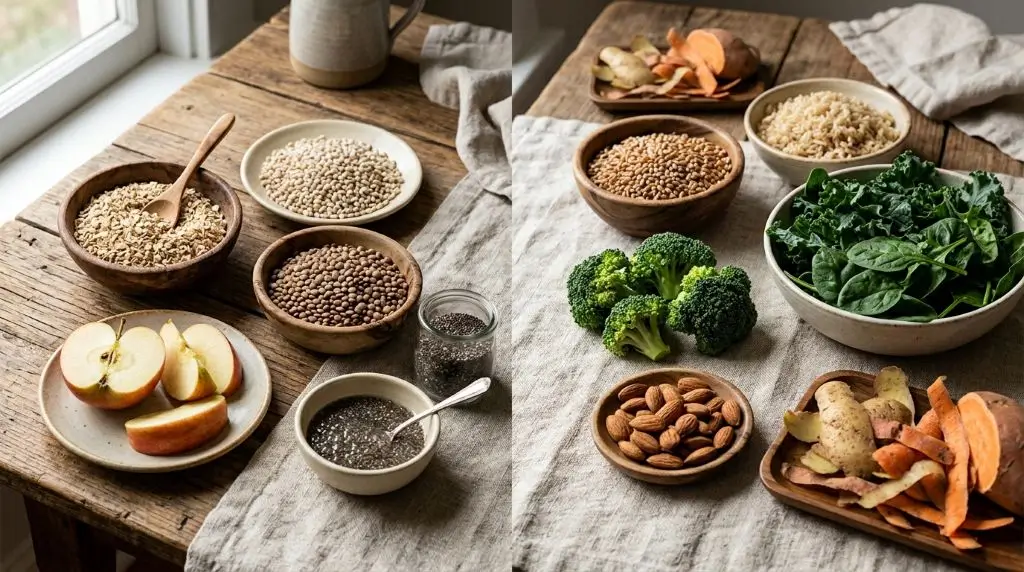
Think of it this way. When you eat an apple, your body digests the natural sugars and uses them for energy. Some of the parts of the apple that your body does not fully digest are dietary fiber. Your body does not break it down the same way, and that is actually a good thing.
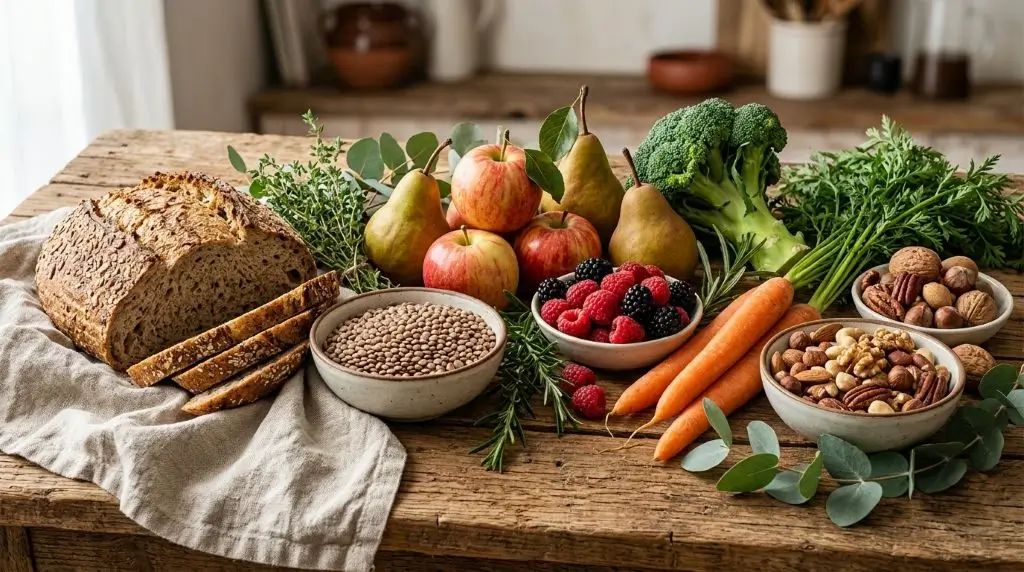
Naturally occurring dietary fiber is found in plant foods. You will not find it in meat, dairy, or eggs. Foods high in fiber include fruits, vegetables, legumes like beans and lentils, whole grains, nuts, and seeds. These foods are what people mean when they talk about dietary fiber foods.
What is dietary fiber in food, really? Much of it comes from the structural parts of plants, such as the cell walls and outer layers of fruits, vegetables and grains. The skin on an apple, the husk on a wheat kernel, the cell walls in a carrot. All of it counts.
Where Does Dietary Fiber Come From?
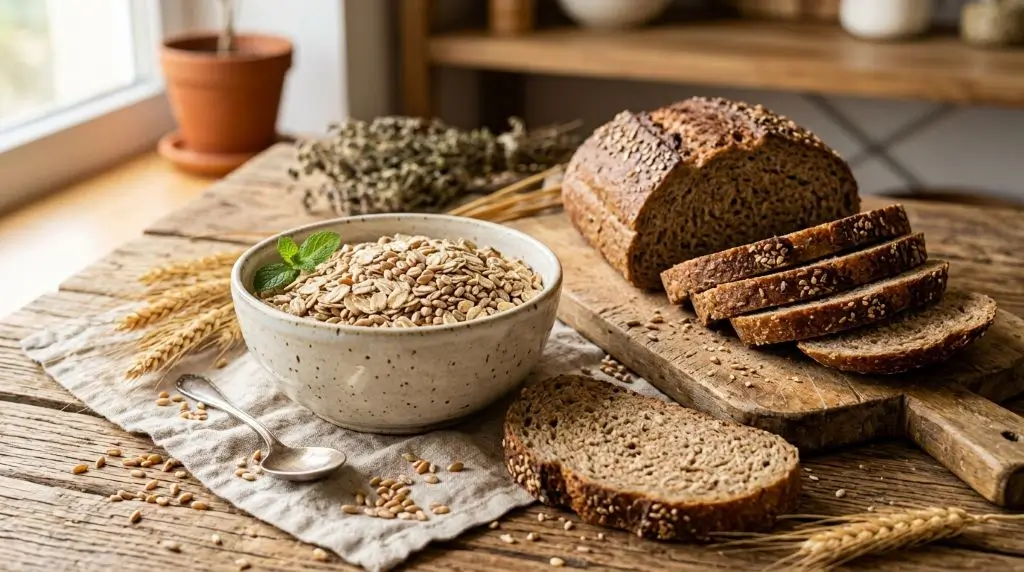
Many plant foods contain dietary fiber, although the amount can vary considerably. A cup of raspberries has a very different fiber count than a slice of white bread.
Here are quick examples to give you a feel for it:
- A bowl of oatmeal has fiber from the oats themselves.
- A cup of cooked lentils has fiber plus plant protein.
- A handful of almonds has fiber from the nuts.
- A pear with the skin on has more fiber than a peeled one.
The pattern is simple. Less-refined plant foods often retain more of their naturally occurring fiber than refined versions.
How Does Dietary Fiber Work?
Now that you know what fiber is, let’s talk about how dietary fiber works once you eat it.
Different fibers behave differently in your digestive system. Some absorb water and form a gel-like material. Others do not dissolve in water at all. Some are broken down by the bacteria in your gut, while others pass through mostly unchanged.
Here is what generally happens:
- Water holding. Many fibers soak up water as they move through your gut. This softens stool and adds bulk.
- Slowing things down. Some fibers can slow digestion and the absorption of nutrients, particularly carbohydrates.
- Fermentation. Certain fibers are fermented by microorganisms in your large intestine, producing compounds such as short-chain fatty acids that can affect the gut environment.
- Bulking. Insoluble fiber can add bulk to stool and help support normal movement through the digestive tract.
So how does dietary fiber work overall? It shapes the entire environment of your gut, from the speed of digestion to the bacteria that live there.
Why Fiber Doesn’t All Work the Same Way
This trips people up. Not every fiber does the same job. The fiber in beans behaves differently than the fiber in celery. Some fibers have stronger effects on stool bulk, while certain soluble fibers have been studied for their effects on cholesterol and digestion. Real foods usually contain a mixture of fiber types.
This is why nutrition experts talk about different types of fiber. Understanding the types helps you make sense of the food lists you see everywhere online.
What Does Fiber Do for Your Body?
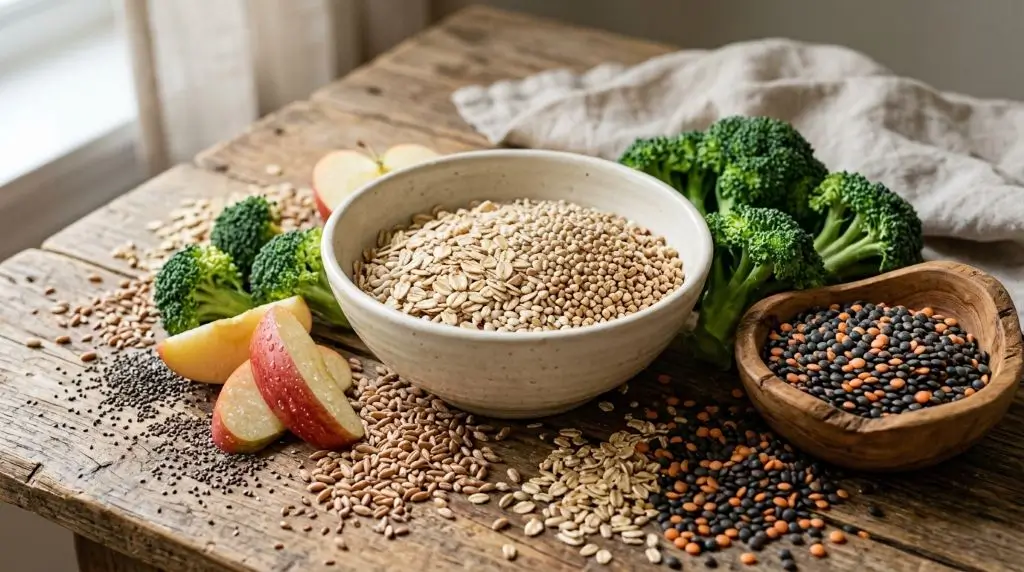
What does fiber do for your body, exactly? Quite a few things, and none of them are magic. They are the natural result of how fiber moves through your system.
Fiber and Digestion
This is the role most people know about. Fiber adds bulk to stool, which helps keep bowel movements regular. When stool has enough bulk and water, it is easier to pass. That is basic digestive function, and fiber plays a direct part in it.
But here is the catch. If you suddenly jump from a low-fiber diet to a very high-fiber one, your digestive system may protest. Bloating, gas, and discomfort are common when fiber goes up too fast. The fix is simple: increase gradually over time, and drink enough water.
That is the honest truth about fiber and digestion. It helps most when you build it up slowly and consistently.
Fiber and Blood Sugar
Some soluble fibers can slow digestion and carbohydrate absorption, which may lead to a more gradual rise in blood glucose after a meal. This is one reason fiber-rich foods can affect how quickly carbohydrate-containing meals are digested.
Whole fruit is a practical example. It keeps its naturally occurring fiber, while fruit juice generally contains much less fiber. That makes whole fruit a useful everyday choice when you want the fiber that comes with the food.
To be clear, fiber is not a treatment for blood sugar conditions. Its effect on blood glucose is one part of the broader nutritional picture, and the type and amount of carbohydrate, along with the rest of the meal, also matter.
Fiber and Cholesterol
Certain soluble fibers, including fibers found in oats and barley, can help support healthy LDL cholesterol levels when eaten regularly as part of an overall healthy eating pattern. The effect is gradual and is one part of the bigger dietary picture.
Notice what that says and does not say. It does not say fiber fixes cholesterol overnight. It says the fiber and cholesterol relationship is one piece of a bigger picture that includes your whole diet over time.
Fiber and Fullness
Fiber-rich foods can contribute to fullness because they add bulk to meals and, depending on the type of fiber and food, may slow digestion. This can contribute to greater meal satisfaction.
This is also why protein and fiber together are such a useful combination. If you want to dig deeper into that idea, check out our guide on Why Protein and Fiber Keep You Full.

Types of Dietary Fiber
Fiber is commonly grouped into two broad categories: soluble and insoluble. They are not competitors. Your body benefits from both, and most fiber-rich foods contain some of each.
Soluble Fiber
Soluble fiber dissolves or disperses in water. Some soluble fibers form a gel-like material as they move through your digestive system. Certain soluble fibers are associated with slower digestion and can help support healthy cholesterol levels.
Foods with notable soluble fiber include:
- Oats and barley
- Beans, lentils, and chickpeas
- Apples and citrus fruits
- Flaxseed and chia seeds
- Brussels sprouts and sweet potatoes
Insoluble Fiber
Insoluble fiber does not dissolve in water. It can add bulk to stool and help support normal movement through the digestive tract.
Foods with notable insoluble fiber include:
- Whole wheat and wheat bran
- Brown rice
- Many vegetables, especially leafy greens and cauliflower
- Nuts
- The skins of fruits and vegetables
Soluble vs Insoluble Fiber
Here is a quick comparison table:
| Feature | Soluble Fiber | Insoluble Fiber |
| Basic behavior | Mixes with water | Doesn’t dissolve in water |
| Common role | Helps form a gel-like material | Adds bulk to stool |
| Food examples | Oats, beans, apples | Whole grains, many vegetables |
One important point. Whole foods almost never contain just one type of fiber. Beans have both. So do apples, oats, and most vegetables. You do not need to categorize every food perfectly or track which type you ate at lunch. Eat a variety of plant foods and you will naturally get both kinds.
How Much Fiber Do You Need Daily?
How much fiber do you need daily? For adults ages 19–50, the general DRI is 25 grams of fiber per day for women and 38 grams for men. Fiber needs can change with age and calorie needs, according to the Institute of Medicine’s recommendations summarized by the National Academies. Many people fall short of these numbers.
Here is the practical framing we want you to keep: a daily recommendation is a target, not a score. You do not need to hit exactly 30 grams every single day. Some days will be higher, some lower. What matters is the pattern across your week.
You can read the full details in the Dietary Guidelines for Americans, which set fiber goals based on calorie intake.
Does Everyone Need the Same Amount of Fiber?
No, and this matters. Fiber needs can vary based on:
- Age. Needs shift as you get older, partly because calorie needs change.
- Sex. Adult men generally need more than adult women.
- Your overall diet. A calorie-based fiber benchmark would generally result in a higher target at higher calorie intakes.
- Individual circumstances. Digestive health and personal tolerance can affect how much fiber you comfortably tolerate and how quickly you should increase it.
So treat any number you see as a starting point, not a law. Your overall diet, digestion, and individual circumstances matter more than treating one number as a strict rule.
What Foods Are High in Dietary Fiber?
Now for the part everyone wants. What food is high in dietary fiber, and which foods should you actually put on your plate?
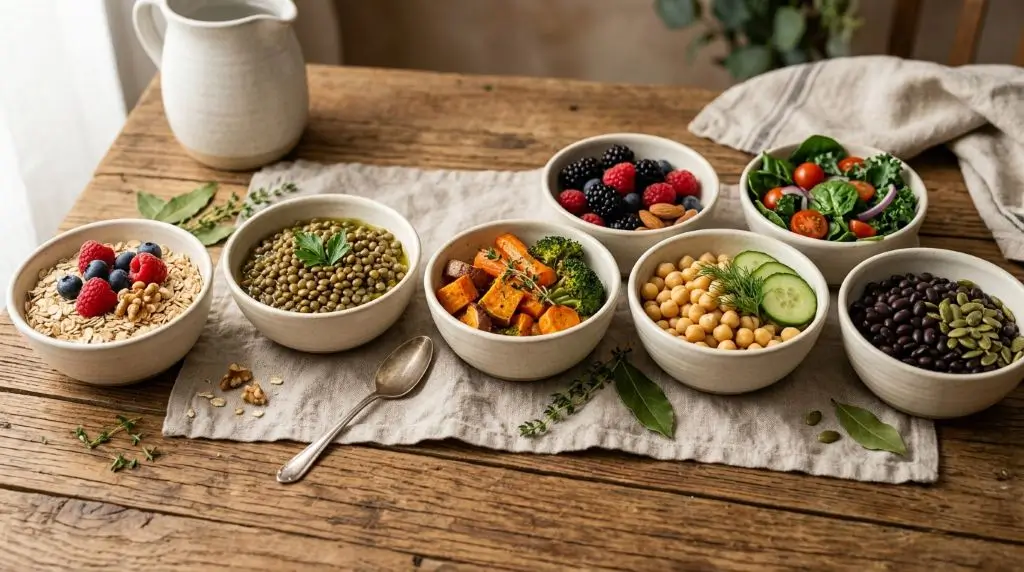
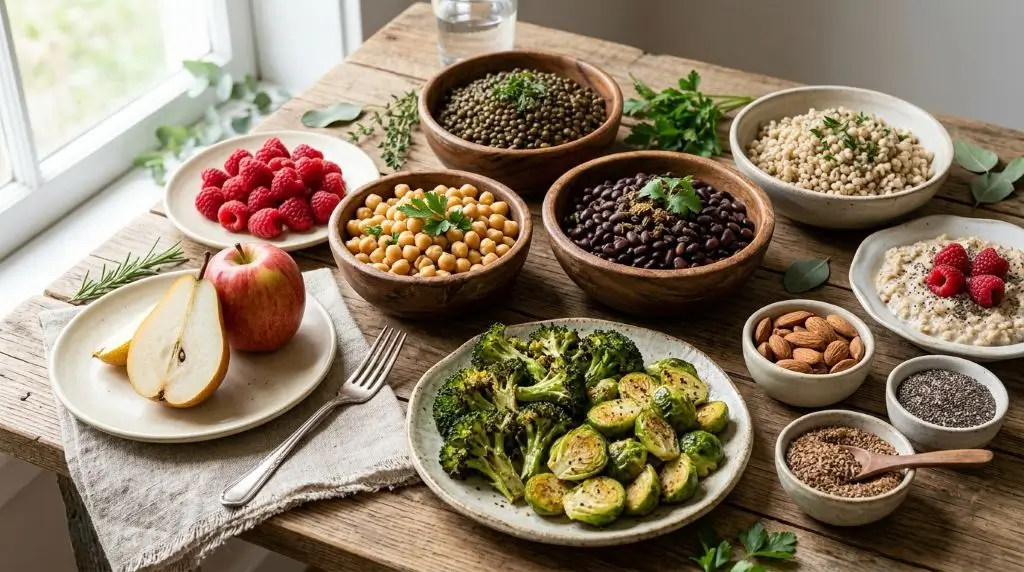
If you have ever wondered what are dietary fiber foods, the answer is simple: beans, lentils, fruits, vegetables, whole grains, nuts, and seeds are some of the best everyday sources.
We organized the top foods high in fiber by category. Fiber amounts vary depending on the specific food, serving size, how it is prepared, and the brand, so treat these as helpful estimates based on USDA FoodData Central values.
Beans, Lentils and Chickpeas
Legumes are some of the most fiber-rich foods you can easily build into everyday meals. They are versatile and often budget-friendly.
- Lentils, cooked, 1 cup: about 15 grams
- Chickpeas, cooked, 1 cup: about 12 grams
- Black beans, cooked, 1 cup: about 15 grams
Add them to soups, salads, tacos, or grain bowls. If you use canned beans, rinsing them can reduce some of the sodium from the canning liquid.
Fruits
Fruit often gets unfairly dismissed because of its natural sugar. That is a myth we will bust later. Whole fruit is one of the easiest ways to add fiber.
If you are asking what food has dietary fiber, whole fruits such as raspberries, pears, apples, and bananas are simple options to include in everyday meals and snacks.
- Raspberries, 1 cup: about 8 grams
- Pear, medium with skin: about 6 grams
- Apple, medium with skin: about 4 grams
- Banana, medium: about 3 grams
When practical, eating edible skins can provide additional fiber.
Vegetables
Almost every vegetable brings fiber to the table, along with vitamins and minerals.
- Artichoke, cooked, 1 medium: about 10 grams
- Brussels sprouts, cooked, 1 cup: about 6 grams
- Broccoli, cooked, 1 cup: about 5 grams
- Carrots, raw, 1 cup: about 4 grams
Roast them, add them to stir-fries, or throw them into soups. It all counts.
Whole Grains
Whole grains keep all parts of the grain kernel, which is where the fiber lives. Refined grains lose most of it during processing.
- Barley, cooked, 1 cup: about 6 grams
- Quinoa, cooked, 1 cup: about 5 grams
- Oatmeal, cooked, 1 cup: about 4 grams
- Whole wheat bread, 1 slice: about 2 grams
Check labels when you buy bread and cereal. Look for whole grain as the first ingredient, and compare fiber numbers between brands.
Nuts and Seeds
Nuts and seeds are compact sources of fiber, healthy fats, and other nutrients.
- Chia seeds, 1 tablespoon: about 4 grams
- Flaxseed, ground, 1 tablespoon: about 2 grams
- Almonds, 1 ounce: about 4 grams
- Pistachios, 1 ounce: about 3 grams
Sprinkle them on yogurt, oatmeal, or salads. A little goes a long way.
Here is a quick reference table:
| Food | Serving | Approximate Fiber |
| Lentils, cooked | 1 cup | 15 g |
| Black beans, cooked | 1 cup | 15 g |
| Chickpeas, cooked | 1 cup | 12 g |
| Artichoke, cooked | 1 medium | 10 g |
| Raspberries | 1 cup | 8 g |
| Barley, cooked | 1 cup | 6 g |
| Pear | 1 medium, with skin | 6 g |
| Quinoa, cooked | 1 cup | 5 g |
| Brussels sprouts, cooked | 1 cup | 6 g |
| Chia seeds | 1 tablespoon | 4 g |
| Apple | 1 medium, with skin | 4 g |
| Oatmeal, cooked | 1 cup | 4 g |
| Almonds | 1 ounce | 4 g |
| Banana | 1 medium | 3 g |
Approximate values; actual amounts vary by food, serving size, preparation and brand. Source: USDA FoodData Central.
How to Get More Fiber Without Overdoing It
Knowing which foods have fiber is one thing. Actually eating more of it is another. Here is how to get more fiber in a way that works in real life.
Start With One Meal
Do not overhaul your whole diet on a Monday. Pick one meal and upgrade it.
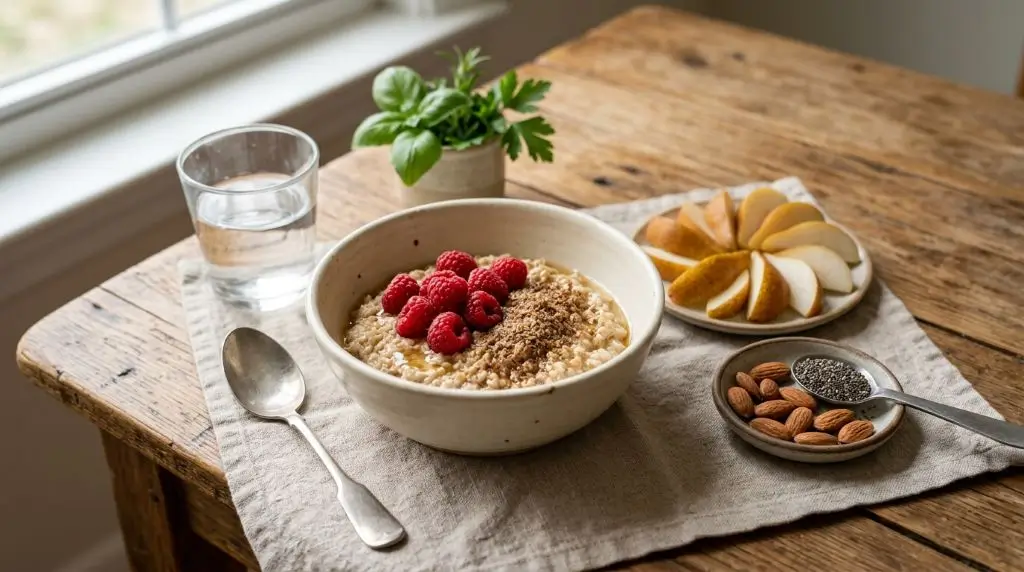
- Breakfast: oatmeal topped with berries and a spoonful of chia seeds.
- Lunch: add lentils or beans to your soup, salad, or grain bowl.
- Dinner: serve an extra vegetable side and swap white rice for brown rice or quinoa.
Improving one meal at a time can make a higher-fiber eating pattern much easier to maintain.
Increase Fiber Gradually
This is the section that saves you from regret. If you go from 12 grams of fiber a day to 35 grams overnight, your digestive system may notice. Gas, bloating, and abdominal discomfort can happen when fiber intake increases too quickly.
The better approach is to increase fiber gradually and give your digestive system and gut microorganisms time to adjust, especially when adding more fermentable fiber.
Remember Fluids
Fiber and water work as a team. When fiber absorbs water, it becomes soft and bulky, which is exactly what you want for comfortable digestion. Without enough fluid, a big increase in fiber can actually make constipation worse.
When increasing fiber, make sure you are also drinking enough fluids for your individual needs.
Choose Foods You Already Enjoy
You do not need to force down foods you dislike. Hate kale? Fine. Eat broccoli, carrots, or green beans instead. Not a fan of lentils? Try chickpeas or black beans.
The way to get more fiber long term is to build it around foods you genuinely like. Willpower runs out. Enjoyment does not.
What Happens If You Don’t Get Enough Fiber?
What are the signs you may not be getting enough fiber? They can be subtle and are not specific to fiber intake.
- Constipation or irregular bowel movements
- Stools that are small or hard
- A diet low in plant foods overall
Here is the important distinction. One low-fiber day is not a problem. Nobody needs to panic over a day of travel eating or a holiday meal. The bigger concern is a consistently low-fiber eating pattern over weeks and months.
Also, these signs are not a diagnosis tool. Many things affect digestion. If you have ongoing digestive concerns, talking with a healthcare professional is the right move.
Can You Get Too Much Fiber?
Yes, and this is worth saying clearly. More is not automatically better.
Very high fiber intakes, especially when they jump up suddenly, can cause:
- Bloating and gas
- Abdominal discomfort
- Cramping
- Changes in bowel habits, sometimes constipation if fluid intake does not keep up
There is also a practical ceiling. Fiber is filling, and if you fill up on it, you may crowd out other important foods.
The sweet spot for most people is meeting the general daily target through food, not chasing record numbers.
Do You Need a Fiber Supplement?
Most people can build a fiber-rich diet from whole foods. Whole foods are the practical foundation, and here is why. A bowl of beans does not just give you fiber. It also provides protein, vitamins, minerals, and other nutrients that an isolated fiber supplement may not provide.
That said, supplements are not automatically a bad choice. They can be a convenient tool in certain situations, like when travel, dietary restrictions, or individual circumstances make food-based fiber harder to obtain. Some people use them on the advice of their doctor.
The balanced view is this. For most everyday eating, building meals around naturally fiber-rich foods is a sensible starting point. If you are considering a supplement regularly, it is worth a conversation with a healthcare professional about your specific situation.
Common Fiber Myths
Fiber advice is full of half-truths. Let us clear up the big ones.
Myth 1: All fiber works the same way
Reality: Soluble and insoluble fiber behave differently in your body. Different fibers support digestion, fullness, and cholesterol in different ways.
Myth 2: More fiber is always better
Reality: There is a point of diminishing returns. Jumping too high too fast causes discomfort, and extremely high intakes are not necessary for most people.
Myth 3: Fiber is only useful for digestion
Reality: Digestion is the most famous role, but fiber also plays a part in fullness, blood sugar response, and cholesterol support as part of an overall healthy diet.
Myth 4: You need supplements to get enough fiber
Reality: Most people can reach their fiber goals with everyday foods like beans, oats, fruits, and vegetables. Supplements are optional tools, not requirements.
Myth 5: Fruit does not count because it contains sugar
Reality: Whole fruit comes packaged with fiber, water, and nutrients. Whole fruit provides fiber along with its naturally occurring sugars, while juice generally contains much less fiber. Whole fruit and candy are not the same thing.
Myth 6: You have to completely change your diet to eat more fiber
Reality: Small swaps work. Brown rice instead of white. Beans in your soup. An apple instead of chips. Incremental changes add up over time.
Simple Ways to Add Fiber to Everyday Meals
No complicated meal plan. Just simple swaps.
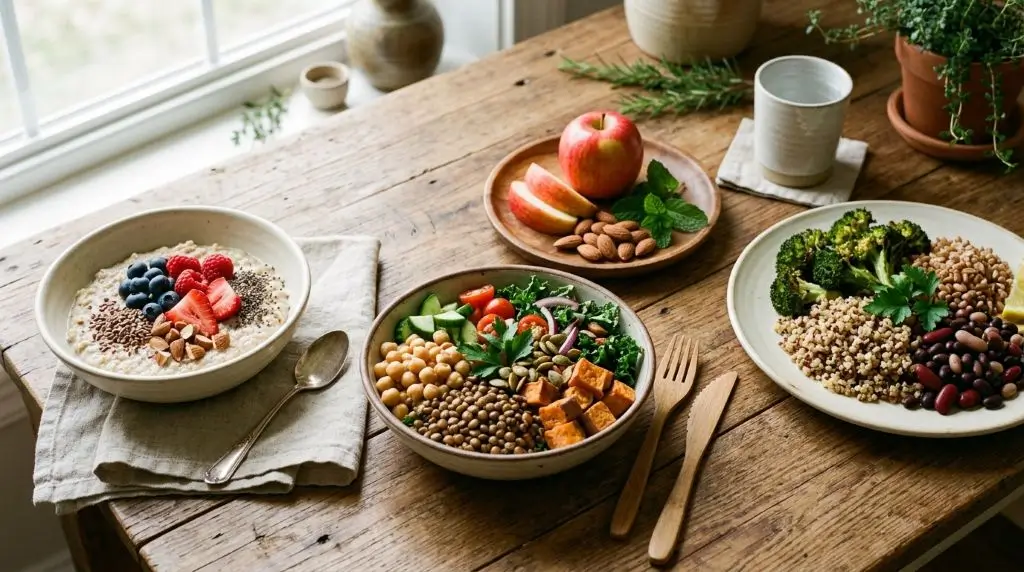
- Breakfast: Oatmeal with sliced fruit and a sprinkle of seeds. If mornings are rushed, our comparison of Oatmeal vs Overnight Oats can help you pick a routine that fits.
- Lunch: Add lentils or beans to soup, salad, or a grain bowl. Canned beans make this a two-minute job.
- Snack: Fruit with a handful of nuts. If you want to level up your snack game, read our guide on Healthy Snack Alternatives to Junk Food.
- Dinner: A vegetable side, a whole grain, and some beans or lentils alongside your protein. It does not need to be fancy.
Curious about seeds? Our Flaxseed vs Chia Seeds breakdown covers the differences and how to use each one.
This is what fiber for everyday health actually looks like. Normal food, small upgrades, repeated daily.
FAQs About Dietary Fiber
Q1: What is dietary fiber?
Dietary fiber is the part of plant foods that your body cannot fully digest or absorb in the small intestine. It is found naturally in fruits, vegetables, beans, lentils, whole grains, nuts, and seeds.
Q2: What does fiber do for your body?
Fiber adds bulk to stool and supports regular bowel movements. Some types can slow digestion and carbohydrate absorption, which may lead to a more gradual blood glucose response after a meal. Certain soluble fibers can also support healthy cholesterol levels as part of an overall healthy diet. Fiber can also help you feel full after meals.
Q3: How much fiber do you need daily?
For adults ages 19–50, the general DRI is 25 grams per day for women and 38 grams per day for men. Needs can vary with age and calorie intake. Treat this as a flexible target rather than a number you must hit exactly every day.
Q4: What foods are high in dietary fiber?
Lentils, black beans, chickpeas, raspberries, pears, artichokes, Brussels sprouts, barley, oats, chia seeds, and almonds are all strong sources. Whole and minimally processed plant foods are practical sources of naturally occurring fiber.
Q5: What is the difference between soluble and insoluble fiber?
Soluble fiber dissolves in water and can form a gel-like material. Insoluble fiber does not dissolve and adds bulk to stool. Most whole foods contain some of both.
Q6: How can I get more fiber every day?
Upgrade one meal at a time. Add beans to lunch, eat fruit with the skin on, choose whole grains over refined ones, and sprinkle nuts or seeds on your food. Increase gradually and drink enough water.
Q7: Can too much fiber cause problems?
Yes. Sudden large increases can lead to gas, bloating, cramping, and abdominal discomfort. Build up slowly over several weeks to give your digestive system time to adjust.
Q8: Do I need a fiber supplement?
Most people can get enough fiber from food alone. Supplements can be useful in specific situations, but whole foods provide fiber along with many other nutrients. Talk with a healthcare professional if you are considering regular use.
Conclusion
So, what is dietary fiber? It is simply the part of plant foods your body does not fully digest, and it quietly does important work as it moves through you. Now you understand it.
The path forward is straightforward. Choose fiber-rich foods you actually enjoy. Increase your intake gradually so your stomach stays happy. Drink enough water to help things along. And be consistent, because a decent fiber intake most days beats a perfect intake once in a while.
You do not need supplements, detoxes, or a total diet makeover. You need ordinary foods like beans, oats, fruit, and vegetables, showing up on your plate regularly.
That is fiber for everyday health in a nutshell. Real food. Practical portions. No need to overthink it.
Food & Nutrition Writer at PureHealthBites

Nadeem Sharif is the voice behind PureHealthBites, a blog focused on simple nutrition and everyday food choices. With hands-on experience experimenting with ingredients and meals, he shares practical, gut-friendly ideas to help readers eat well, feel better, and build healthier habits for real life.
Connect With Nadeem