
Medical Disclaimer:This article is for informational purposes only and does not replace professional medical advice. See our full disclaimer.
Introduction
Overnight oats seem to show up everywhere. You see them on Instagram, in meal prep videos, and in your coworkers lunch bag. There is a good reason for that. They are easy. You throw oats and milk in a jar, stick it in the fridge, and breakfast is ready when you wake up. No cooking. No mess. No standing over a stove when you are barely awake.
But here is where things get confusing. People wonder about overnight oats calories. They ask if these cold oats help with weight loss or if they are just another trendy breakfast that sounds healthy but is not. Some jars on social media are loaded with peanut butter, chocolate chips, and granola. Those versions can pack a lot more energy than you expect.
So how healthy are overnight oats, really? That depends mostly on portions, toppings, and overall balance. And are overnight oats good for you? The truth is simpler than the hype. Overnight oats are convenient, but the toppings and portions matter a lot.
In this article, we will look at overnight oats nutrition facts, fullness, protein, weight management, and overnight oats vs oatmeal. We will keep it realistic. No magic promises. Just practical info you can actually use.
Table of Contents
What Makes Overnight Oats Healthy?
Before we talk toppings and weight loss, let us look at what is actually in the base. Plain oats soaked in milk are pretty simple stuff. The real oats nutrition benefits come from the fiber and energy they provide, but the details matter.
Overnight Oats Nutrition Facts at a Glance
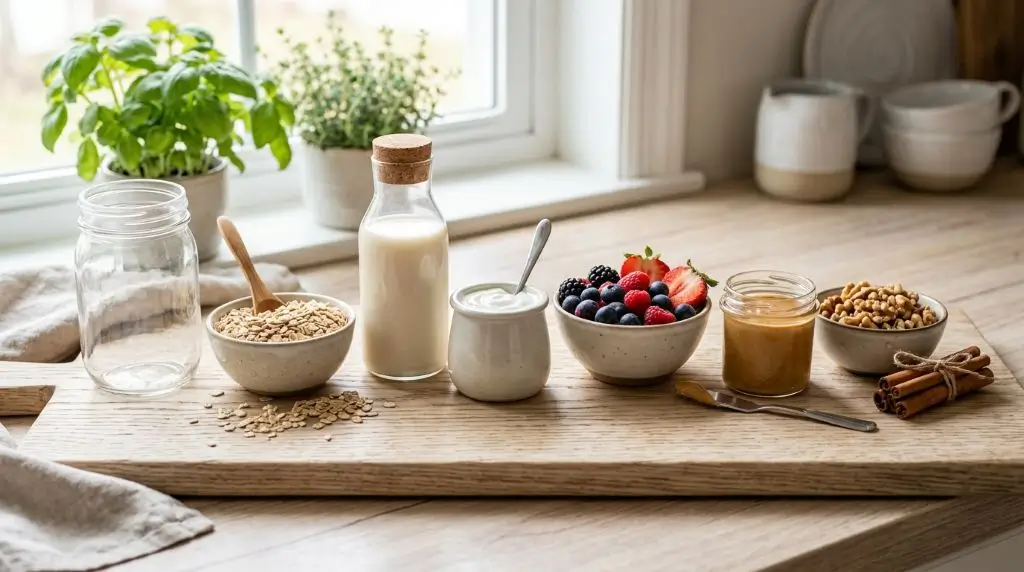
Let us start with the basics. A typical serving of overnight oats uses about half a cup of dry rolled oats. When you soak them in milk or yogurt, the oats absorb liquid and expand. The base itself is pretty straightforward.
Half a cup of dry rolled oats contains roughly 150 calories, 27 grams of carbs, 4 grams of fiber, and 5 grams of protein. The Mayo Clinic recommends whole grains like oats as part of a healthy eating pattern. Those numbers come from the USDA FoodData Central. When you add milk, yogurt, fruit, or seeds, the numbers change. That is important to remember. Overnight oats calories depend heavily on what you add in.
A plain version with oats and skim milk might land around 200 calories. A loaded jar with almond butter, maple syrup, coconut flakes, and granola can climb past 600 calories without you even noticing. Both can be fine.
It just depends on your day and your hunger. The oats nutrition benefits come from fiber and complex carbs that give you steady energy. The add-ins determine whether your jar becomes a light breakfast or a dense meal.
Why Soaking Oats Changes the Texture, Not the Nutrition
Here is something people ask a lot. Does soaking oats overnight make them more nutritious? Not really. The oats nutrition benefits stay mostly the same whether you eat them hot or cold. Soaking just softens the oats. It changes the texture. Some people find cold soaked oats easier to eat. Others like that they do not need to chew as much.
There is some chatter about digestion and phytic acid. Some people believe soaking may slightly reduce compounds that affect mineral absorption. The research on this is mixed and not something to worry about for a normal breakfast. If cold soaked oats feel good in your stomach, that is a solid reason to eat them. If hot oatmeal feels better, that works too. The nutrition is similar either way.
Are Overnight Oats Healthy for Everyday Eating?
A lot of people wonder if eating cold oats every single morning is too much. The short answer is no, but there are a few things to keep in mind. Let us break down daily use and realistic portions so you can decide what works for your routine.
Can You Eat Overnight Oats Every Day?
So, can you eat overnight oats every day? Yes. For most people, it is completely fine. The key is what you put in them and what else you eat during the day. Looking at overnight oats nutrition facts, oats offer fiber and carbs. They help with regularity and energy. But you still need variety. You still need vegetables, protein sources, and healthy fats at other meals.
Think of overnight oats as one tool in your kitchen. Not the only tool. If you eat them every morning, switch up the toppings. One day add berries and chia seeds. Another day try walnuts and sliced apple. This keeps your taste buds happy and gives you a wider mix of nutrients. The overnight oats benefits add up most when your overall diet is balanced.
How Much Overnight Oats Per Day Is Reasonable?
A good starting point is half a cup of dry oats. That is a realistic breakfast portion for many adults. If you are very active or work a physical job, you might need more. If you are smaller framed or not super hungry in the morning, you might need less.
The mistake I see often is oversized mason jars. People fill a 16-ounce jar to the top and call it one serving. That can easily be a cup or more of dry oats plus a ton of toppings. That is a lot of food. It might leave you too full or add more calories than you need. Pay attention to your hunger. Start with a modest portion and adjust from there. For most adults, this amount works well as a balanced overnight oats breakfast.
Overnight Oats Benefits for Fullness and Energy
One of the main reasons people stick with overnight oats is how they feel hours after eating. They tend to keep you full and steady, which is a big deal on busy days. Here is why that happens and how protein plays a role.
Overnight oats help in two main ways:
- They support fullness for longer
- They provide steadier energy through the morning
Why Overnight Oats Keep You Full
One of the big overnight oats benefits is how they keep hunger away. Fiber slows digestion. Harvard Health notes that fiber helps you feel full and supports heart health. When oats absorb milk or yogurt, they swell up and create volume in your stomach. That physical fullness matters. You are less likely to reach for a mid-morning snack if your breakfast actually fills you up.
Adding protein helps even more. We will get to that next. But even plain oats with milk tend to last longer than a slice of toast or a muffin. The complex carbs break down slowly. You get a steady stream of energy instead of a quick spike and crash. This is similar to why protein and fiber keep you full longer after meals. For busy mornings, that steady energy is a big deal.
Overnight Oats Protein: Is It Enough?
Oats alone give you about 5 grams of protein per half cup. That is moderate. It is not enough to carry a whole breakfast for most people, especially if you want to stay full until lunch. This is why overnight oats protein levels need a boost.
Greek yogurt is a popular add-in because it boosts protein and creates a thicker, creamier texture. The Cleveland Clinic suggests including protein at breakfast to maintain energy and muscle health. Chia seeds and hemp seeds bring protein plus healthy fats. Milk, whether dairy or soy, adds more protein than water. Nuts like almonds or walnuts also help.
If you already enjoy high-protein breakfasts, overnight oats can fit into that routine easily.
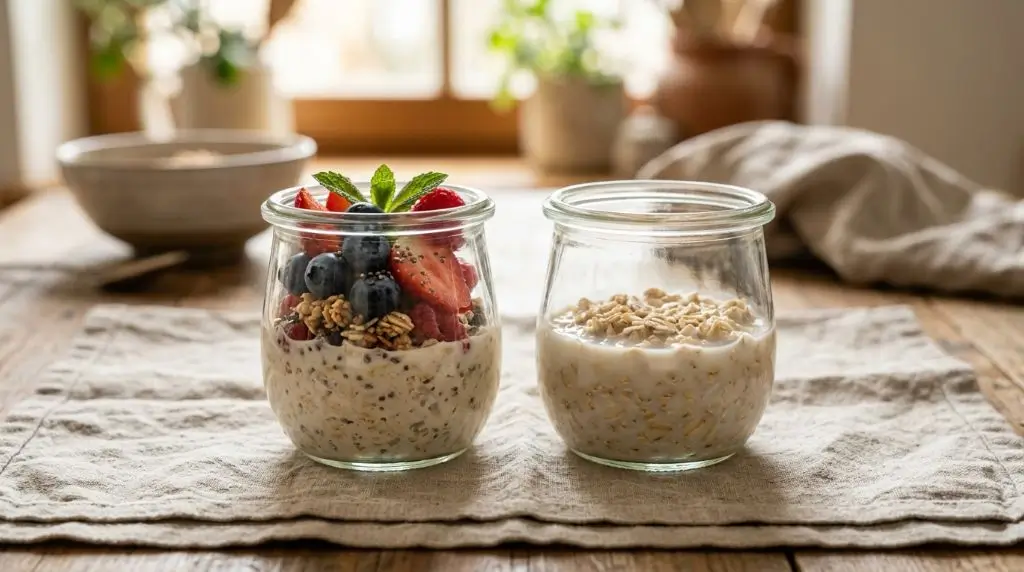
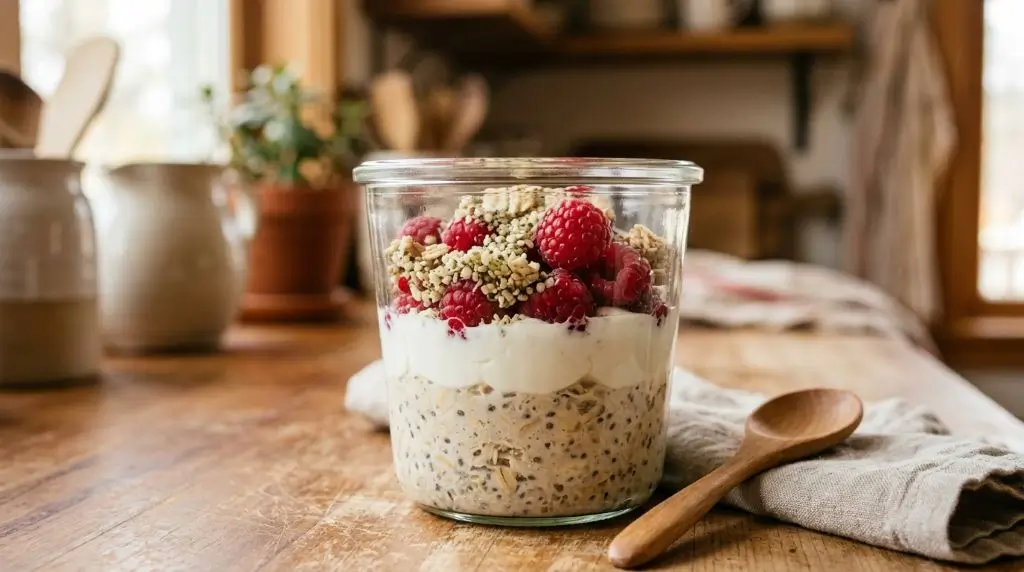
A balanced jar might include half a cup of oats, half a cup of Greek yogurt, half a cup of milk, a tablespoon of chia seeds, and some berries. That combination gives you fiber, protein, and carbs in one place. It is a practical breakfast that supports your morning without overcomplicating things.
Are Overnight Oats Good for Weight Loss?
This is probably the most common question people ask about breakfast trends. Everyone wants to know if a jar of oats will help them drop pounds. The truth is a little more practical than magical, so let us look at what actually helps with weight management.
What Helps Most with Weight Management
People ask all the time, are overnight oats good for weight loss? Here is the honest answer. No single food burns fat. What helps with weight management is fullness, routine, and not eating extra snacks because you are starving by 10 a.m.
Overnight oats can help with that. They give you a consistent breakfast option that is ready to go. When you have a solid morning meal waiting in the fridge, you are less likely to grab a pastry at the coffee shop. That consistency matters more than any magic ingredient.
Simple breakfast routines often make healthy eating easier to maintain. If overnight oats fit your life and keep you satisfied, they can support your goals. Just keep the jar balanced. Loading it with honey and chocolate every day might work against you.
What Makes Overnight Oats High in Calories?
This part trips people up. Healthy ingredients still contain calories. Nut butters are nutritious but dense. Two tablespoons of peanut butter add about 190 calories. Sweeteners like maple syrup or agave add up fast. Chocolate chips, granola, and coconut flakes are tasty but easy to overdo.
Large portions are another factor. A huge jar with a full cup of oats, a banana, almond butter, and granola can hit 700 or 800 calories. That might be perfect for someone with high energy needs. For someone trying to manage weight, it might be too much.
The point is not to fear these foods. It is to be aware. Overnight oats calories can climb fast when you load up on toppings. Oats nutrition benefits do not cancel out energy from add-ins. Build your jar with intention. Use enough to enjoy it. Just do not turn breakfast into dessert every single day.
Overnight Oats vs Oatmeal: What to Know?
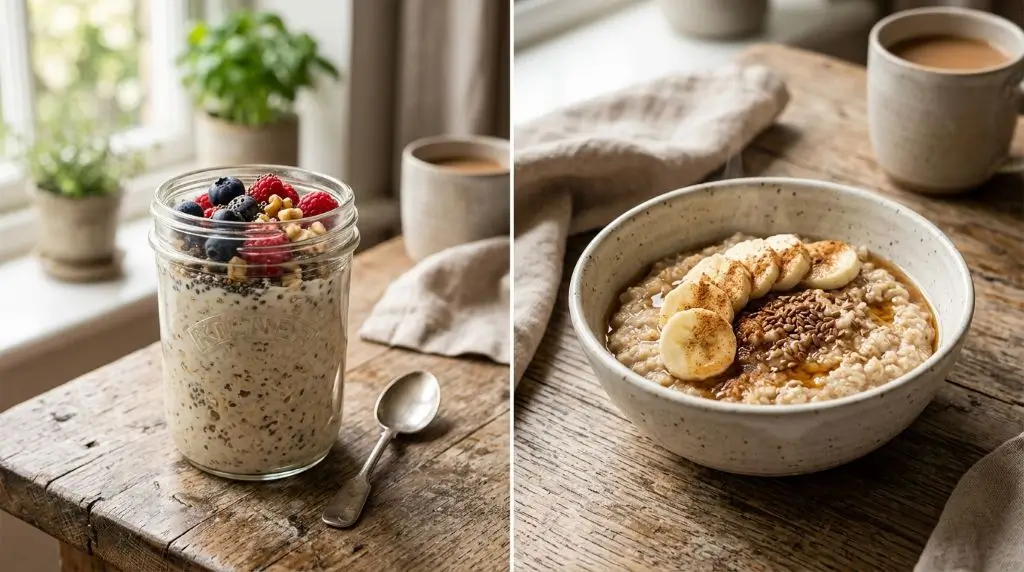
People love to debate which version wins. The reality is that both have the same core ingredients and similar nutrition. The choice usually comes down to texture, temperature, and what fits your morning schedule.
Main Differences Between Overnight Oats and Hot Oatmeal
Let us talk about overnight oats vs oatmeal. The main differences are temperature, texture, convenience, and prep time.
Overnight oats:
• Cold and creamy
• Prepped the night before
• Ready to grab in the morning
Hot oatmeal:
• Warm and soft
• Cooked fresh in the morning
• Feels more comforting in colder weather
Overnight oats usually take five minutes to prep the night before. Hot oatmeal takes around five to ten minutes to cook in the morning.
Some people feel more satisfied after a warm meal. The warmth and steamy texture feel comforting, especially in winter. Others prefer the cold, pudding-like texture of soaked oats. There is no right or wrong here. Your body might prefer one or the other depending on the season.
We break this down further in our guide on oatmeal vs overnight oats. The biggest difference is how they fit your schedule.
Which One Fits Better into Real Life?
If your mornings are rushed and you barely have time to brush your teeth, overnight oats make a lot of sense. Grab the jar and go. If you work from home or have time to cook, hot oatmeal might feel more satisfying.
There is no universal winner. Consistency matters more than temperature. If you will actually eat overnight oats because they are ready, choose them. If you will skip them because you crave something warm, make hot oatmeal.
Both give you the same oats nutrition benefits. The one you will stick with is the right choice for you.
Best Oats for Overnight Oats
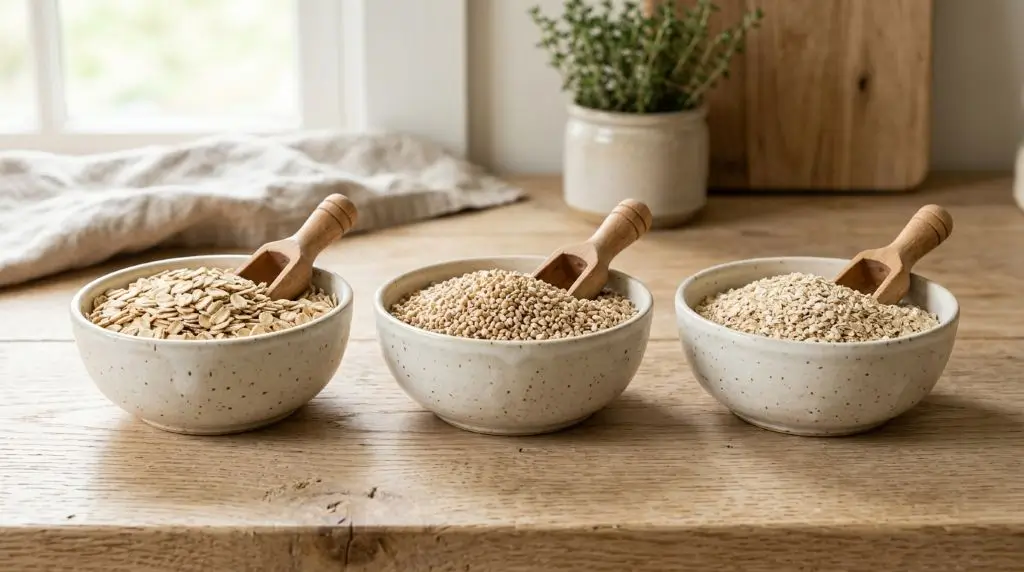
Not all oats behave the same way when you soak them. The type you pick changes the texture a lot. Here is what to expect from rolled, instant, and steel-cut oats so you can choose your favorite.
Why Rolled Oats Work Best
Rolled oats are the middle ground. They are steamed and flattened, so they soften overnight without turning to mush. They keep some chew. That texture is what most people expect when they think of overnight oats. Old-fashioned rolled oats are the standard for a reason.
Can You Use Instant or Steel-Cut Oats?
You can, but the texture changes. Instant oats are thinner and more processed. They get very soft after soaking. Some people like that. Others find it mushy and unappealing.
Steel-cut oats are the whole oat groat chopped up. They stay chewy for a long time. If you soak them overnight, they will still have a bite. Some people love that. Others find the texture too chewy. You can soak steel-cut oats for two nights to soften them more. It is a texture preference. There is no rule saying you cannot experiment.
Healthy Overnight Oats Recipe Ideas
Once you understand the basics, building a good jar is easy. You do not need a fancy recipe book or hard-to-find ingredients. A simple formula and a few flavor combos are all you need to keep breakfast interesting.
Simple Balanced Overnight Oats Formula
Here is a simple formula that works. Start with half a cup of rolled oats. Add half a cup of milk or a milk alternative. Add half a cup of Greek yogurt for creaminess and a protein boost. Add a handful of fruit for flavor and fiber. Top with a tablespoon of seeds or nuts for crunch and healthy fats.
Mix it in a jar or bowl. Let it sit in the fridge for at least four hours. Overnight works well. That is it. You do not need fancy ingredients. You do not need a recipe book. This basic structure gives you fiber, overnight oats protein from the yogurt, carbs, and fat in one meal.
This basic structure works well for a healthy overnight oats recipe because it balances carbs, protein, fiber, and healthy fats.
Easy Flavor Combinations
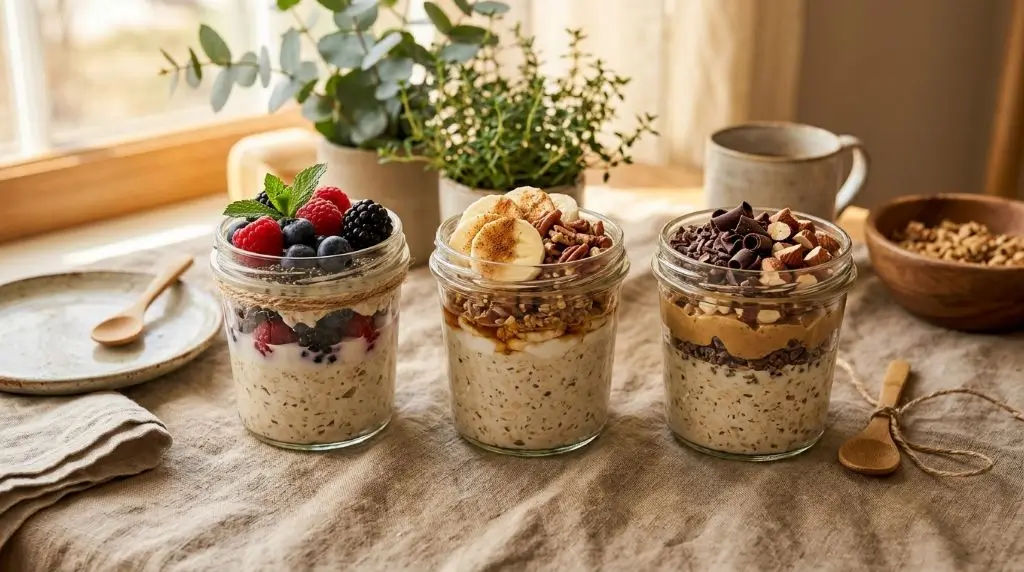
Keep it simple. Try berry chia with frozen blueberries, chia seeds, and a little vanilla. Try banana cinnamon with sliced banana and a sprinkle of cinnamon. Apple walnut works great with diced apple and chopped walnuts. Peanut butter cocoa is tasty with a small spoon of peanut butter and a little cocoa powder.
You do not need to get complicated. These combos use ingredients you probably already have. Rotate them so you do not get bored.
Common Mistakes People Make with Overnight Oats
Let us wrap up with some real mistakes people make with overnight oats. Most problems are not caused by the oats themselves. They usually come from portions and toppings.
Adding Too Much Sugar
A drizzle of honey or maple syrup is fine. But if every jar tastes like dessert, the calories can climb quickly. Sweeteners, flavored yogurt, chocolate chips, and sugary granola add up fast.
Using Oversized Portions
A large mason jar is not automatically one serving. Filling a 16-ounce jar to the top can easily double the amount of oats and toppings you actually need. Measuring your oats once or twice helps you understand realistic portions.
Skipping Protein
Plain oats with fruit alone may leave you hungry by mid-morning. Adding Greek yogurt, milk, chia seeds, hemp seeds, or nuts makes the meal more balanced and satisfying.
Assuming All Overnight Oats Are Healthy
Just because something contains oats does not automatically make it balanced. A jar loaded with Nutella, candy toppings, and sweet sauces works more like dessert than breakfast.
Overloading Toppings
Healthy toppings still contain calories. Nut butters, granola, coconut flakes, and dried fruit can turn a light breakfast into a very dense meal if portions get too large.
Turning Breakfast Into Dessert Daily
Dessert-style overnight oats are completely fine once in a while. But for everyday eating, simpler combinations usually work better. Oats, fruit, protein, and a few balanced toppings are often enough.
Final Verdict: Are Overnight Oats Healthy?
So, are overnight oats good for you? Yes, when portions and toppings stay balanced. Overnight oats are a practical and healthy breakfast option for busy people. They offer fiber and complex carbs that support steady energy. When you add protein, they keep you full longer.
They are not magic for weight loss. They will not melt fat or replace a balanced diet. If you have been asking are overnight oats good for weight loss, the answer is they can support your habits but not do the work for you. Simple habits matter more than trendy recipes. If you like them, if they fit your routine, and if you build them with reasonable ingredients, they are a solid choice.
If you have been asking can you eat overnight oats every day, the answer is yes with balanced toppings. The oats nutrition benefits are real. They come from the whole grain fiber, the energy from complex carbs, and the flexibility to add what your body needs. Overnight oats work well as part of an overall balanced routine. Not as a miracle. Just as a smart, simple breakfast that makes your mornings easier.
FAQs about Are Overnight Oats Healthy
Q1: Are overnight oats healthy?
Yes. Overnight oats can be a healthy breakfast when made with balanced ingredients and reasonable portions.
Q2: Are overnight oats good for weight loss?
They can support weight management because fiber and protein help keep you full longer.
Q3: How many calories are in overnight oats?
Basic overnight oats calories depend on ingredients, but a simple serving often ranges from 250 to 400 calories.
Q4: Can you eat overnight oats every day?
Most people can eat them daily as part of a balanced diet.
Q5: What are the best oats for overnight oats?
Rolled oats usually work best because they soften well overnight without turning mushy.
Q6: Are overnight oats better than oatmeal?
Not necessarily. Overnight oats and hot oatmeal offer similar nutrition. The better choice depends on your routine and texture preference.
Food & Nutrition Writer at PureHealthBites

Nadeem Sharif is the voice behind PureHealthBites, a blog focused on simple nutrition and everyday food choices. With hands-on experience experimenting with ingredients and meals, he shares practical, gut-friendly ideas to help readers eat well, feel better, and build healthier habits for real life.
Connect With Nadeem