By Nadeem Sharif | Reviewed June 23, 2026 |
Medical Disclaimer:This article is for informational purposes only and does not replace professional medical advice. See our full disclaimer.
Introduction
Standing in the cooking oil aisle can feel overwhelming. One bottle says extra virgin olive oil. Another says avocado oil. Then you see butter and ghee sitting on the cold shelf nearby. If you have ever wondered about plant oils vs animal fats, you are not alone.
Most home cooks want to know which option makes sense for everyday meals. This guide breaks down the real differences without making things complicated. We will look at where these fats come from, what makes them different, and how they perform in your kitchen.
You will also get a healthy fats comparison that looks at saturated vs unsaturated fats in plain language. Whether you are drizzling oil on salad or frying eggs in butter, understanding cooking fats and oils helps you cook with more confidence and less confusion.
Table of Contents
What Are Plant Oils and Animal Fats?
Before comparing nutrition, it helps to understand where these fats come from and how people use them.
What Are Plant Oils?
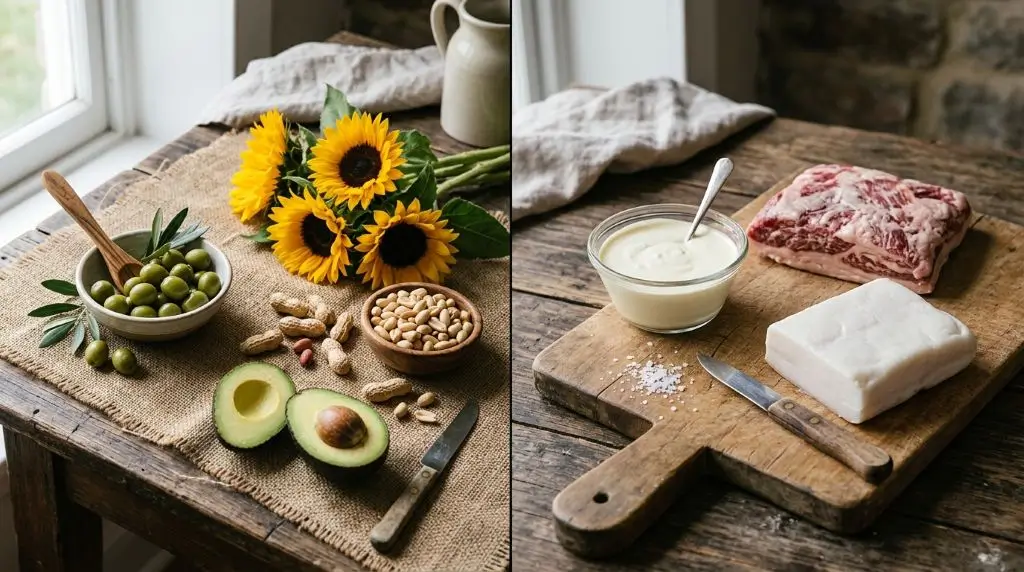
Plant oils come from seeds, nuts, and fruits. People press or extract the oil from the source and bottle it for cooking. Common examples include olive oil, avocado oil, canola oil, peanut oil, and sunflower oil.
Olive oil comes from pressed olives. Avocado oil comes from the flesh of avocados. Canola oil comes from rapeseed. Peanut oil comes from peanuts. Sunflower oil comes from sunflower seeds. These oils stay liquid at room temperature because of their fat structure.
You will find them in salad dressings, marinades, and everyday sautéing. Many cultures have used plant oils for centuries. The Mediterranean diet, for example, relies heavily on olive oil as a daily fat source.
What Are Animal Fats?
Animal fats come from meat and dairy. Butter comes from churning cream. Ghee is clarified butter with the milk solids removed. Lard comes from pig fat. Tallow comes from beef or sheep fat. These fats often feel solid at room temperature, though some soften when the kitchen gets warm. People use them for baking, roasting, and traditional cooking. My grandmother kept a jar of bacon grease by the stove. She used it for frying potatoes and making biscuits. That is a real example of how animal fats show up in home cooking. They add a rich taste that many people enjoy.
Plant Oils vs Animal Fats at a Glance
Here is a simple way to see the difference.
| Feature | Plant Oils | Animal Fats |
| State at Room Temp | Usually liquid | Usually solid |
| Main Fat Type | Mostly unsaturated | More saturated |
| Typical Vitamins | Vitamin E, K | Fat-soluble A, D, K2 |
| Best For | Everyday cooking, dressings | High heat, flavor, baking |
| Dietary Pattern | Mediterranean, DASH | Traditional, keto, paleo |
Which Fat Is Good: Saturated or Unsaturated?
This is one of the most common questions people ask when comparing cooking fats and oils. Let’s settle the saturated vs unsaturated fats question in simple terms.
What Are Saturated Fats?
Saturated fats stay solid at room temperature. Common sources include butter, ghee, lard, and tallow. Coconut oil is also high in saturated fat, even though it comes from a plant.
The carbon atoms in saturated fats are covered with hydrogen atoms. That makes them stable but dense. The American Heart Association suggests keeping saturated fat to about 13 grams per day for most adults eating a 2,000-calorie diet.
What Are Unsaturated Fats?
Unsaturated fats stay liquid at room temperature. Common sources include olive oil, avocado oil, canola oil, and peanut oil. These fats have one or more double bonds in their carbon chains. Monounsaturated fats have one double bond.
Polyunsaturated fats have more than one. These fats tend to be more flexible and fluid. Many health organizations encourage people to choose unsaturated fat sources more often.
Which Fat Type Is Better for Everyday Use?
So which fat is good saturated or unsaturated? For most people, unsaturated fats are generally recommended because they fit heart-healthy eating patterns and work well for everyday cooking. \
They replace some sources of saturated fat without sacrificing flavor. That said, balance matters. You don’t need to banish butter from your kitchen. You just might want to use olive oil for sautéing and save butter for the Sunday roast.
If you are deciding between the two, a closer look at butter vs olive oil can help. The Mayo Clinic notes that a diet rich in unsaturated fats, especially when it replaces saturated fat, may support healthy cholesterol levels.
Vegetable Oils vs Animal Fats: Key Nutrition Differences
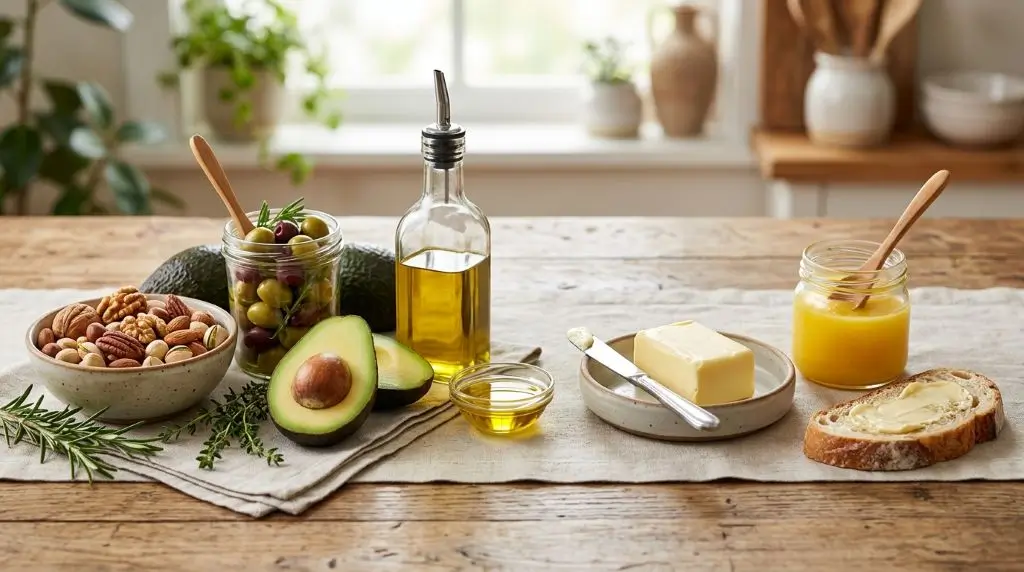
Although plant oils and animal fats both provide energy and flavor, their nutrition profiles can differ significantly. When you look at vegetable oils vs animal fats side by side, the fat types stand out as the main difference.
Comparing Fat Composition
All fats contain a mix of fatty acids, but the ratios vary. Saturated fats have no double bonds between carbon molecules. Unsaturated fats have one or more double bonds. Plant oils usually contain more monounsaturated and polyunsaturated fats.
Animal fats usually contain more saturated fat. For example, olive oil is about 73% monounsaturated fat. Butter is about 50% saturated fat. Understanding saturated vs unsaturated fats helps you make smarter swaps in the kitchen.
These numbers matter because they affect how the fat behaves in your body and in your pan. The Harvard T.H. Chan School of Public Health explains that replacing some saturated fat with unsaturated fat is associated with better heart health outcomes. .
Healthy Fats Comparison at a Glance
| Nutrition Factor | Plant Oils | Animal Fats |
| Main Fat Type | Mostly Unsaturated | More Saturated |
| Texture | Usually Liquid | Usually Solid |
| Vitamin Content | Often Vitamin E | Some Fat-Soluble Vitamins |
| Everyday Use | Highly Versatile | More Limited |
This healthy fat comparison shows the basic trade-offs. Plant oils tend to offer more flexibility for daily use. Animal fats bring specific nutrients but usually fit fewer cooking roles.
Why Fat Type Matters
The type of fat you cook with affects more than taste. It affects texture, cooking temperature, and how the fat fits into your overall eating pattern. If most of your fat comes from one source, you might miss out on the variety your body likes.
Different fats also handle heat differently. We will cover that more in the cooking section. For now, just know that mixing up your fat sources usually works better than relying on just one.
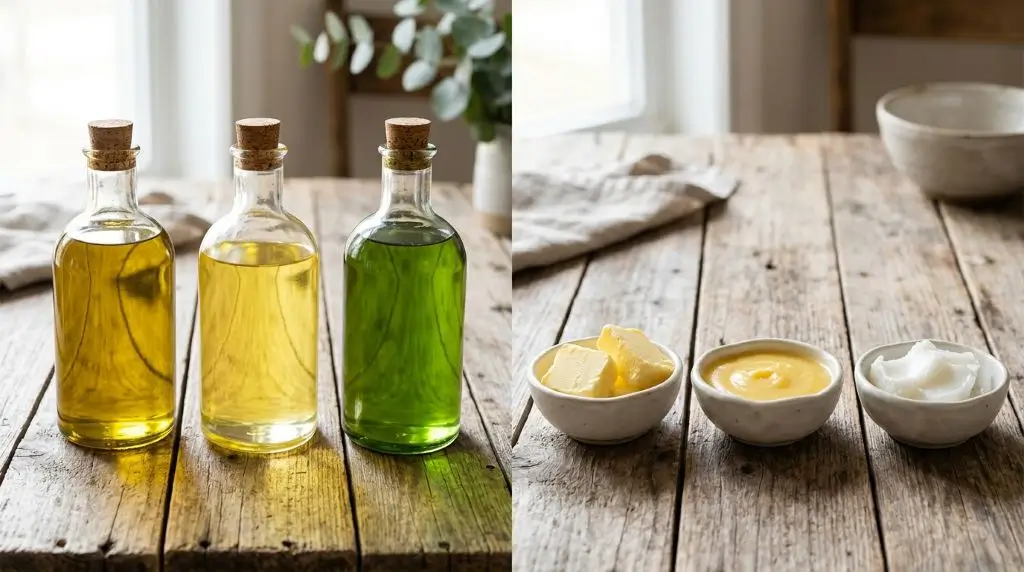
Plant Based Oils Benefits
Plant oils are popular because they are versatile, widely available, and easy to incorporate into everyday meals. Learning about plant based oils benefits can change how you stock your pantry.
Why Many People Choose Plant Oils
People often choose plant oils because they:
- Are rich in unsaturated fats
- Work in many recipes
- Fit Mediterranean-style eating patterns
- Come in a variety of flavors
Plant oils are popular because they are versatile and easy to use in everyday cooking. They can be used in everything from stir-fries and roasted vegetables to baking and salad dressings.
Many people also choose plant oils because they fit Mediterranean-style eating patterns, which researchers have studied for decades. Flavor is another advantage.
Extra virgin olive oil tastes peppery and bright, peanut oil has a mild nutty taste, and avocado oil is almost neutral. This variety makes it easier to match the oil to the dish you are preparing.
Another benefit is convenience. Many plant oils stay fresh for months when stored in a cool, dark place. The plant based oils benefits go beyond nutrition alone. They also make cooking simpler because they are versatile, widely available, and easy to use.
Popular Plant Oils for Everyday Cooking
Popular choices include:
- Olive oil
- Avocado oil
- Canola oil
Olive oil works well for sautéing vegetables, making vinaigrettes, and drizzling over finished dishes. Many people also choose it because of its reputation as a healthy everyday cooking fat.
It handles medium heat cooking comfortably. Extra virgin olive oil offers more flavor, while regular olive oil can tolerate slightly higher temperatures.
Avocado oil has a high smoke point of around 520°F. This makes it a good choice for searing, grilling, and high-heat roasting. It also has a mild flavor that does not overpower other ingredients.
Canola oil is a budget-friendly option with a neutral taste. It works for baking, frying, and everyday cooking. It also contains some omega-3 fatty acids, which adds to its appeal as an all-purpose cooking oil.
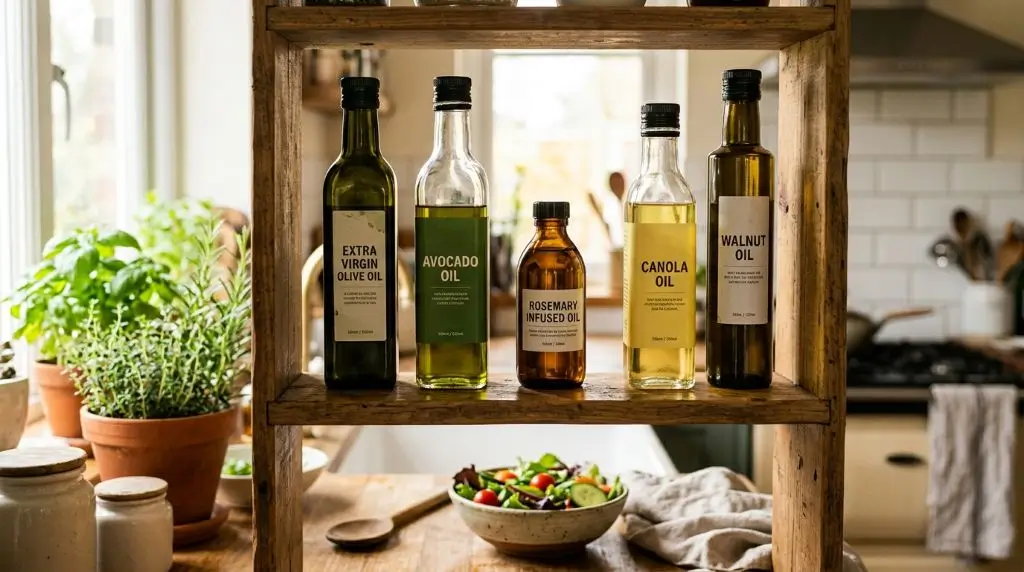
Animal Fats vs Plant Fats for Cooking
The choice often depends on what you are making and how you are cooking it. An honest look at animal fats vs plant fats shows that both have roles in a functional kitchen.
When Plant Oils Work Best
Plant oils shine in situations where you want a clean flavor or high heat tolerance. They work well for salad dressings because they emulsify with vinegar. They handle sautéing and roasting vegetables without adding a heavy taste.
For everyday cooking, most people reach for olive oil or canola oil because they are easy to pour and measure.
When Animal Fats May Be Used
Animal fats bring something different to the table. They add a richness that plant oils cannot replicate. Butter makes pastries flaky. Lard gives pie crusts that tender crumb. Ghee works beautifully for high-heat Indian cooking because the milk solids are gone.
Tallow adds depth to roasted potatoes. If you are making a traditional recipe that calls for animal fat, substituting plant oil might change the final texture. That doesn’t mean animal fat is superior. It just means it has a specific job. Looking at animal fats vs plant fats this way helps you pick the right tool for the recipe.
Healthy Fats for Cooking Different Methods
Different cooking methods work best with different fats, which is why understanding the healthiest cooking oils can help you choose the right option for each recipe.
Best Healthy Fats for Everyday Cooking
Good choices for daily meals include:
- Extra virgin olive oil
- Avocado oil
- Canola oil
Extra virgin olive oil handles medium heat well and adds flavor to vegetables, eggs, pasta dishes, and salad dressings.
Avocado oil is useful when you need a higher heat option. Its mild flavor and high smoke point make it suitable for roasting, grilling, and searing.
Canola oil is a practical budget-friendly choice for baking, frying, and general cooking. Its neutral taste works well in recipes where you do not want the oil to affect the flavor.
Many people consider these the healthiest fats for everyday cooking because they balance nutrition, versatility, and convenience. These are solid healthy fats for cooking regular family meals.
Best Fats for High-Heat Cooking
Good choices for high-heat cooking include:
- Avocado oil
- Refined olive oil
- Peanut oil
- Ghee
When you need to sear, grill, or stir-fry at high temperatures, choosing the right fat becomes important.
Avocado oil has one of the highest smoke points among common cooking oils, making it a popular choice for high-heat cooking.
Refined olive oil can handle higher temperatures than extra virgin olive oil because it undergoes additional processing.
Peanut oil is often used for stir-fries and frying because it remains stable at high temperatures and has a mild flavor.
Ghee also works well for high-heat cooking. The clarification process removes most of the milk solids that would normally burn in regular butter.
These options are often recommended when you need fats that remain stable during high-temperature cooking.
Best Fats for Flavor
Popular options include:
- Butter
- Ghee
- Extra virgin olive oil
Sometimes you cook for taste, not just nutrition.
Butter adds a creamy richness to sauces, baked goods, and comfort foods.
Ghee brings a slightly nutty aroma and works well in traditional recipes and high-heat cooking.
Extra virgin olive oil adds a peppery, fruity finish to salads, soups, vegetables, and grain dishes.
These fats bring personality to your meals. Using small amounts can make vegetables and other nutritious foods more enjoyable, which may help you include them more often in your diet.
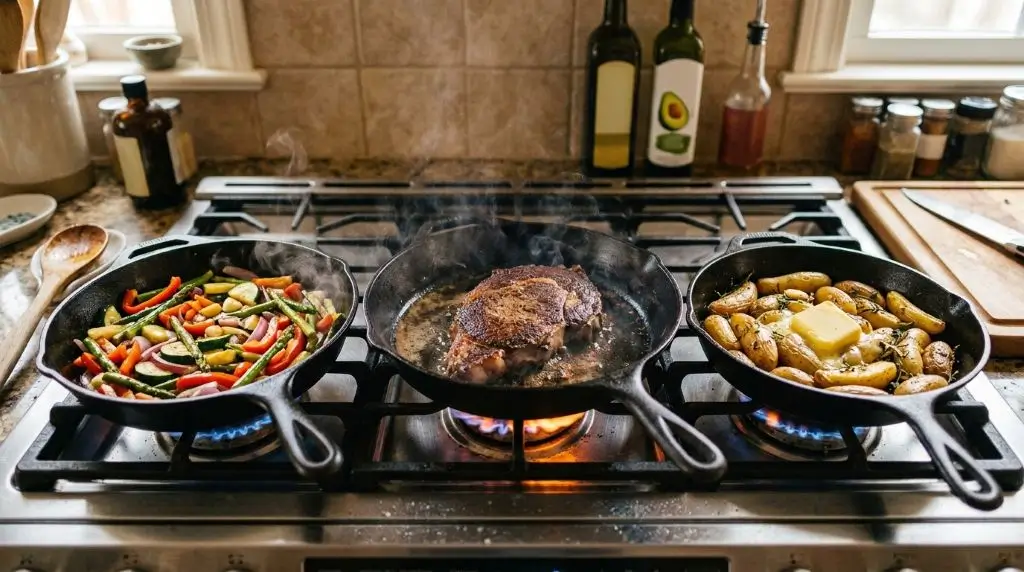
Healthy Fats Comparison: Side-by-Side Cooking Guide
| Fat | Smoke Point | Fat Profile | Best Use | Key Note |
| Extra Virgin Olive Oil | 375°F / 190°C | High mono | Sautéing, dressings | Antioxidant-rich |
| Avocado Oil | 520°F / 271°C | High mono | High-heat frying | Neutral flavor |
| Canola Oil | 400°F / 204°C | Balanced | General cooking | Budget-friendly |
| Butter | 350°F / 177°C | High sat | Baking, flavor | Use clarified for higher heat |
| Ghee | 485°F / 252°C | High sat | High-heat, frying | Lactose-free, stable |
| Coconut Oil | 350°F / 177°C | Very high sat | Baking, medium heat | Distinct flavor |
Which Fats Are Healthier?
When people ask which fats are healthier, the answer usually depends on the type of fat, how it is used, and the overall eating pattern.
Why Many Experts Recommend Plant Oils
Plant oils contain more unsaturated fat. They offer everyday versatility. They align with common dietary recommendations from organizations like the American Heart Association and the World Health Organization.
These groups generally advise people to choose unsaturated fat sources more often. Plant oils also tend to come with vitamin E and other compounds that support overall health.
Can Animal Fats Still Fit Into a Balanced Diet?
Yes, animal fats can fit. The key is moderation and portion awareness. A tablespoon of butter in your mashed potatoes won’t ruin your health. Eating a stick of butter every day might crowd out other nutrients.
Overall eating patterns matter more than any single meal. If most of your diet includes vegetables, whole grains, lean proteins, and other fiber-rich foods, occasional animal fat is not a problem.
The Real Answer Depends on the Whole Diet
Healthier fat choices generally:
- Fit your cooking style
- Support balanced eating habits
- Are used in reasonable amounts
- Replace heavily processed fats when possible
Think about your whole week, not just one recipe. If you cook with olive oil on Monday and butter on Saturday, you are probably doing fine.
Common Myths About Plant Oils and Animal Fats
Nutrition discussions about fats often create confusion. Some myths make animal fats sound dangerous, while others suggest every plant oil is automatically healthy. The reality is usually more balanced.
Myth 1: Animal Fats Are Always Unhealthy
Animal fats contain saturated fat, but that doesn’t make them poison. Traditional cultures have used lard and tallow for generations. The problem comes from eating too much saturated fat overall, especially when it replaces fiber-rich foods. A small amount of animal fat in a balanced diet is different from eating bacon at every meal.
Myth 2: All Plant Oils Are Automatically Healthy
Not every bottle with a plant picture on the label deserves a halo. Highly refined seed oils processed with high heat and chemicals lose some of their natural benefits. Some plant oils also contain high amounts of omega-6 fatty acids, which can be a concern if they dominate your diet.
Choose minimally processed oils when you can. Extra virgin olive oil and cold-pressed avocado oil retain more of their natural compounds than heavily refined blends.
Myth 3: One Fat Is Perfect for Every Recipe
No single fat does everything. Olive oil burns at high heat. Butter smokes if you get the pan too hot. Coconut oil tastes like coconut, which doesn’t belong in every dish. Smart cooks keep two or three options on hand and pick the right one for the job.

Common Mistakes People Make When Choosing Fats
Common mistakes include:
- Focusing only on calories. All fats contain about nine calories per gram. The type of fat matters more than the calorie count.
- Ignoring fat type. Some people buy whatever is cheapest without checking if it is mostly saturated or unsaturated.
- Using the wrong fat for the cooking method. Extra virgin olive oil is not ideal for deep frying. Butter burns quickly over high heat.
- Assuming natural means healthier. Natural doesn’t guarantee a good nutrition profile. Coconut oil is natural but very high in saturated fat.
- Overusing any type of fat. Even good fats add up. Pouring half a cup of olive oil into a pan turns a healthy meal into a calorie bomb.
How to Choose the Healthiest Fats for Everyday Cooking
Choosing the right fat becomes easier when you ask yourself a few practical questions before buying. Picking healthy fats for cooking starts with knowing your own habits.
Questions to Ask Before Choosing a Fat
How do you usually cook? If you sauté and roast, olive oil and avocado oil cover most needs. If you bake a lot, butter and canola oil both have roles.
Do you need high-heat performance? For searing and deep frying, look at avocado oil, refined olive oil, or ghee.
Do you prefer bold or neutral flavors? Extra virgin olive oil tastes strong. Avocado oil and canola oil stay quiet in the background.
What fits your budget? Extra virgin olive oil costs more than canola oil. You might want one fancy bottle for finishing and one plain bottle for cooking.
How often will you use it? Buying a huge bottle of walnut oil makes no sense if you only use it once a month. Buy sizes that match your habits.
Final Verdict: Plant Oils vs Animal Fats
Key Takeaways
When people ask which fats are healthier, plant oils often come out ahead because they:
- Provide more unsaturated fats
- Support balanced eating patterns
- Work well for everyday cooking
- Offer versatility across many recipes
Animal fats may add flavor to certain dishes, work well in traditional recipes, and be enjoyed in moderation.
For most people, plant oils such as olive oil and avocado oil are practical choices for everyday cooking. Animal fats can still have a place in the kitchen, but balance and overall diet quality matter more than any single ingredient.
FAQs about Plant Oils vs Animal Fats
Q1: What is the difference between plant oils and animal fats?
Plant oils come from seeds, nuts, and fruits. They usually stay liquid at room temperature. Animal fats come from meat and dairy. They often stay solid at room temperature.
Q2: Which fat is good, saturated or unsaturated?
For most people, unsaturated fats are generally recommended because they fit heart-healthy eating patterns. Saturated fats can be part of the diet in smaller amounts. That does not mean saturated fats must be completely avoided. The goal is usually balance rather than eliminating one type entirely.
Q3: Which fats are healthier for everyday cooking?
Plant oils like olive oil and avocado oil are often recommended for daily use because they contain more unsaturated fat and handle various cooking methods well.
Q4: Are plant oils healthier than animal fats?
Generally, yes, when you look at overall eating patterns. Plant oils contain more unsaturated fat. However, moderate use of animal fat can still fit a balanced diet.
Q5: What are the healthiest fats for cooking?
Olive oil, avocado oil, and canola oil are popular choices for everyday cooking. Ghee and refined olive oil work well for high-heat methods.
Q6: What is the best oil for high heat cooking?
Avocado oil handles very high heat with a smoke point around 520 degrees Fahrenheit. Refined olive oil and peanut oil also work well.
Q7: Can animal fats be part of a healthy diet?
Yes, in moderation. The overall pattern of your eating matters more than any single ingredient.
Q8: What are the benefits of plant-based oils?
They are rich in unsaturated fats, versatile in recipes, and fit many heart-healthy eating patterns like the Mediterranean diet.
Q9: Are vegetable oils and plant oils the same thing?
Most of the time, yes. Vegetable oil usually refers to blends like soybean or canola oil. Plant oils is a broader term that includes olive oil, avocado oil, and nut oils.
Q10: Which cooking fat should I use every day?
Extra virgin olive oil or avocado oil are solid daily choices. Pick one that matches your cooking style and budget.
Food & Nutrition Writer at PureHealthBites

Nadeem Sharif is the voice behind PureHealthBites, a blog focused on simple nutrition and everyday food choices. With hands-on experience experimenting with ingredients and meals, he shares practical, gut-friendly ideas to help readers eat well, feel better, and build healthier habits for real life.
Connect With Nadeem