By Nadeem Sharif | Reviewed June 14, 2026 |
Medical Disclaimer:This article is for informational purposes only and does not replace professional medical advice. See our full disclaimer.
Introduction
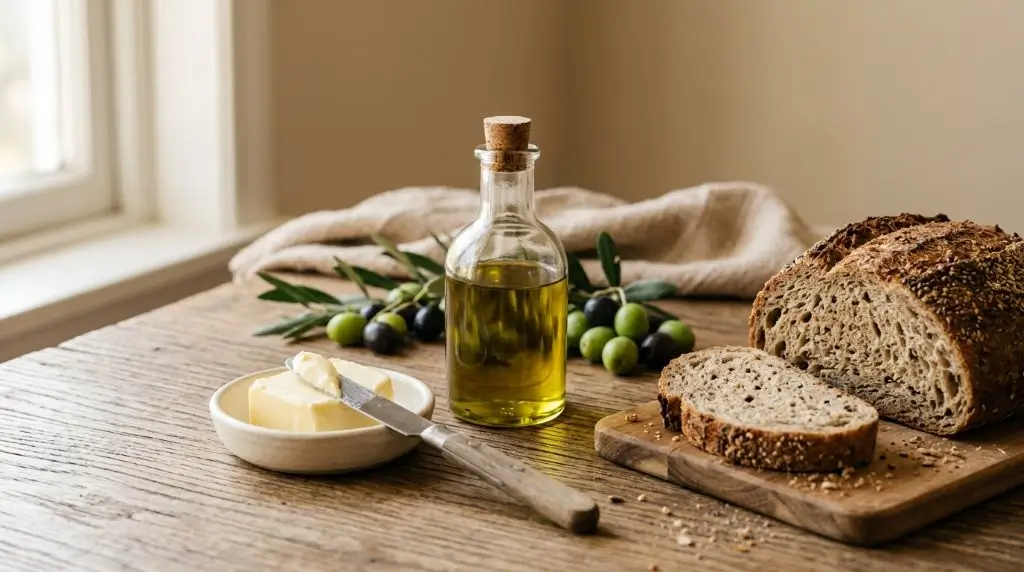
You open the fridge in the morning and stare at two bottles. One holds golden butter. The other holds olive oil. You want to make toast or cook eggs, but you pause. Which one should you reach for? This question pops up in kitchens everywhere. Butter vs olive oil is not just a debate for chefs. It matters for anyone who wants to eat well without overcomplicating meals.
Both fats have been around for centuries. People spread butter on bread in Europe long before supermarkets existed. Families in the Mediterranean have poured olive oil over salads and fish for generations.
Today, both sit on grocery shelves in nearly every country. But they are not the same inside. This article breaks down the real differences so you can decide what works for your daily routine.
In this guide, we look at butter vs olive oil through nutrition, calories, cooking, and everyday use so you can pick what fits your life.
Table of Contents
Butter vs Olive Oil at a Glance
Before we dig into numbers, let us look at what these two foods actually are.
Butter comes from cream. It is a dairy product made by churning milk until the fat separates. That is why it tastes rich and creamy. It works great for baking cookies or melting over warm vegetables.
Olive oil comes from pressing olives. It is a plant-based fat. The flavor changes depending on where the olives grow. Some taste mild and buttery. Others taste peppery or fruity. People use it for dressings, roasting, and everyday cooking.
Here is a quick side-by-side look:
| Butter | Olive Oil |
| Dairy product | Oil pressed from olives |
| Higher in saturated fat | Higher in monounsaturated fat |
| Contains cholesterol | Naturally cholesterol free |
| Rich flavor | Fruity or mild flavor depending on type |
| Common for baking and spreading | Popular for dressings and cooking |
This table gives you the big picture. Now let us look closer at what is inside each one.
Butter vs Olive Oil Nutrition
Both butter and olive oil give you fat. Fat helps your body absorb certain vitamins and keeps you full after meals. But the type of fat inside each one differs quite a bit. Butter vs olive oil nutrition is not about picking a winner. It is about understanding what you are eating.
Both butter and olive oil provide dietary fat, but they differ in the types of fat and nutrients they contain.
Butter Nutrition Facts
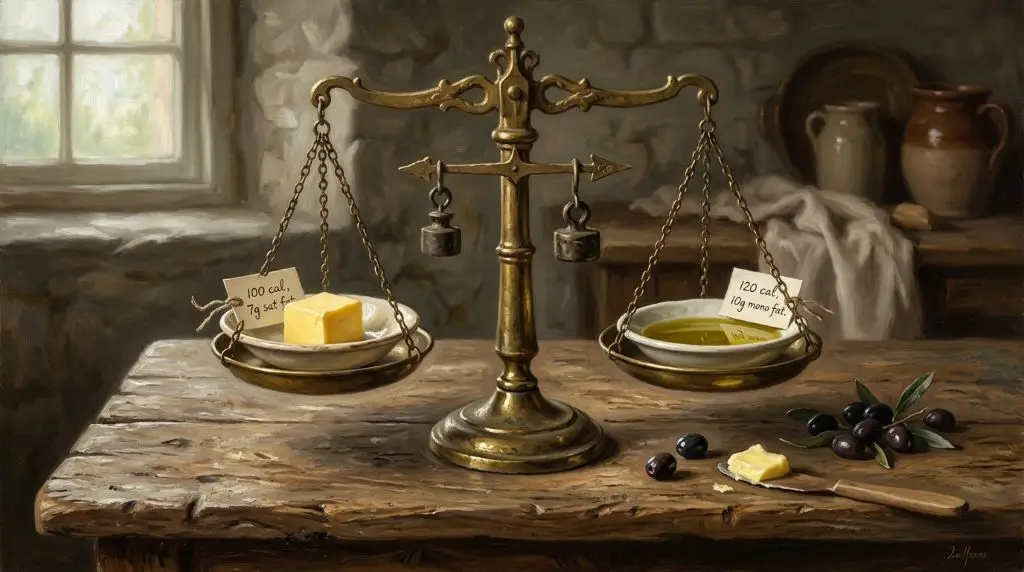
One tablespoon of butter provides approximately:
- About 100 calories
- Around 7 grams of saturated fat
- About 30 milligrams of cholesterol
- Small amounts of vitamins A, D, and E
On the bright side, butter offers some vitamin A. Your eyes and skin need this nutrient. You also get small amounts of vitamins D and E. These amounts are not huge, but they add a little extra nutrition to your meal.
Olive Oil Nutrition Facts
One tablespoon of olive oil provides approximately:
- About 120 calories
- Around 10 grams of monounsaturated fat
- Vitamin E
- Natural polyphenols
Olive oil also gives you vitamin E. This vitamin acts as an antioxidant in your body. Extra virgin olive oil goes even further. It contains polyphenols. These are natural compounds found in olives that may support general wellness. The healthy fats in olive oil have been studied for years, especially in Mediterranean regions where people tend to live long and active lives.
Butter vs Olive Oil Calories
People often worry about calories when choosing fats. It makes sense. Fats are dense in energy. But the butter vs olive oil calories comparison tells a simple story.
Which Has More Calories?
One tablespoon provides approximately:
- Butter: about 100 calories
- Olive oil: about 120 calories
Olive oil has slightly more calories per spoon. But the gap is small. Twenty calories will not make or break your day. What matters more is how much you pour. It is easy to drizzle half a cup of olive oil over a salad without noticing. That adds up fast.
Calories alone should not determine food quality, and understanding the full nutrition panel can help you make better choices. Our guide on how to read nutrition labels explains what to look for. A hundred calories of olive oil and a hundred calories of butter affect your body differently because of the fat types inside. So, do not pick one just because it has fewer calories on the label.
Butter vs Olive Oil Health Comparison
No single ingredient will save your diet or ruin it. Your overall eating pattern matters far more than what fat you spread on toast. Butter vs olive oil health comparisons should stay grounded in that truth.
Saturated Fat vs Monounsaturated Fat
Saturated fat comes mostly from animal products like butter, cheese, and meat. Diets high in saturated fat may contribute to higher LDL cholesterol levels in some people when eaten in large amounts. Monounsaturated fat comes mainly from plants like olives, avocados, and nuts. Research from institutions like Harvard Health suggests that replacing some saturated fat with monounsaturated fat may support heart health.
Current dietary guidance from American Heart Association recommends limiting saturated fat to less than 10 percent of your daily calories. That does not mean you must ban butter. It means you should keep an eye on portions.
Moderation is the key word here. A little butter on your potato will not cause harm. But using butter for every meal every day might push your saturated fat intake too high.
Is Butter Healthier Than Olive Oil?
This is the question everyone wants answered. The honest reply is: it depends on your goals.
Butter can fit a balanced diet. It adds flavor to dishes that oil simply cannot match. A small pat of butter in your oatmeal or on a piece of sourdough feels satisfying. That satisfaction matters because it helps you enjoy your food.
Olive oil is generally recommended more often in Mediterranean-style eating patterns. If you want a deeper look at the evidence, read our guide on whether olive oil is good for health. These patterns are linked to lower rates of heart disease and longer life spans in population studies. Olive oil fits easily into vegetables, grains, and legumes.
Neither food should be viewed as magic. Butter will not destroy your health in small amounts. Olive oil will not fix a diet full of processed snacks and sugary drinks. So when people ask is butter healthier than olive oil or which is healthier butter or olive oil, the real answer lies in how you use them and what the rest of your plate looks like.
Butter vs Olive Oil for Cooking
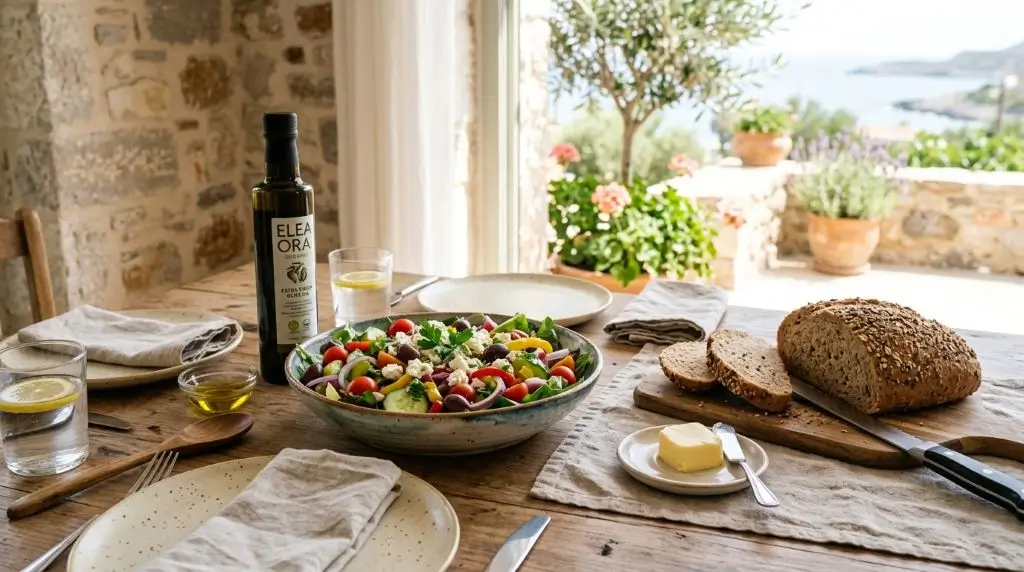
Different cooking methods suit different fats. You would not use water to fry an egg, and you would not use the same logic for every dish. Butter vs olive oil for cooking comes down to heat, flavor, and tradition.
The best choice often depends on the recipe, cooking temperature, and flavor you want.
When Butter Works Well
Butter shines in specific situations. Try reaching for it when you are:
- Baking cookies, cakes, or pastries. Butter creates flaky layers and rich textures that oil struggles to copy.
- Spreading on toast or muffins. The creamy taste feels comforting.
- Making sauces like bechamel or brown butter. The milk solids in butter help create depth.
- Cooking at lower temperatures. Butter burns around 350 degrees Fahrenheit because of those same milk solids.
When Olive Oil Works Well
Olive oil handles other tasks with ease. It works well when you are:
- Making salad dressings. It mixes with vinegar or lemon juice beautifully.
- Roasting vegetables. Toss broccoli or potatoes in olive oil before the oven. They come out crisp and flavorful.
- Sautéing onions or garlic. The oil carries heat evenly across the pan.
- Cooking Mediterranean dishes. Think chickpea stew, grilled fish, or hummus.

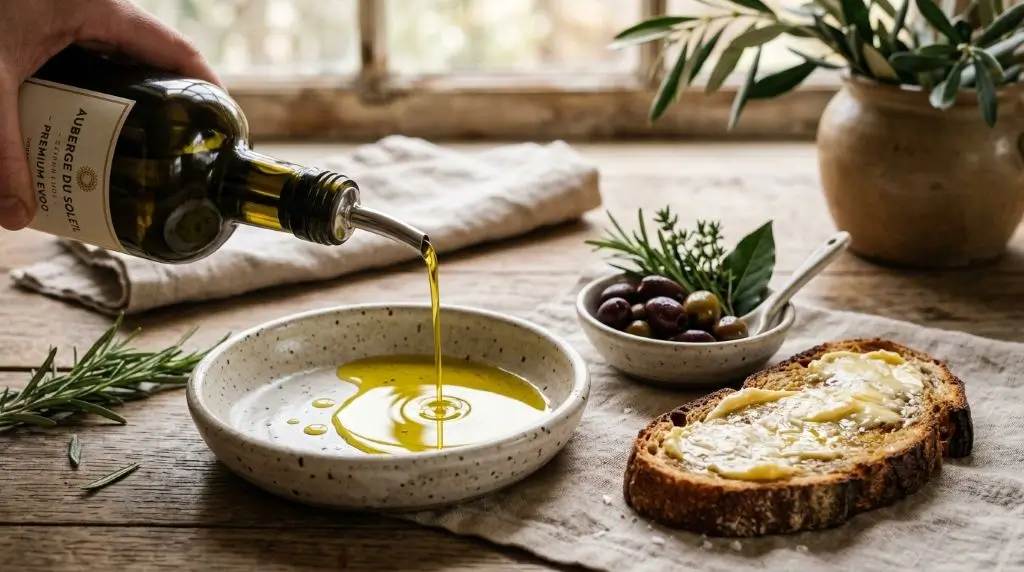
Extra Virgin Olive Oil vs Butter
Not all olive oil is the same. Extra virgin olive oil keeps more natural compounds because it is minimally processed. According to the International Olive Council, extra virgin olive oil is produced using mechanical or other physical methods without chemical refining, which helps preserve its natural characteristics. This process also helps retain many of the flavors and naturally occurring compounds that refined olive oils may lose.
Extra virgin olive oil offers:
- Natural antioxidants from the olive fruit itself
- Fruity flavor that changes depending on the harvest
- Minimal processing so the oil stays closer to its original form
- Good everyday versatility for cold dishes and low to medium heat cooking
Butter brings a creamy taste that extra virgin olive oil cannot replicate. They serve different purposes on the table. When comparing extra virgin olive oil vs butter, think about what your dish needs. An olive oil cake can be delicious, but a butter cake has a different crumb and richness. Both have their place.
Clarified Butter vs Olive Oil
You might have heard of clarified butter or seen jars of ghee at the store. This section explains how it fits into the conversation.
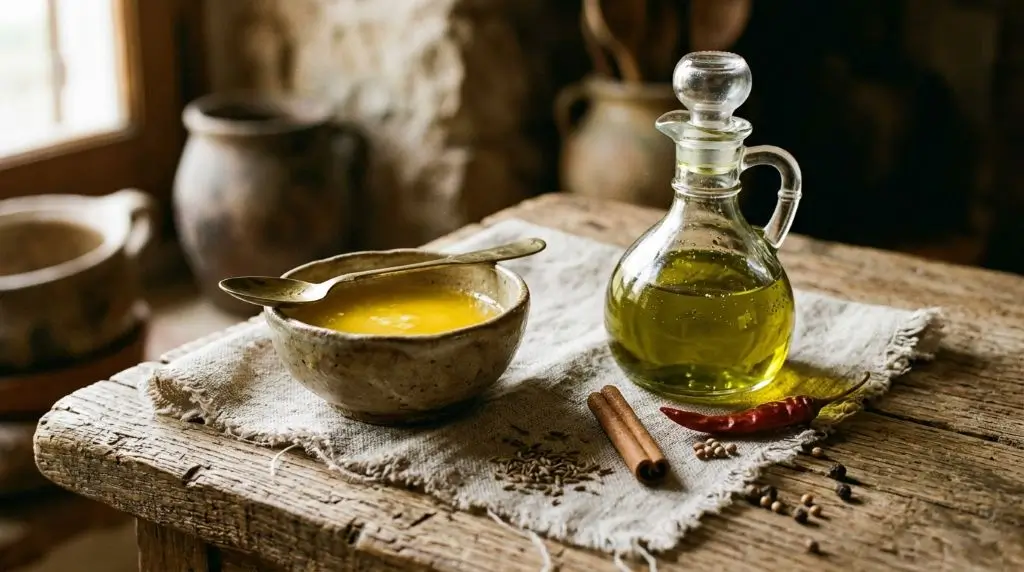
What Is Clarified Butter?
Clarified butter is butter with the milk solids and water removed. You heat regular butter until it separates, then you skim off the top and pour off the clear fat. What remains is almost pure butterfat. It has a higher smoke point than regular butter, usually around 450 degrees Fahrenheit. In many cuisines, especially Indian cooking, people call this ghee.
Clarified Butter vs Olive Oil
When you compare clarified butter vs olive oil, a few differences stand out.
Clarified butter has a nutty, rich flavor. It works great for high-heat cooking like stir-frying or searing meat. Olive oil, especially extra virgin, is better for cold applications or gentle heating. Clarified butter still contains saturated fat, though slightly more concentrated since the water is gone. Olive oil still leads in monounsaturated fat content.
Both can sit in your pantry. Clarified butter lasts longer than regular butter because the moisture is gone. Olive oil stays fresh for months if you keep it away from light and heat.
Olive Oil or Butter for Weight Loss?
People trying to lose weight often ask which fat to cut first. The honest truth about olive oil or butter for weight loss is simple. Neither one will melt fat off your body.
Does One Help You Lose Weight?
Calorie balance matters most. If you eat more calories than you burn, you gain weight. If you eat fewer, you lose weight. Both butter and olive oil pack a lot of calories into a small space. One tablespoon of either can add over a hundred calories to your meal.
Both are calorie-dense. That means you need to watch portions. Drizzling olive oil freely because it is plant-based is a common mistake. Those calories still count.
Portion size matters. Measure your fat instead of pouring straight from the bottle. A teaspoon here and there adds flavor without loading up your plate.
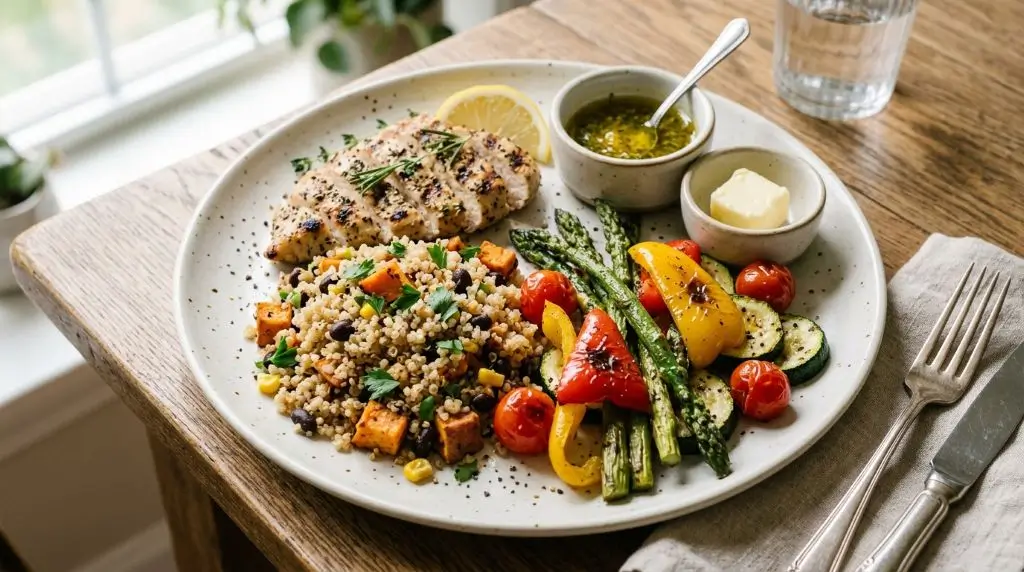
Overall eating pattern matters. Replacing butter with olive oil will not help if you still eat large portions of refined bread, sugary drinks, and processed snacks. Focus on vegetables, protein, whole grains, and sensible fat amounts. Combining healthy fats with foods rich in protein and fiber to keep you full can also make meals more satisfying.
When Should You Choose Butter?
Butter may work well for:
- Baking where texture and richness matter
- Occasional spreading on bread or pancakes
- Traditional recipes that call for it specifically
- Flavor-focused dishes where that creamy taste completes the meal
If you grew up eating butter on your morning toast, you do not need to ban it. Use it when it makes sense. Enjoy it. Just do not make it the only fat in your kitchen. Choosing butter occasionally for flavor does not mean your overall diet is unhealthy.
When Should You Choose Olive Oil?
Olive oil may work well for:
- Everyday cooking like sautéing and roasting
- Salad dressings and marinades
- Roasted vegetables that need a light coating
- Mediterranean-style meals with beans, fish, and grains
- Replacing less healthy fats like heavily processed vegetable oils
If you cook dinner most nights, olive oil is a practical choice. It pours easily, stores well, and works with many ingredients. For many households, olive oil is an easy everyday option because it works across a wide range of meals.

Final Verdict: Butter vs Olive Oil
We have covered a lot of ground. Let us pull it together.
Key Takeaways
- Both can fit into a balanced diet. You do not need to pick sides forever.
- Olive oil contains mostly monounsaturated fats. This fat type is generally viewed as heart-friendly.
- Butter contains more saturated fat. This does not make it evil, but it means you should use smaller amounts.
- Portion size matters. A tablespoon of either is plenty for most cooking tasks.
- Overall eating habits matter more than one ingredient. No fat can fix a poor diet, especially if the rest of your routine is built around ultra-processed foods instead of healthy snack alternatives to junk food.
Looking at the evidence as a whole, neither option needs to be completely avoided. For many people, olive oil is often the better everyday choice because of its fat profile and versatility, while butter can still have a place when used in moderation. You might drizzle olive oil on your lunch salad and use a small pat of butter on your weekend pancakes. That is a realistic way to eat.
The goal is not perfection. The goal is a kitchen that works for your life. Keep both on hand if you enjoy them. Pay attention to how much you use. Let your meals taste good without stressing over every tablespoon. That is how you build a way of eating that lasts.
FAQs about Butter vs Olive Oil
Q1: Is butter healthier than olive oil?
Olive oil is generally considered the healthier everyday option because it is rich in monounsaturated fats, although butter can still fit into a balanced diet.
Q2: Which is healthier, butter or olive oil?
For most people, olive oil is recommended more often due to its fat composition and role in Mediterranean-style eating patterns.
Q3: Does olive oil have more calories than butter?
Yes. Olive oil has slightly more calories per tablespoon, but the difference is relatively small.
Q4: Can I replace butter with olive oil in cooking?
Often yes. Olive oil works well for sautéing, roasting, and dressings, though butter may still be preferred in some baking recipes.
Q5: Is clarified butter healthier than olive oil?
They have different nutritional profiles. Clarified butter has a higher smoke point, while olive oil provides mostly monounsaturated fats and natural plant compounds.
Food & Nutrition Writer at PureHealthBites

Nadeem Sharif is the voice behind PureHealthBites, a blog focused on simple nutrition and everyday food choices. With hands-on experience experimenting with ingredients and meals, he shares practical, gut-friendly ideas to help readers eat well, feel better, and build healthier habits for real life.
Connect With Nadeem