Medical Disclaimer: This article is for informational purposes only and does not replace professional medical advice. See our full disclaimer.
Introduction
Walking down the cooking oil aisle at the grocery store can feel overwhelming. One bottle says extra virgin. Another says refined. Some claim to be heart-healthy, while others promise high heat performance. With so many choices, it is hard to know which bottle to grab.
The truth is, there is no single perfect oil for every meal. The healthiest cooking oils depend on how you cook, what you are making, and how you eat overall. This guide breaks down the smart choices for everyday cooking, frying, roasting, and more. You will learn which oils match your cooking style and how to use them without overthinking it.
Table of Contents
What Are the Healthiest Cooking Oils?
Not all oils are created equal. Some are better for your body, and some handle heat better than others. Understanding what makes an oil a smart choice helps you shop with confidence.
What Makes a Cooking Oil Healthy?
Several factors influence whether an oil is considered a healthy choice. It is not just about calories or smoke point. The overall fat profile, level of processing, and intended use all matter.
A few simple traits separate the most healthy cooking oils from the rest.
- Unsaturated fats are the main thing. These fats are liquid at room temperature and come from plants. They help keep your heart in good shape when you use them instead of saturated fats. Olive oil, avocado oil, and canola oil are all rich in unsaturated fats.
- Minimal processing matters too. Oils that are cold-pressed or extra virgin keep more of their natural nutrients. They do not go through heavy chemical treatments, which means they retain more of what makes them valuable.
- Heat stability is another key factor. When you cook at high temperatures, some oils break down and create compounds you do not want in your food. The healthiest oils for cooking stay stable under heat and do not change into something unhealthy.
- The oil should fit your overall eating pattern. No oil can fix a diet full of processed foods. But the right oil, used in the right way, supports a balanced way of eating.
Most Healthy Cooking Oils at a Glance
No single oil works well in every situation, but a handful of options consistently stand out for everyday cooking. So what are the healthy cooking oils you should keep in your kitchen? Here is a quick look.
- Extra virgin olive oil is the classic choice. It is rich in monounsaturated fats and works great for salads, sautéing, and light cooking. It has been a staple in Mediterranean diets for centuries.
- Avocado oil is newer on the scene but gaining fast. It handles high heat well and has a mild flavor that does not overpower food.
- Canola oil is affordable and versatile. It works for everyday cooking and baking without adding much flavor of its own.
- Peanut oil is popular in Asian cooking and deep frying. It has a high smoke point and a light nutty taste.
Now let us look deeper at how these compare and when to use each one.
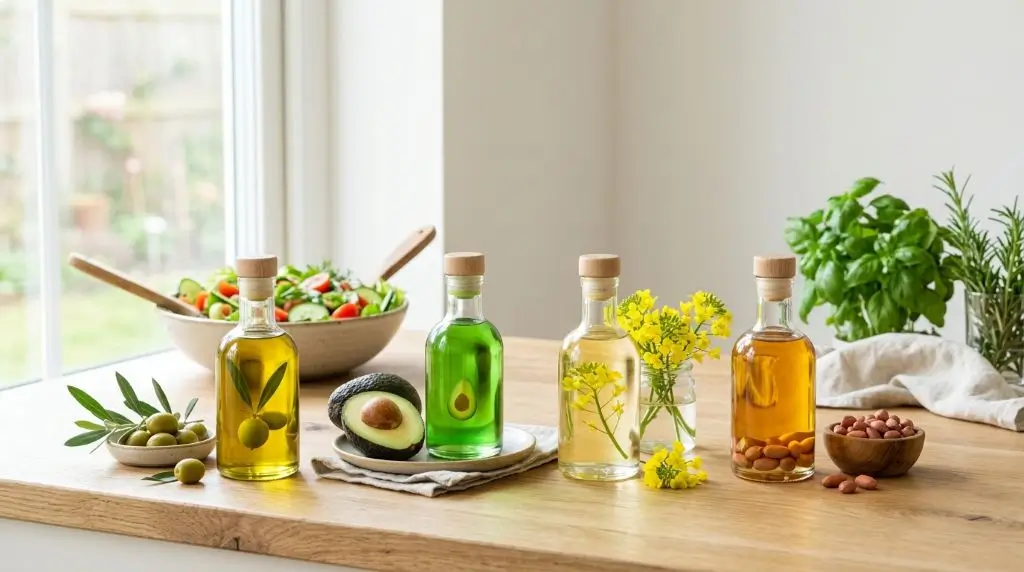
Cooking Oils Comparison
Every oil has its strengths. Some shine in cold dishes. Others handle the heat like a pro. Another way to choose is to match the oil to the job.
| Cooking Oil | Works Well For | Heat Level | Main Fat Type |
| Extra Virgin Olive Oil | Salads, sautéing | Medium | Monounsaturated |
| Avocado Oil | High-heat cooking | High | Monounsaturated |
| Canola Oil | Everyday cooking | Medium-High | Unsaturated |
| Peanut Oil | Stir-frying | High | Mostly unsaturated |
At a glance:
- Extra virgin olive oil shines in salads and everyday sautéing.
- Avocado oil performs well at high temperatures.
- Canola oil offers an affordable all-purpose option.
- Peanut oil works especially well for stir-fries and frying.
The cooking oils comparison above gives you a starting point. But the real magic happens when you match the oil to the meal you are making.
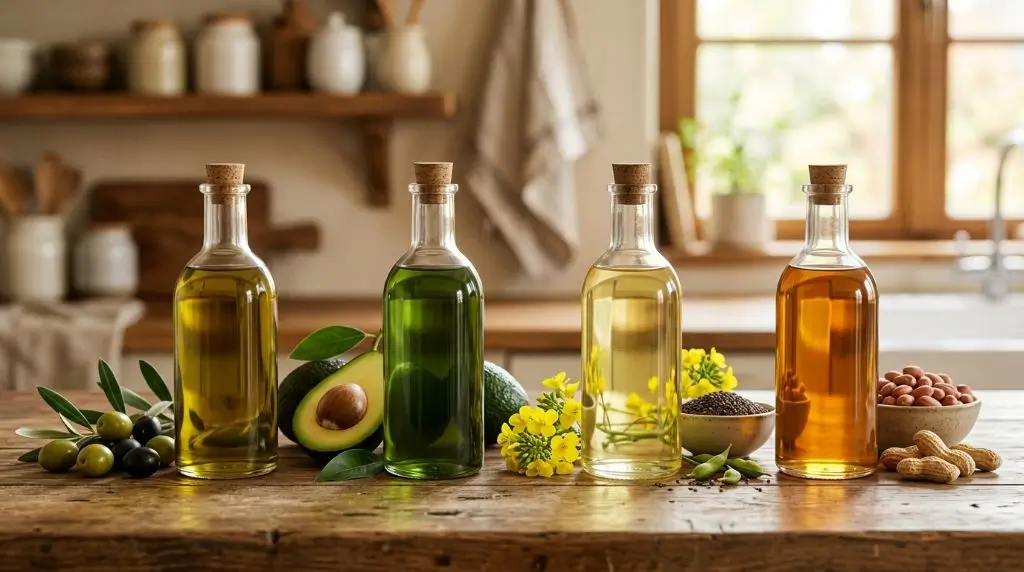
Healthiest Oils for Cooking Different Meals
The good oil depends on what is happening in your kitchen. A salad dressing needs something different than a stir-fry. Let us break it down by meal type.
Best Oil for Everyday Cooking
For most daily meals, you want an oil that is healthy, versatile, and easy to find.
Good everyday cooking oils include:
- Extra virgin olive oil
- Canola oil
- Avocado oil
Extra virgin olive oil is hard to beat for everyday use. Drizzle it over roasted vegetables, toss it with pasta, or use it to sauté onions and garlic. It adds a rich, fruity flavor that makes simple food taste better. Studies from the Harvard T.H. Chan School of Public Health show that olive oil is linked to better heart health when used as part of a balanced diet.
Canola oil is another solid pick for daily cooking. It has a neutral taste, so it does not clash with other ingredients. It works well for baking, pan-frying, and making sauces. Plus, it is usually one of the more affordable options on the shelf.
Avocado oil is becoming a favorite for everyday meals too. It has a mild flavor and a high smoke point, so you can use it for almost anything. It is especially good if you cook at medium to high heat regularly.
Best Cooking Oil for Frying
Frying gets a bad reputation, but the oil you choose makes a big difference. The best cooking oil for frying is one that stays stable at high temperatures.
Popular choices include:
- Avocado oil
- Peanut oil
- Refined olive oil
Avocado oil is one of the top choices for frying. It has a smoke point around 520°F, which is higher than most home cooking needs. This means it does not break down easily when you fry chicken or make crispy potatoes.
Peanut oil is another strong option. It handles high heat well and adds a subtle nutty flavor. Many restaurants use it for deep frying because it lasts longer without becoming rancid.
Refined olive oil (not extra virgin) can work for frying too. It has a higher smoke point than extra virgin olive oil and a more neutral flavor. Just keep in mind that frying adds extra calories no matter which oil you use. The American Heart Association recommends keeping fried foods as an occasional treat rather than an everyday habit.
Portion awareness matters here too. Even healthy oils are calorie-dense. A couple of tablespoons go a long way in a pan.
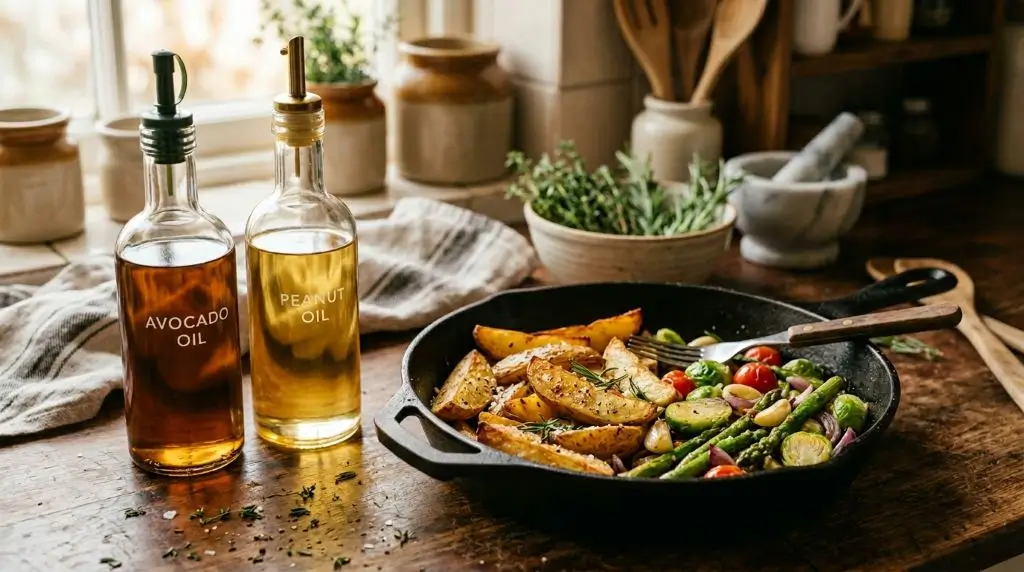
Best Oil for Roasting Vegetables
Roasting brings out the sweetness in vegetables, and the right oil helps them get crispy without burning.
Great options for roasting include:
- Extra virgin olive oil
- Avocado oil
- Canola oil
Extra virgin olive oil is the classic choice for roasting. Toss broccoli, carrots, or Brussels sprouts with a light coating and roast at 400°F. The oil helps the edges caramelize and adds a rich taste.
Avocado oil works great for roasting at higher temperatures. If you like your vegetables extra crispy and charred, this oil can handle the heat without smoking.
Canola oil is a good budget option for roasting. It has a neutral flavor, so the taste of your vegetables shines through. It also handles moderate heat without any issues.
Try this: cut sweet potatoes into cubes, toss with a tablespoon of olive oil, sprinkle with salt and pepper, and roast at 425°F for about 25 minutes. The result is crispy on the outside, soft on the inside, and full of flavor.
Olive Oil vs Avocado Oil
This is one of the most common debates in home kitchens. Both oils are healthy, but they are not the same. Let us look at how they stack up.
At a glance:
- Both are rich in monounsaturated fats
- Olive oil has a stronger flavor
- Avocado oil has a higher smoke point
- Both can be part of a balanced diet
Similarities
Both olive oil and avocado oil are rich in unsaturated fats, especially monounsaturated fats. If you want a deeper look at the research behind olive oil, see our guide on is olive oil good for health. These are the fats that support heart health when they replace saturated fats in your diet. Both oils are also versatile.
You can use them for cooking, dressing salads, or drizzling over finished dishes. They both fit well into balanced eating patterns and have been studied for their potential health benefits.
Key Differences
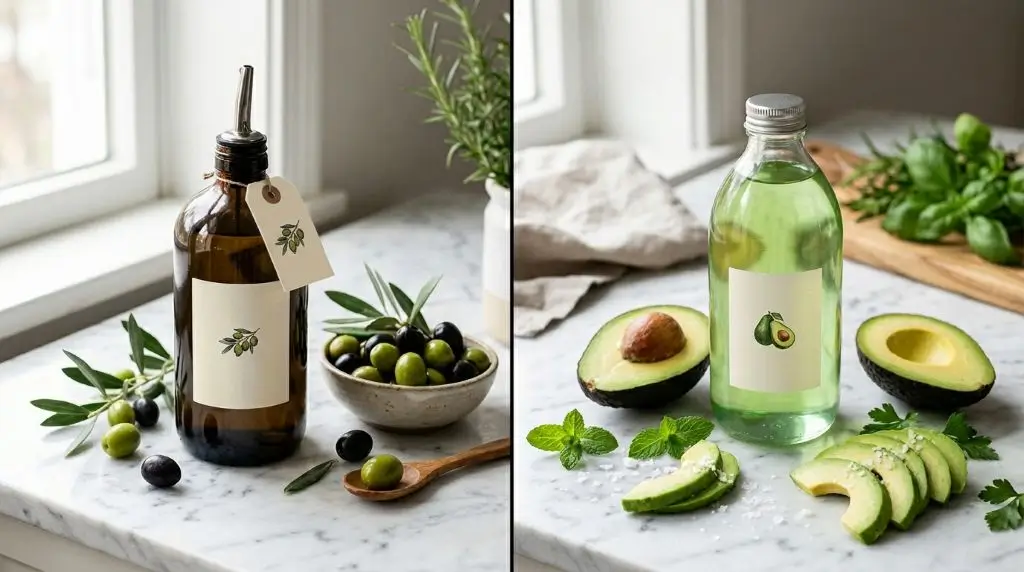
Flavor is the first thing you will notice. Extra virgin olive oil has a bold, fruity, sometimes peppery taste. Avocado oil is much milder. It barely tastes like anything, which makes it good when you do not want the oil to steal the show.
Smoke point is where avocado oil wins. It can handle temperatures up to 520°F, while extra virgin olive oil starts to smoke around 375°F. This makes avocado oil better for high-heat searing and frying.
Cooking uses follow from the smoke point. Olive oil is ideal for sautéing, dressing, and low to medium heat cooking. Avocado oil is better for grilling, roasting at high heat, and deep frying.
Cost is another difference. Avocado oil is usually more expensive. If you cook a lot, using olive oil for everyday meals and saving avocado oil for high-heat jobs can help your budget.
The bottom line is that both oils can fit into a healthy kitchen. Extra virgin olive oil is a great choice for dressings, everyday sautéing, and adding flavor, while avocado oil is well suited to higher-heat cooking because of its mild taste and heat stability. If your budget allows, keeping both on hand gives you flexibility for different recipes.
Oils for High Heat Cooking
High heat cooking includes grilling, searing, stir-frying, and deep frying. Not every oil can handle the heat. Using the wrong one can create smoke and undesirable compounds.
Good Choices for High Heat
Not every cooking oil performs well under high temperatures. If you regularly grill, stir-fry, or sear food, choosing an oil with good heat stability can make a difference.
Good oils for high heat cooking include:
- Avocado oil
- Refined olive oil
- Peanut oil
Avocado oil leads the pack. With a smoke point over 500°F, it is one of the safer choices for high-heat cooking. It stays stable and does not break down easily, making it ideal for searing, grilling, and frying.
Refined olive oil is another reliable option. It goes through more processing than extra virgin olive oil, giving it a higher smoke point. It works well for sautéing and pan-frying at medium to high heat.
Peanut oil is a popular choice for stir-fries and deep frying. It handles high temperatures well and adds a mild nutty flavor to food. If you are cooking for guests, remember to consider peanut allergies before using it.
Why Smoke Point Is Not the Only Factor
Smoke point is important, but it is not everything. The overall nutrition of the oil matters too. An oil with a high smoke point but full of saturated fat is not a great choice. The healthiest food oil for high heat is one that stays stable and supports your health goals.
Also think about how often you cook at high heat. If you fry food daily, even the good oil will not cancel out the downsides of a fried-food-heavy diet. The Mayo Clinic suggests focusing on your overall eating pattern rather than obsessing over one ingredient.

Unhealthy Cooking Oils: What Should You Know?
No single oil will make or break your health. What matters more is your overall diet and how you use oils over time. Still, some habits and choices are worth watching.
Common Characteristics to Watch For
Common concerns include:
- Heavy processing
- Repeated reheating
- Frequent deep frying
- Too much saturated fat
Heavy processing can strip oils of their natural nutrients. Highly refined oils often go through chemical treatments and high heat. They may be stable for cooking, but they lose some of the good stuff along the way.
Repeated reheating is another concern. When you reuse oil multiple times, especially for deep frying, it breaks down and can form unwanted compounds. This is why restaurants change their frying oil regularly. At home, it is generally best to avoid reusing oil more than once or twice.
Frequent deep frying adds a lot of extra calories and fat to your diet. Even if you use a healthier oil, eating fried foods often can contribute to weight gain and other health concerns over time.
Too much saturated fat is another concern. If you are deciding between traditional fats and plant oils, our comparison of butter vs olive oil explains the key differences. Oils such as coconut oil and palm oil are higher in saturated fat.
While they have become popular in some diets, organizations like the American Heart Association still recommend limiting saturated fat as part of a heart-healthy eating pattern.
The key message is simple: unhealthy cooking oils are often less about the oil itself and more about how it is processed, heated, and used. Focus on balance, variety, and moderation rather than searching for a single perfect oil.
How to Choose the Healthiest Food Oil
Shopping for oil does not have to be stressful. Learning how to read nutrition labels can also make it easier to compare products when you are standing in the grocery aisle. Choosing the right oil becomes much easier when you ask yourself a few practical questions before buying.
- How will you cook? If you mostly sauté and make salads, extra virgin olive oil is a great pick. If you grill and fry often, avocado oil or peanut oil makes more sense.
- What flavors do you like? Olive oil adds boldness. Avocado oil stays quiet. Canola oil has a neutral taste. Pick the one that matches your preference.
- What is your budget? Olive oil and canola oil are usually more affordable. Avocado oil costs more but can be worth it if you regularly cook at high heat. Peanut oil often falls somewhere in the middle.
- How often will you use it? If you cook daily, buy a size you will finish within a few months. Oils can go rancid if they sit too long.
- Where will you store it? Heat, light, and air can reduce an oil’s quality over time. Keep bottles in a cool, dark place away from the stove whenever possible.
- What fits your overall routine? The healthiest food oil for you is the one that matches your cooking style, taste preferences, and budget. There is no need to overcomplicate it.
Common Mistakes People Make When Choosing Cooking Oils
Even smart cooks can fall into habits that make choosing or using cooking oils more confusing than it needs to be.
Common mistakes include:
- Choosing based only on smoke point
- Assuming expensive means healthier
- Reusing oil multiple times
- Ignoring serving sizes
- Expecting one oil to work for every recipe
Choosing based only on smoke point is a common mistake. While smoke point matters, it is not the whole story. Nutrition, flavor, and how the oil is processed are just as important.
Assuming expensive means healthier is another misconception. A high price tag does not guarantee better quality. Some affordable oils, such as canola oil, can be perfectly suitable for everyday cooking.
Reusing oil multiple times, especially after frying, can reduce its quality. Each reheating cycle breaks the oil down further. Fresh oil is generally safer and provides better flavor.
Ignoring serving sizes is easy to do. One tablespoon of oil contains about 120 calories, and it is simple to pour more than intended without measuring, particularly if you are watching your calorie intake.
Expecting one oil to work for every recipe can also lead to disappointment. No single oil is ideal for every cooking method. Keeping two or three different oils on hand often gives you better results than relying on just one bottle.
Final Verdict: Which Are the Healthiest Cooking Oils?
After looking at all the options, here is what stands out.
Key Takeaways
The healthiest cooking oils generally:
- Are rich in unsaturated fats
- Match the cooking method
- Are used in moderation
- Support balanced eating patterns
Extra virgin olive oil is a standout for everyday cooking, dressings, and light sautéing. It is backed by decades of research and real-world use.
Avocado oil is an excellent choice for high-heat cooking. Its mild flavor and high smoke point make it a versatile option for grilling, roasting, and frying.
Canola oil is a practical, budget-friendly choice for baking, everyday cooking, and recipes where you prefer a neutral flavor.
Peanut oil works especially well for stir-fries and frying, provided peanut allergies are not a concern. The real answer is that several oils can be part of a healthy kitchen, especially when they are used alongside whole foods such as vegetables, legumes, and other fiber-rich foods.
You do not need to pick just one. Keeping a couple of different oils on hand and using each for the right purpose is often the simplest and most practical approach.

FAQs about Healthiest Cooking Oils
Q1: What are the healthiest cooking oils?
depends on how you cook and what you are making. If you are wondering what are the healthy cooking oils for your specific kitchen, start with olive oil for everyday use and avocado oil for high heat.
Q2: What is the healthiest food oil for everyday use?
Extra virgin olive oil is hard to beat for daily cooking. It is flavorful, full of unsaturated fats, and works for most meals. Canola oil is a good affordable alternative.
Q3: Which oil is best for frying?
Avocado oil and peanut oil are top picks for frying because they handle high heat well. Refined olive oil can work too. Just remember that frying adds extra calories, so keep it occasional.
Q4: What is the best oil for roasting vegetables?
Extra virgin olive oil is the classic choice. Avocado oil works well for higher temperatures. Canola oil is a good neutral option if you want the vegetable flavor to shine.
Q5: Is olive oil healthier than avocado oil?
Both are healthy. Olive oil has more research behind it and a stronger flavor. Avocado oil handles higher heat and has a milder taste. They are both good choices for different reasons.
Q6: Which oils are good for high heat cooking?
Avocado oil, refined olive oil, and peanut oil are the strong options. They stay stable at high temperatures without breaking down.
Q7: Are there unhealthy cooking oils?
No oil is purely unhealthy in small amounts. The problems come from heavy processing, repeated reheating, frequent frying, and too much saturated fat. Focus on balance and smart use.
Q8: Can I use one cooking oil for every recipe?
You can, but you will get better results with a few different oils. Olive oil for flavor, avocado oil for heat, and canola oil for baking covers most needs.
Food & Nutrition Writer at PureHealthBites

Nadeem Sharif is the voice behind PureHealthBites, a blog focused on simple nutrition and everyday food choices. With hands-on experience experimenting with ingredients and meals, he shares practical, gut-friendly ideas to help readers eat well, feel better, and build healthier habits for real life.
Connect With Nadeem