By Nadeem Sharif | Reviewed July 24, 2026 |
Medical Disclaimer: This article is for informational purposes only and does not replace professional medical advice. See our full disclaimer.
Introduction
You stand in the grocery aisle. Two jars stare back at you. One says peanut butter. The other says almond butter. Both look creamy. Both promise protein and healthy fats. But which one actually fits your life better?
This is the classic peanut butter vs almond butter dilemma. And honestly? Both are good choices. They each bring something different to the table. This healthy nut butter comparison breaks down the nutrition, ingredients, taste, cost, and everyday uses of both. By the end, you will have a clear picture of which nut butter makes sense for you.
There is no universal winner here. What matters is what you need. More protein? Go one way. More vitamin E and fiber? Go the other. This guide walks you through it all with real numbers, practical advice, and zero hype.
This article is for informational purposes only and should not replace personalized medical or dietary advice.
Table of Contents
Peanut Butter vs Almond Butter: Quick Comparison
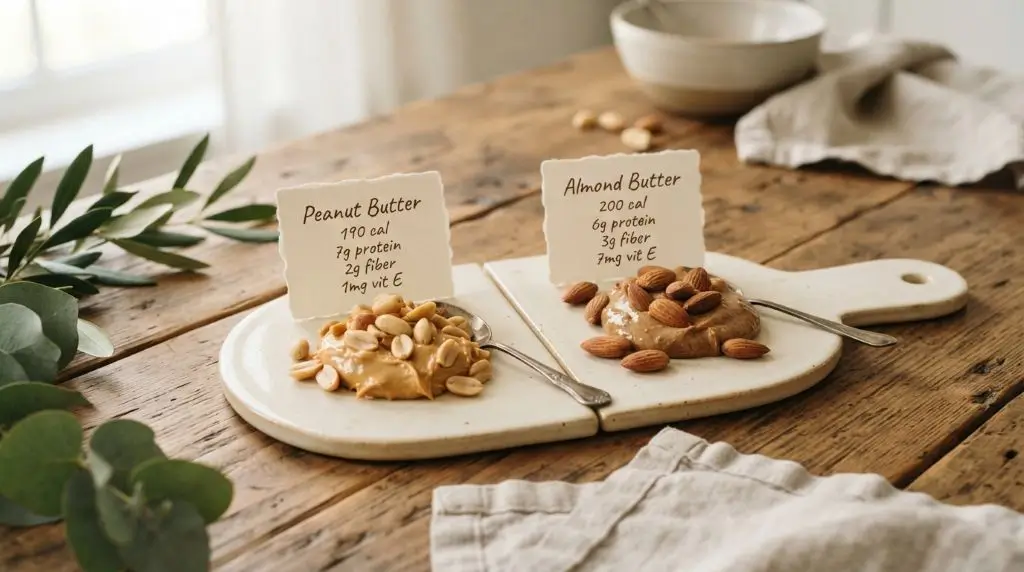
Here is a side-by-side look at how these two popular spreads stack up. This table gives you the essentials at a glance.
| Feature | Peanut Butter | Almond Butter |
| Calories | ~190 per 2 tbsp | ~190-200 per 2 tbsp |
| Protein | ~7-8g per serving | ~6-7g per serving |
| Healthy Fats | Rich in polyunsaturated and monounsaturated fats | Higher in monounsaturated fats |
| Fiber | ~2g per serving | ~3-4g per serving |
| Vitamin E | ~1-2mg per serving | ~7-8mg per serving |
| Magnesium | ~50mg per serving | ~90mg per serving |
| Cost | Budget-friendly, widely available | More expensive, premium pricing |
| Taste | Classic, slightly sweet, familiar | Nuttier, richer, more complex |
| Best For | Protein seekers, budget shoppers, everyday use | Micronutrient boost, fiber needs, richer flavor |
This overview highlights the most important peanut butter vs almond butter nutrition facts, making it easier to see how the two spreads compare at a glance.
Bottom line: Peanut butter offers more protein and affordability, while almond butter provides more vitamin E, magnesium, fiber, and monounsaturated fats.
Did You Know?
Almond butter usually contains more vitamin E, magnesium, and fiber, while peanut butter typically provides slightly more protein and costs less. Both can be nutritious choices when made with simple ingredients.
Peanut Butter vs Almond Butter Nutrition
Let us dig into the numbers. This is where the peanut butter vs almond butter nutrition story gets interesting. Both are calorie-dense foods, which is not a bad thing. It just means a little goes a long way.
Calories
A standard serving size for both is two tablespoons. That is about 32 grams. Peanut butter clocks in around 190 calories. Almond butter sits slightly higher at 190 to 200 calories per serving.
The almond butter vs peanut butter calories difference is tiny. We are talking about 10 calories or less. That is not enough to sway your decision. What matters more is how much you actually eat. It is easy to scoop out more than two tablespoons without realizing it. A small calorie gap should not be the deciding factor here.
Protein
Peanut butter contains slightly more protein per serving. It delivers about 7 to 8 grams of protein per serving. Almond butter gives you around 6 to 7 grams.
When you look at protein in almond butter vs peanut butter, the gap is small but real. If you are trying to hit a daily protein target and you eat nut butter regularly, that extra gram or two adds up over time. Both are solid sources of plant-based protein though. You do not need to overthink this unless protein is your top priority.
Healthy Fats
Peanut butter vs almond butter spreads are packed with healthy fats. That is why they taste so rich and satisfying.
Peanut butter contains a mix of monounsaturated fats and polyunsaturated fats. It also has a small amount of saturated fat, around 3 grams per serving. Almond butter leans more heavily into monounsaturated fats. It has a slightly better fat profile in that regard.
When comparing almond butter vs peanut butter healthy fats, both are excellent choices. Neither one is loaded with bad fats. The key difference is that almond butter has a bit more of the heart-friendly monounsaturated kind. Peanut butter brings more polyunsaturated fats to the table, including omega-6 fatty acids.
Fiber
Fiber keeps you full. It supports digestion. And most people do not get enough of it.
Almond butter has the edge here. It offers about 3 to 4 grams of fiber per serving. Peanut butter gives you closer to 2 grams. That extra fiber in almond butter means you might feel satisfied longer after eating it. It also supports regular digestion without making any medical claims.
Vitamins & Minerals
This is where almond butter provides higher amounts of several key micronutrients.
Peanut butter is a good source of:
- Niacin (vitamin B3)
- Protein
- Some magnesium and phosphorus
Almond butter stands out for:
- Vitamin E (significantly more than peanut butter)
- Magnesium
- Calcium
- A bit more fiber
If you want a full nutrient breakdown of almonds specifically, you can explore our dedicated Almonds Nutrition Facts guide.
Ingredients Matter More Than the Name
Here is something most people miss. Two jars may both say peanut butter, yet have very different ingredient lists. The same goes for almond butter. The name on the label means less than what is actually inside. If you’d like a closer look at what makes a healthier jar, including nutrition, ingredients, and serving size, read our complete guide to Peanut Butter Nutrition Facts.
What to Watch For
- Added sugar: Some brands dump in sugar to make it taste sweeter. You do not need that.
- Hydrogenated oils: These are added to keep the spread from separating. They also add trans fats. Skip them.
- Added salt: A little salt is fine. A lot is not necessary.
- Long ingredient lists: The best nut butters have short lists. Often just one or two ingredients.
Shopping Checklist
- When you pick up a jar, flip it over and read the back. Look for:
- Peanuts or almonds listed first
- Little or no added sugar
- No hydrogenated oils
- Minimal salt
- A short, simple ingredient list
Natural nut butter will separate. The oil rises to the top. That is normal. Just stir it before you use it. That separation is actually a good sign. It means there are no stabilizers or weird additives holding everything together.
Quick Tip: If the ingredient list starts with peanuts or almonds and contains little more than salt, you’re usually looking at a less processed option.
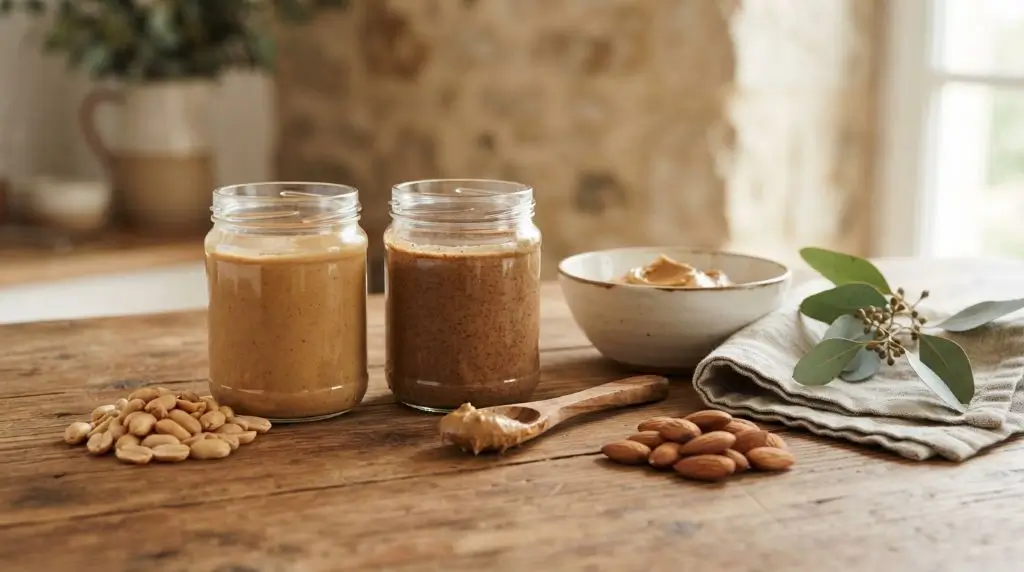
Health Benefits Compared
Understanding the almond butter vs peanut butter benefits can help you choose the spread that best fits your nutrition goals rather than assuming one is always healthier.
Heart-Friendly Fats
One of the biggest differences in the peanut butter vs almond butter comparison is their healthy fat profile. Both peanut butter and almond butter contain mostly unsaturated fats. These are the kinds of fats that support general wellness. They are not the enemy. Your body needs healthy fats for energy, hormone production, and absorbing certain vitamins. Research from the Harvard T.H. Chan School of Public Health supports including nuts and nut butters as part of a heart-healthy eating pattern.
Almond butter has a slight edge in monounsaturated fats. Peanut butter brings more polyunsaturated fats. Both profiles support a balanced approach to eating.
Satiety and Weight Management
Let us be honest. Neither of these is a weight-loss food. They are calorie-dense. Two tablespoons can easily become four if you are not paying attention.
That said, both can support fullness when eaten in appropriate portions. The combination of protein, fiber, and healthy fats helps you feel satisfied for longer. If you’d like to understand why this combination is so effective, read our guide on Why Protein and Fiber Keep You Full. If you are looking for the best nut butter for weight loss, the answer is neither and both. It depends on portion control and what else you are eating that day. A tablespoon on an apple slice is very different from half a jar on toast.
Everyday Nutrition
Where does each one fit into your daily routine?
Peanut butter works well when you want:
- A protein boost
- An affordable staple
- Something familiar that blends into smoothies, oatmeal, and sandwiches
Almond butter fits when you want:
- More micronutrients in one spoonful
- Extra fiber and vitamin E
- A richer, more complex flavor

Taste, Texture, and Cost
This section matters more than people admit. You can read all the nutrition labels you want. If you do not enjoy eating it, you will not stick with it.
Taste
Peanut butter tastes classic. It is slightly sweet, a little salty, and deeply familiar. Most people grew up with it. That comfort factor is real.
Almond butter tastes nuttier. It has a richer, more complex flavor. Some people love it right away. Others need a few tries to adjust. It is less sweet than peanut butter, which can be a good thing if you are cutting back on sugar.
Texture
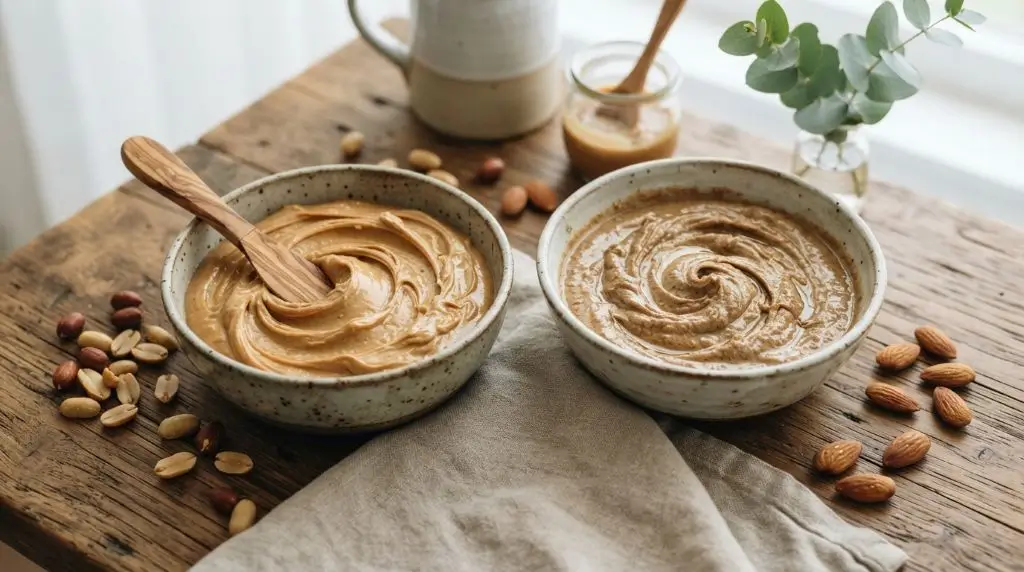
Both come in creamy and crunchy versions. Peanut butter tends to be a bit smoother and more uniform. Almond butter can be slightly grainier because almonds have a different structure than peanuts. Some brands grind almonds super fine. Others leave a bit of texture. Try a few to see what you prefer.
Availability and Price
Peanut butter is generally more affordable and easier to find in most grocery stores., usually for a few dollars per jar. It is a budget-friendly pantry staple.
Almond butter costs more. Sometimes two to three times as much. It is also less common in smaller stores. The price reflects the cost of almonds, which are more expensive to grow and process than peanuts.
Which Should You Choose?
Here is a quick decision guide based on what you actually care about.
Choose Peanut Butter If…
- You want more protein per serving
- You prefer a familiar, classic flavor
- You are on a budget
- You eat nut butter frequently and want an affordable staple
Choose Almond Butter If…
- You want more vitamin E and magnesium
- You prefer more fiber in your spread
- You enjoy a richer, nuttier flavor
- You do not mind paying a bit more for extra nutrients
Choose Either If…
Here is the truth. Natural varieties of both can fit into a balanced eating pattern. You do not have to pick one for life. Keep peanut butter in the pantry for everyday use. Choose almond butter when you’re looking for a little more vitamin E, magnesium, and fiber. There is no rule saying you can only eat one.

Simple Ways to Enjoy Both Nut Butters
You do not need recipes. You need ideas that actually work on busy mornings.
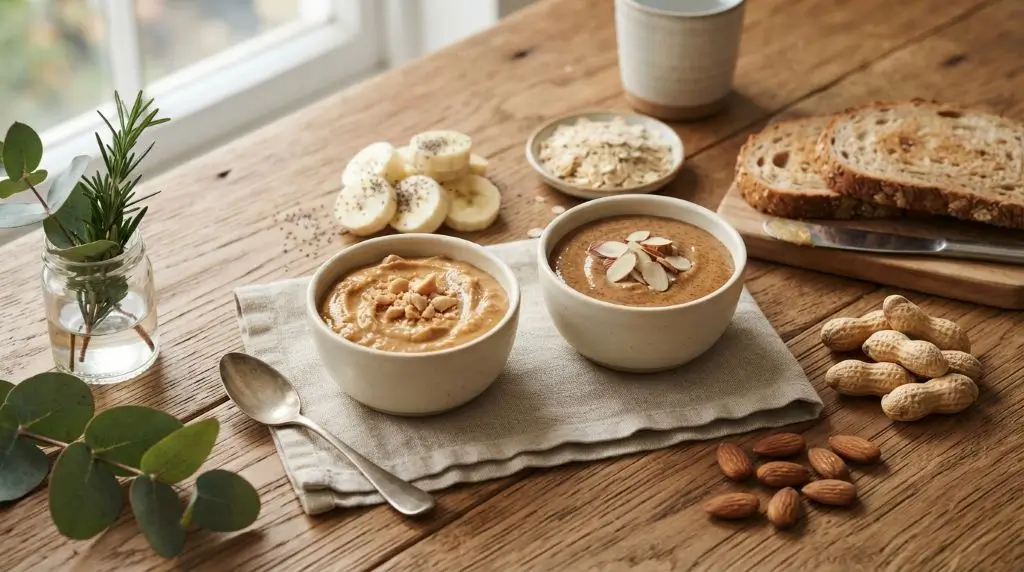
- Spread on whole-grain toast with sliced banana
- Dip apple slices into a small bowl
- Swirl into warm oatmeal
- Blend into a smoothie for creaminess and protein
- Stir into Greek yogurt with a drizzle of honey
- Pair with celery sticks for a quick snack
These simple combinations make satisfying snacks with minimal preparation. If you’re looking for even more wholesome ideas, explore our guide to Healthy Snack Alternatives to Junk Food.
Keep it simple. The nut butter does the heavy lifting. You just need a vehicle to enjoy it as part of a balanced snack or meal.

FAQs about Peanut Butter vs Almond Butter
Q1: Is almond butter healthier than peanut butter?
Not exactly. Almond butter has more vitamin E, magnesium, and fiber. Peanut butter has more protein and costs less. Neither is clearly healthier. It depends on your personal nutrition goals and what your diet already includes.
Q2: Which nut butter has more protein?
Peanut butter has slightly more protein. You get about 7 to 8 grams per serving compared to 6 to 7 grams in almond butter. The difference is small but consistent.
Q3: Which is better for weight loss?
Neither is a weight-loss food on its own. Both are calorie-dense. What matters is portion size and how they fit into your overall eating pattern. A measured serving can support fullness. An unmeasured serving can add up fast.
Q4: Which has more healthy fats?
Both are excellent sources of healthy fats. Almond butter has more monounsaturated fats. Peanut butter has more polyunsaturated fats. Both are far better choices than spreads loaded with saturated or trans fats. The American Heart Association recommends choosing unsaturated fats over saturated ones for overall heart health.
Q5: Is natural peanut butter better than regular peanut butter?
Usually, yes. Natural peanut butter typically contains just peanuts and maybe a little salt. Regular peanut butter often adds sugar, hydrogenated oils, and other stabilizers. Check the ingredient list. Shorter is better.
Q6: Can you eat peanut butter or almond butter every day?
Yes, in appropriate portions. A serving or two per day fits fine into most balanced diets. Just watch your total calorie intake and choose natural varieties without added sugar or hydrogenated oils.
Final Thoughts: Peanut Butter vs Almond Butter
The best nut butter is the one that fits your nutrition goals, taste preferences, and everyday lifestyle.
- Choose peanut butter if affordability, slightly higher protein, and a familiar taste matter most to you. It is a reliable, budget-friendly staple that works in almost any situation.
- Choose almond butter if you are looking for more vitamin E, magnesium, fiber, and a richer monounsaturated fat profile. It costs more but delivers more micronutrients per spoonful.
For most people, the healthiest choice is not one over the other. Both can be part of a balanced eating pattern when you choose natural varieties with simple ingredient lists and enjoy them in appropriate portions. The Mayo Clinic notes that understanding which types of dietary fats to choose can help you make smarter everyday food decisions.
Food & Nutrition Writer at PureHealthBites

Nadeem Sharif is the voice behind PureHealthBites, a blog focused on simple nutrition and everyday food choices. With hands-on experience experimenting with ingredients and meals, he shares practical, gut-friendly ideas to help readers eat well, feel better, and build healthier habits for real life.
Connect With Nadeem