
By Nadeem Sharif | Reviewed July 09, 2026 |
Medical Disclaimer:This article is for informational purposes only and does not replace professional medical advice. See our full disclaimer.
Introduction
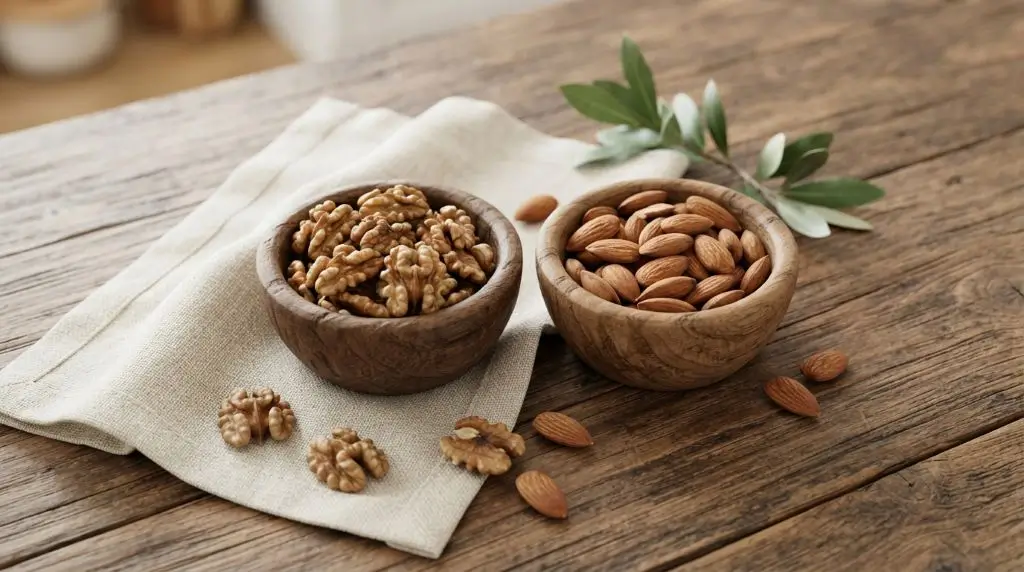
You are standing in the snack aisle. Your hand hovers between a bag of walnuts and a bag of almonds. Both look healthy. Both cost about the same. But which one fits your goals better?
This is the everyday question behind the walnuts vs almonds debate. Both nuts are nutrient-rich snacks that have earned their place in kitchens around the world. But they are not identical. Each one brings its own mix of fats, protein, vitamins, and minerals to the table.
In this article, we will look at walnuts vs almonds nutrition side by side. We will compare calories, protein, fiber, healthy fats, vitamins, and weight management. We will also look at heart health, brain function, and serving sizes. All nutrition data comes from USDA FoodData Central.
Please note: this article is for general information only. It is not medical advice. Talk to a healthcare provider before making big changes to your diet.
Whether you’re choosing a healthier everyday snack or simply wondering which nut offers more nutritional value, this guide will help you make an informed choice based on your own goals.
Table of Contents
Quick Comparison Box: Walnuts vs Almonds at a Glance
Before you dive into the full comparison, here is a quick snapshot of how these two nuts stack up. The differences are small but meaningful, and they can help you decide which one fits your day.
- Walnuts provide more plant-based omega-3 fats.
- Almonds contain more protein and fiber.
- Almonds are richer in vitamin E.
- Walnuts contain fewer carbohydrates.
- Both are excellent nutrient-rich snacks.
Quick Verdict
- Choose walnuts if you want more plant-based omega-3 fats.
- Choose almonds if you want more protein, fiber, and vitamin E.
For most people, including both nuts in a balanced diet offers the widest variety of nutrients.
Walnuts vs Almonds Nutrition: Complete Comparison
If you want to understand the almonds vs walnuts nutrition picture, start with the numbers. This section breaks down walnuts nutrition facts and almonds nutrition facts side by side. One serving of nuts is 28 grams. That is about one small handful. Here is how the two compare based on USDA FoodData Central.
Comparison Table
| Nutrient (per 28g / 1 oz) | Walnuts | Almonds |
| Calories | 185 | 164 |
| Protein | 4.3g | 6.0g |
| Total Fat | 18.5g | 14.2g |
| Saturated Fat | 1.7g | 1.1g |
| Monounsaturated Fat | 2.5g | 9.0g |
| Polyunsaturated Fat | 13.4g | 3.5g |
| Omega-3 (ALA) | 2.5g | 0.0g |
| Fiber | 1.9g | 3.5g |
| Carbohydrates | 3.9g | 6.1g |
| Vitamin E | 0.2mg | 7.3mg |
| Magnesium | 45mg | 76mg |
| Calcium | 28mg | 76mg |
| Copper | 0.45mg | 0.29mg |
| Manganese | 0.97mg | 0.65mg |
Source: USDA FoodData Central. Nutrient values are approximate and may vary slightly by variety and processing method.
As you can see, the walnuts vs almonds nutrition story is not about one clear winner. It is about different strengths. Walnuts carry far more omega-3 fat. Almonds carry more protein, fiber, and vitamin E. Both offer meaningful amounts of magnesium, copper, and manganese. This is why a healthy nuts comparison depends on what you are looking for.
The comparison table gives a useful overview, but individual nutrients tell a more complete story. Let’s look at the differences one by one.

Calories, Protein, Fiber & Healthy Fats Compared
Now that you have seen the full nutrition table, let us zoom in on the four areas people ask about most. Calories, protein, fiber, and fats are the numbers that usually drive snack decisions. Each nut handles these a little differently, so it helps to look at them one by one.
Calories
When people ask about walnuts vs almonds calories, they often worry about weight gain. A one-ounce serving of walnuts has about 185 calories. Almonds have about 164 calories. That is a difference of roughly 20 calories.
In real life, 20 calories is not much. What matters more is how full you feel after eating them. Both nuts are calorie-dense, which means a small amount packs a lot of energy. This is not a bad thing. It just means you need to pay attention to portion size.
Protein
Looking at walnuts vs almonds protein, almonds come out ahead. One ounce of almonds provides about 6 grams of protein, while walnuts provide about 4.3 grams. If you’re trying to increase your intake of plant-based protein, almonds are a solid choice. They also pair well with breakfast foods like oatmeal and yogurt. For more ideas, explore our guide on building a high-protein breakfast.
Protein helps you feel full between meals. That is why a handful of almonds in the afternoon can carry you until dinner. Walnuts still offer protein, just a little less per serving. Either one adds value to a smoothie or oatmeal.
Fiber
Fiber is where almonds shine again. One ounce has 3.5 grams of fiber. Walnuts have 1.9 grams. When people search for walnuts vs almonds fiber, they are usually thinking about digestion and fullness.
Fiber keeps things moving in your digestive system. It also slows down how quickly food leaves your stomach, helping you feel satisfied for longer. If you’d like to understand why this combination works so well, explore our guide on why protein and fiber keep you full. If you’re building a list of nutrient-rich snacks, almonds have a slight edge here. That said, walnuts still make a valuable contribution to your daily fiber intake.
Healthy Fats
The healthy fats in these two nuts tell very different stories. Walnuts vs almonds healthy fats is one of the most important parts of this comparison.
Walnuts are loaded with polyunsaturated fat. The omega-3 in walnuts comes mostly as ALA. One ounce gives you about 2.5 grams of ALA. That is rare in the plant world. One ounce of walnuts gives you about 2.5 grams of ALA. That is rare in the plant world. Most people do not get enough omega-3 from their diet, so walnuts fill a real gap.
Almonds, on the other hand, are rich in monounsaturated fat. This is the same kind of fat found in olive oil. About 9 grams per ounce. According to the Mayo Clinic, monounsaturated fats can help reduce bad cholesterol levels in your blood, which may lower your risk of heart disease and stroke.
Your body needs both. Walnuts help you get omega-3. Almonds help you get monounsaturated fat. That is why rotating both into your diet makes sense.
Healthy fats are only part of the picture. Vitamins and minerals also play an important role in the nutritional value of both nuts.
Quick Tip: Instead of choosing the same nut every day, rotate walnuts and almonds throughout the week or enjoy a small mix of both. This simple habit adds greater variety to your intake of healthy fats, protein, fiber, vitamins, and minerals.

Vitamins and Minerals: Which Nut Offers More?
Beyond calories and fats, the real story often hides in the vitamins and minerals. Walnuts and almonds both bring something useful to the table, but they do not bring the same things. Let us look at where each one shines.
Vitamin E
If you are looking for vitamin E in almonds, you will find plenty. One ounce delivers about 7.3 milligrams. That is nearly half of what most adults need in a day. Walnuts contain only trace amounts.
Vitamin E acts as an antioxidant. It helps protect your cells from everyday damage. Almonds are one of the easiest ways to get this vitamin from whole food.
Magnesium
Both nuts contain magnesium, but almonds have more. One ounce of almonds gives you about 76 milligrams. Walnuts give you about 45 milligrams. Magnesium supports muscle function, nerve health, and steady energy levels. Many people do not get enough magnesium from their diet, so both nuts help.
Copper & Manganese
Here is where walnuts fight back. Walnuts contain more copper and manganese than almonds. One ounce of walnuts gives you about 0.45 milligrams of copper and 0.97 milligrams of manganese. Almonds give you 0.29 and 0.65 respectively.
Copper helps your body make energy and build connective tissue. Manganese supports bone health and wound healing. Neither nut is a poor choice here. Walnuts just offer a bit more of these two trace minerals.
Calcium & Phosphorus
Almonds contain more calcium. One ounce has about 76 milligrams compared to 28 milligrams in walnuts. Both nuts contain phosphorus, which works with calcium to support bone structure. If you do not eat dairy, almonds can be a small but helpful source of calcium in your day.

Are Walnuts Healthier Than Almonds?
This is the question that shows up in search boxes every day. Are walnuts healthier than almonds? Which is healthier walnuts or almonds? The honest answer is that there is not one universal winner. It depends on what your body needs most.
Here is a simple way to look at it.
| Goal | Better Choice |
| Omega-3 | Walnuts |
| Protein | Almonds |
| Fiber | Almonds |
| Vitamin E | Almonds |
| Antioxidants | Both |
| Balanced Snacking | Both |
If your diet is low in omega-3, walnuts may be the smarter pick. If you need more protein and fiber, almonds might fit better. Many nutrition experts suggest eating a mix of nuts rather than betting everything on one type. This gives your body a wider range of nutrients.
Walnuts vs Almonds Benefits: Health Effects Compared
Numbers on a label only tell part of the story. What really matters is how those nutrients work inside your body. In this section, we will look at what walnuts and almonds actually do for your heart, brain, weight, and skin.
Heart Health
Both walnuts and almonds have been widely studied for their potential role in supporting heart health as part of an overall balanced dietary pattern. Walnuts bring omega-3 ALA, which has been linked to healthy cholesterol levels. Almonds bring monounsaturated fat and vitamin E, which support healthy arteries.
Research published in the Journal of the American Heart Association suggests that regular nut consumption is associated with better cardiovascular outcomes. The Harvard T.H. Chan School of Public Health also notes that nuts contain unsaturated fats, omega-3 fatty acids, fiber, and vitamin E, all of which may explain their heart benefits. But nuts do not replace medication, exercise, or a doctor’s advice. They are one piece of a larger puzzle.

Brain Function & Cognitive Support
Walnuts look like tiny brains. That coincidence has made them famous for cognitive health. The real reason they matter is the omega-3 ALA and polyphenols they contain. These compounds have been studied for their role in reducing oxidative stress in the brain.
Almonds also support brain health through vitamin E. Some studies suggest that higher vitamin E intake is linked to slower cognitive decline in older adults. Again, this is association, not proof of prevention. Both nuts can be part of a diet that supports a healthy brain.
Weight Management
People often ask about almonds or walnuts for weight loss. The truth is that both can support weight management when eaten in proper portions. The protein and fiber in almonds help you feel full. The omega-3 fats in walnuts may help with appetite regulation.
The key is portion control. Nuts are calorie-dense. A small handful is enough. If you eat nuts straight from the bag while watching TV, you can easily consume 400 or 500 calories without noticing. Measure out a serving. Put the bag away. That is the practical habit that matters most.
Quick Tip: Measure one serving into a small reusable container before leaving home. Having a portion ready makes it easier to avoid overeating and turns nuts into a convenient grab-and-go snack.

Skin & Antioxidant Support
Instead of making bold claims about anti-aging, let us look at what these nuts actually offer. Vitamin E in almonds protects skin cells from oxidative damage. Walnuts contain polyphenols and healthy fats that support the skin barrier.
Neither nut will erase wrinkles. But both provide nutrients that your skin needs to function well. Think of them as support tools, not magic fixes.
Which Nut Should You Choose?
By now you have seen the numbers and the health effects. But maybe you still want a straight answer. Here is a simple way to decide based on what your body needs most right now.
Choose Walnuts If…
- You want more omega-3 in your diet.
- You enjoy a richer, earthier flavor.
- You want more polyunsaturated fat.
- You are looking for copper and manganese.
Choose Almonds If…
- You want more protein per serving.
- You want more fiber for fullness.
- You want more vitamin E.
- You prefer a crunchier texture.
Curious about almonds beyond this comparison? Explore our complete guide to almonds nutrition facts, where you’ll find a detailed nutrient breakdown, serving recommendations, and practical ways to include almonds in your daily diet.
The Smart Move for Most People
Walnuts may be the better choice if you are looking for more omega-3 fats, while almonds are a good option if you want more protein, fiber, and vitamin E. Rather than choosing a single winner, enjoying both nuts as part of a balanced eating pattern offers the greatest nutritional variety.
This is one of the strongest takeaways in any healthy nuts comparison. Variety wins. Your body does not run on one nutrient. It runs on dozens. Mixing walnuts and almonds gives you a broader range of vitamins, minerals, and fats than either one alone.
How Many Almonds and Walnuts Should You Eat Per Day?
The standard serving for nuts is one ounce. That is about 14 walnut halves or 23 almonds. This equals roughly 160 to 185 calories depending on which nut you choose.
If you are wondering how many almonds and walnuts to eat a day, start with one serving. You can split that serving between both nuts. For example, seven walnut halves and twelve almonds. This gives you a mix of omega-3, protein, and fiber in one snack.
Some people eat two servings a day. That is fine if it fits your calorie needs. Just remember that nuts add up fast. If you are trying to manage your weight, keep a measuring cup nearby. Do not eat from the bag.
Best Ways to Enjoy Walnuts and Almonds
Knowing which nut to eat is only half the battle. The other half is figuring out how to fit them into your day without getting bored. If you are looking for the best nuts for snacking, both walnuts and almonds earn their spot. Here are some simple, practical ways to make both nuts part of your regular routine.
Everyday Healthy Snacks
Raw nuts are the simplest choice. They have no added oil or salt. If you buy roasted nuts, look for dry roasted and unsalted. Avoid nuts coated in sugar or honey if you are eating them daily.
Try pairing nuts with fruit. Apple slices with almonds or berries with walnuts make simple, balanced snacks. The natural sweetness of fruit complements the rich, nutty flavor while adding extra fiber and nutrients. If you’re looking for more wholesome snack ideas, explore our guide to healthy snack alternatives to junk food. Greek yogurt with a sprinkle of chopped nuts is another easy option.
Trail mix is popular, but watch the ingredients. Many store-bought mixes contain candy and too much salt. Make your own instead. Mix raw almonds, walnuts, unsalted pumpkin seeds, and a small amount of dried cranberries.

Breakfast Ideas
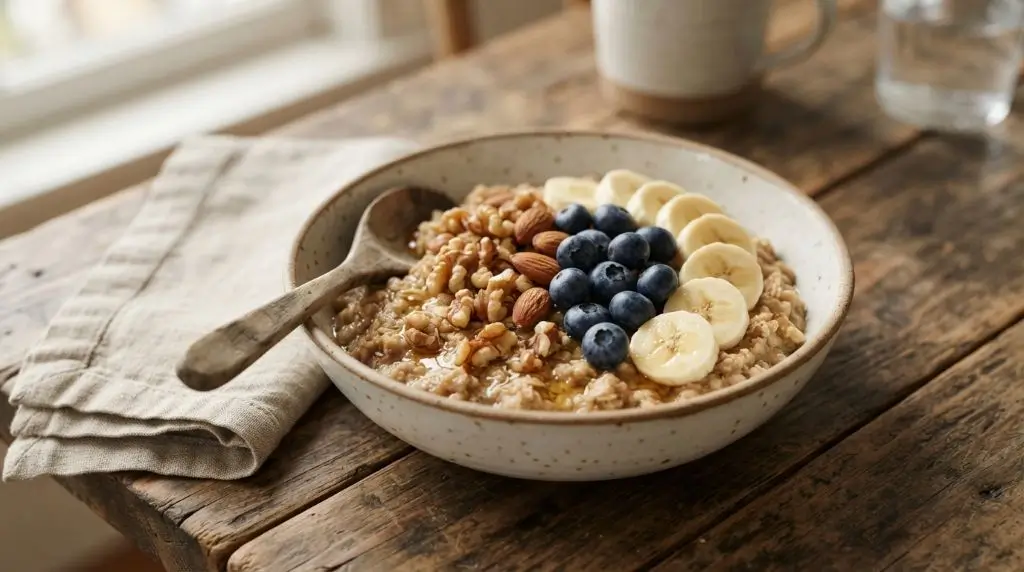
Oatmeal is one of the simplest breakfasts for adding nuts to your diet. Stir chopped walnuts into hot oats, where the gentle heat softens them slightly and brings out their rich flavor. Almonds work especially well on overnight oats because they stay pleasantly crunchy even after soaking. If you’d like more ways to make oats part of a balanced breakfast, explore our guide to oats nutrition benefits.
Smoothies are another option. A tablespoon of almond butter adds creaminess. A few walnuts add omega-3. You do not need much. A small amount is often enough to add flavor, texture, and nutrition without overpowering the smoothie.
Cooking & Baking
Both nuts work in savory dishes. Toss chopped almonds into a stir-fry. Add walnuts to a grain salad. They add texture and healthy fat to meals that might otherwise be low in calories.
In baking, almond flour has become popular for gluten-free recipes. It adds moisture and a mild sweetness. Walnut meal can replace some flour in muffins and bread. It gives a denser texture and deeper flavor.
Make Your Own Balanced Nut Mix
This is where you can put the whole article into practice. Take a small jar. Add equal parts walnuts and almonds. Throw in some cashews or pistachios if you like. Keep the jar in your pantry. Each morning, scoop out one measured serving.
This approach gives you variety without overthinking it. You get the omega-3 from walnuts. You get the protein and fiber from almonds. This is what balanced eating looks like in real life.
Quick Tip: Pair your homemade nut mix with fresh fruit or plain Greek yogurt for a more balanced snack that combines healthy fats, protein, fiber, and carbohydrates.
Potential Downsides and Considerations
Nuts are good food, but they are not perfect for everyone. Before you make them a daily habit, it helps to know the few situations where they might cause problems. Here is what to watch out for.
Tree Nut Allergies
Tree nut allergies are serious. If you are allergic to one tree nut, you may react to others. Walnuts and almonds are both tree nuts. If you have any history of allergic reactions, talk to an allergist before trying new nuts. This article is not a substitute for medical guidance.
Calorie Density
Nuts are easy to overeat. A bowl of almonds on your desk can disappear in twenty minutes. That bowl might contain 500 calories. Be honest with yourself about portions. Measure your serving. Put the container away. This one habit makes a bigger difference than which nut you choose.
Oxalates & Phytic Acid
Both nuts contain oxalates and phytic acid. These are natural compounds found in many plant foods. In large amounts, oxalates may contribute to kidney stones in sensitive people. Phytic acid can slightly reduce mineral absorption.
For most people, this is not a problem. The health benefits of eating nuts far outweigh these concerns. But if you have a history of kidney stones, you may want to talk to your doctor about portion sizes.
Choosing Healthier Store-Bought Nuts
Not all nuts at the grocery store are equal. Some are roasted in cheap vegetable oil and loaded with salt. Others are covered in yogurt coating or sugar glaze. Read the ingredient list. The only ingredient should be the nut itself. Maybe a little salt if you prefer.
Dry roasted is better than oil roasted. Raw is better than dry roasted if you want the least processing. Buy from stores with high turnover so the nuts are fresh. Rancid nuts taste bitter and offer fewer health benefits. Store your nuts in an airtight container in a cool place.
Quick Tip: Buy plain raw or dry-roasted nuts with the shortest ingredient list possible. Choosing products without added sugars or excess sodium helps you enjoy their natural nutritional value.
Bottom Line
- Walnuts are naturally higher in plant-based omega-3 fats.
- Almonds provide more protein, fiber, and vitamin E.
- Both nuts offer valuable vitamins, minerals, and healthy fats.
- Choosing a variety of nuts is often more beneficial than relying on just one type.

FAQs about Walnuts vs Almonds
Q1: Which has more protein, walnuts or almonds?
Almonds have more protein. One ounce of almonds contains about 6 grams of protein. One ounce of walnuts contains about 4.3 grams. Both are good plant-based protein sources, but almonds win on protein per serving.
Q2: Which nut is better for heart health?
Both support heart health in different ways. Walnuts provide omega-3 ALA, which is linked to healthy cholesterol levels. Almonds provide monounsaturated fat and vitamin E, which support artery health. Eating a variety of nuts is associated with better cardiovascular outcomes in research studies.
Q3: Are walnuts better than almonds for weight loss?
Neither is clearly better. Both can support weight management when eaten in proper portions. Almonds have more fiber and protein, which may help you feel full. Walnuts are one of the richest natural plant sources of ALA omega-3, whereas almonds provide only trace amounts, which may support appetite control. The most important factor is portion size. Stick to one ounce per serving.
Q4: Can I eat walnuts and almonds together?
Yes. Eating both together gives you a wider range of nutrients. You get omega-3 from walnuts and protein, fiber, and vitamin E from almonds. Many people mix them in a homemade trail mix or sprinkle both on oatmeal.
Q5: Do walnuts or almonds have more omega-3?
Walnuts have far more omega-3. One ounce contains about 2.5 grams of ALA. Almonds contain almost no omega-3. If you are trying to increase your omega-3 intake from plant sources, walnuts are one of the top choices available.
Q6: How many walnuts and almonds should I eat daily?
A standard serving is one ounce. That is about 14 walnut halves or 23 almonds. You can eat one serving per day, or split a serving between both nuts. Adjust based on your calorie needs and activity level. If you are unsure, ask a registered dietitian for personalized advice.
Conclusion
So where does this leave us? Walnuts may be the better choice if you are looking for more omega-3 fats, while almonds provide more protein, fiber, and vitamin E. Rather than choosing one over the other, many people can benefit from enjoying both as part of a balanced eating pattern. Including a variety of nutrient-rich foods often provides the broadest range of nutritional benefits over time.
The next time you are choosing a snack, think about your goal. Do you need more omega-3 today? Grab walnuts. Do you need more protein and fiber? Grab almonds. Better yet, grab a small handful of both. A sensible portion paired with other whole foods can be a simple step toward a more balanced diet.
Food & Nutrition Writer at PureHealthBites

Nadeem Sharif is the voice behind PureHealthBites, a blog focused on simple nutrition and everyday food choices. With hands-on experience experimenting with ingredients and meals, he shares practical, gut-friendly ideas to help readers eat well, feel better, and build healthier habits for real life.
Connect With Nadeem